
Reviewed · BOSTON HISTORY TOURS
2 Hour Boston Historical and Heritage Walking Tour
Boston’s past is packed into a short stretch of downtown: a common used for grazing and public gatherings, a church tied to abolitionism, the site of a revolutionary protest, and a meeting hall linked to the fight for independence. I like that this walk joins those places into one continuous account of how the city changed, rather than treating each stop as an isolated photo opportunity.
I also like the guide’s room for questions and his use of personal, sometimes surprising details, from the Brahmin literary circle to the political career of James Michael Curley. The main consideration is pace: this is an information-heavy tour, and it can run longer than its advertised two hours.
At a glance
- A compact route: Walk roughly one mile from Boston Common to the area across from Faneuil Hall.
- A story beyond the Revolution: Expect Puritan Boston, abolitionism, immigration, literature, and city politics alongside the familiar revolutionary sites.
- A guide with a strong point of view: Stephen is associated with the tour and is known for connecting historical events with anecdotes and personalities.
- A small-group format: The maximum group size is 24, with an in-person English-speaking guide.
- A $5 starting price: This is an inexpensive way to get oriented, though you will pay mainly with attention and walking time.
- Dress for the weather: The tour is outdoors, and Boston wind, rain, or cold can make a two-hour walk feel longer.
A short walk with a lot to say
The advertised route covers about a mile and takes roughly two hours. That is a good deal of ground for a walking tour, but the distance is not the main measure of effort. The guide spends time explaining events, introducing people, and tying one period to another. You will likely hear more than you can absorb in a single pass.
Stephen is the guide associated with this tour. His approach is energetic and story-led, with material that ranges from Boston’s Puritan beginnings to more recent city politics. He is also open to questions, which can make the walk feel personal rather than like a speech delivered to a moving crowd.
There is a trade-off. Some groups find the pace and amount of detail engrossing; others can find the talk too fast or too long. The route passes through noisy downtown streets, where traffic and tour vehicles may compete with the guide’s voice. Stephen has responded to that challenge by using a voice amplifier, but you should still stay close enough to hear clearly.
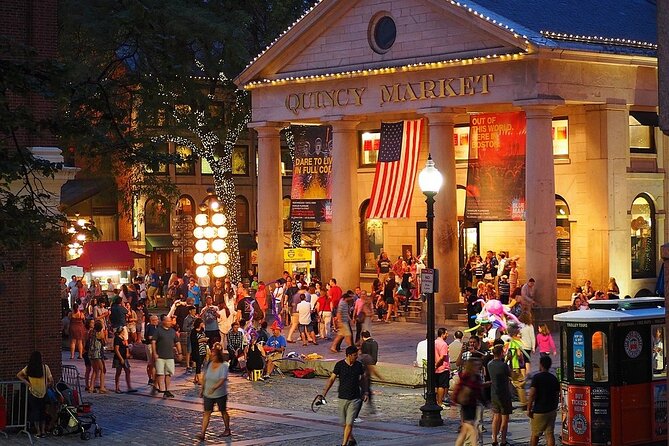
The tour is scheduled to begin at 11:00 a.m. at the Boston Common Tablet, at 1634 Freedom Trail. It finishes beside the James Michael Curley statues near Congress and North streets, directly across from Faneuil Hall. That end point is useful if you want to continue exploring the market area or head toward the North End.
More history tours around Boston:
- Boston: Freedom Trail History Small Group Walking Tour
★ 5.0 · 6,450 reviews - Tour of Historic Fenway Park, America’s Most Beloved Ballpark
★ 4.5 · 3,013 reviews - The Full Revolutionary Story Epic Small Group Boston Walking Tour
★ 5.0 · 2,356 reviews
Boston Common: grazing land, public punishments, and protest
Boston Common is the natural place to begin. At 45 acres, it has served Boston for centuries, but it was not created simply as a pleasant green park. Townspeople once pastured cattle here, and the Common also saw hangings and duels. Later, its promenades and elms gave it a more genteel role.
The guide places the Common in the wider life of the city, including its use for military drills and civil rights rallies. That long timeline helps explain why this central park has been more than a patch of lawn. It has been a public stage, and it remains a good place to pause for photographs.
The stop is listed as about 10 minutes. That is enough to get a sense of the park and hear its main stories, but not enough to explore it at length. If you want time to wander its paths, plan to return after the tour.
Park Street Church and the 54th Massachusetts
Park Street Church adds a different strand to the city’s story. The church was active in the abolitionist movement and in missionary work, and the guide discusses the public voices and figures associated with its history. One memorable detail is the first public performance of Samuel Francis Smith’s My Country, ’Tis of Thee, also known as America, here on July 4, 1831.
The stop is brief, around five minutes, so expect an outside account rather than an extended visit inside. It is a useful reminder that Boston’s public life was shaped not only by political meetings, but also by religious communities and arguments over freedom.
Nearby, the Robert Gould Shaw and 54th Regiment Memorial honors the African American soldiers of the 54th Massachusetts Infantry and their commander. The regiment was among the first African American units in the Civil War. The monument gives the guide a chance to connect Boston’s abolitionist history with the bravery and service of Black soldiers.
This stop is listed at 10 minutes. The memorial rewards a close look, though the tour’s moving format means you may want to come back if you wish to study its details more slowly.
The State House and the city’s intellectual circles
The gold dome of the Massachusetts State House is one of Boston’s most recognizable sights. The building has been the seat of the state legislature since 1798, and the tour points out its architectural presence as well as its civic role. Nearby statues offer stories of their own, including General Joseph Hooker and Mary Dyer, who was hanged for her Quaker beliefs.
A five-minute stop cannot cover every layer of the State House, but it places the building within the city’s political history. The guide’s style is especially suited to this kind of setting, where a statue or a façade can lead to a story about a person whose choices reveal the conflicts of the time.
The route also brings up the private library of Boston’s Brahmins, the city’s elite intellectual circle. This is one of the less obvious subjects on the walk, and a welcome change from a simple parade of famous buildings. You hear about the books and ideas that helped shape American thought, and about the people who had access to those circles.
More walking tours around Boston:
- Harvard University Campus Guided Walking Tour
★ 4.5 · 3,632 reviews - Boston Freedom Trail Walking Tour with Costumed Guide
★ 4.5 · 2,531 reviews - Boston’s Freedom Trail: A Revolutionary Walking Tour
★ 4.9 · 1,748 reviews - Boston: Freedom Trail History Small Group Walking Tour
★ 4.9 · 1,590 reviews
Scollay Square and the Old State House
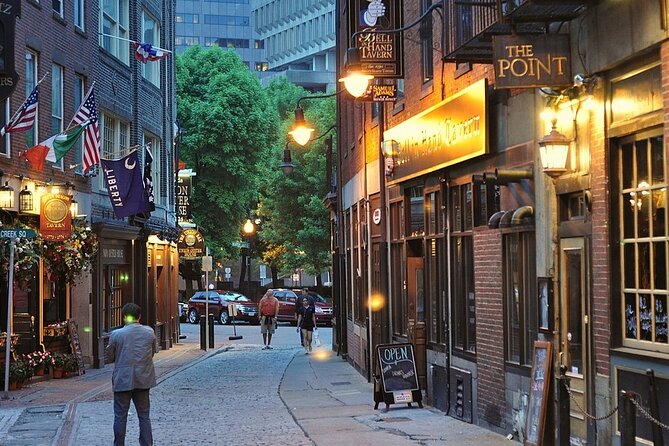
In the West End, the tour recalls Scollay Square, once known for theaters, vaudeville shows, and colorful characters. The area’s entertainment past gives Boston a less solemn face than the usual succession of revolutionary dates and speeches. The route also includes a glimpse of the Kennedy family’s romantic history, though this is a passing story rather than a separate visit.
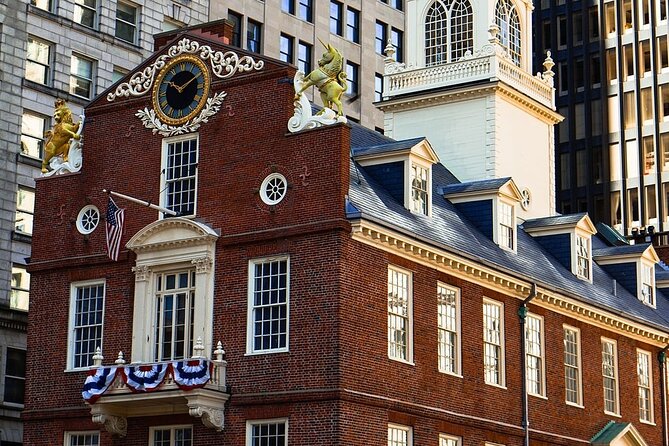
The Old State House brings the focus back to the Revolution. A copy of the Declaration of Independence was read to Boston’s citizens here in 1776, making the building a powerful setting for the city’s break with Britain. Its survival is a story in itself: when the old building fell into disrepair in the late nineteenth century, Chicago offered to buy it. Bostonians rallied to save it, and it was carefully restored.
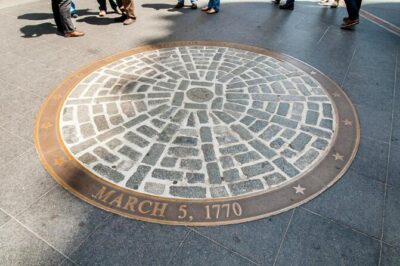
The tour also stops at the Boston Massacre site. Here, the guide recounts the confrontation between British soldiers and colonists that helped fuel outrage before the Revolution. The account is more useful than a quick glance at a marker because it places the event within the rising tension of the period.
Expect about 10 minutes at the Massacre site. It is a short stop in a busy part of downtown, so keep close to the group and listen for the guide’s explanation.
The Tea Party, Irish immigration, and Boston’s writers
The route includes the meeting place where roughly 5,000 citizens gathered on December 16, 1773, during the crisis over British tea. The group agreed to prevent the cargo from being landed. Men disguised as Mohawk Indians then led a group down Milk Street to Griffiths Wharf for the Tea Party. This account links a specific street and waterfront destination to a larger act of protest.
The Boston Irish Famine Memorial shifts the subject from revolution to immigration. It recalls the Irish people who fled the Great Famine of 1845 to 1852 and found refuge in Boston. By 1850, Irish immigrants had become the city’s largest ethnic group. The memorial also honors immigrant groups more broadly, making it a concise stop with a wider message about how newcomers shaped Boston.
At the Old Corner Bookstore, the route turns to literature and publishing. Built as a residence and apothecary in 1718, the building became a bookstore in 1828 and later housed the publishers Ticknor and Fields. Authors connected with the place include Longfellow, Hawthorne, Oliver Wendell Holmes Sr., and Emerson.
This is the kind of detail that gives the walk its broader appeal. You are not following only the Freedom Trail’s familiar political milestones; you are also seeing where Boston’s literary life took shape. The five-minute stop gives you a quick introduction, not time to browse or visit a bookstore.
Boston Latin School, Faneuil Hall, and the finish
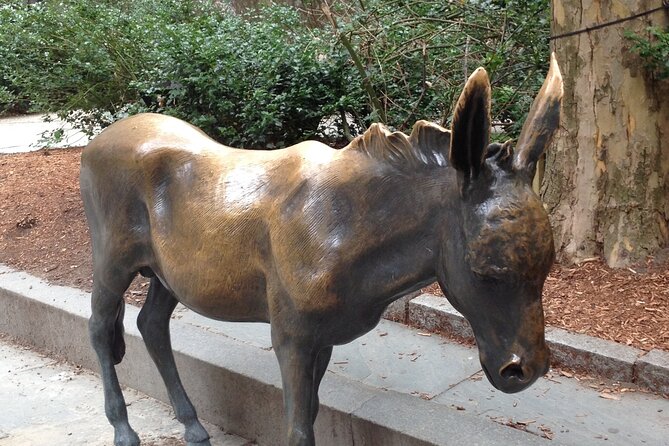
School Street takes its name from the site of Boston Latin School, identified here as the first public school in the United States. Along the way, the route passes King’s Chapel, Old City Hall, and the Parker House. There is also Boston’s beloved donkey, waiting on School Street, a lighter pause amid the serious history.
Faneuil Hall is often called the Cradle of Liberty. Peter Faneuil, a slave trader, gave the building to Boston, and it became a meeting place for revolutionary leaders. That contradiction is worth sitting with: the hall’s democratic legacy is tied to a donor whose wealth came from an institution that denied freedom to others.
The building’s grasshopper weathervane is said to have been modeled on the one atop London’s Royal Exchange. Faneuil Hall also serves as the headquarters of the Ancient and Honorable Artillery Company of Massachusetts, whose charter dates to 1837. The combination of public debate, commerce, and military tradition makes this a fitting final major stop.
The walk ends near the statues of James Michael Curley, a four-time mayor of Boston, governor of Massachusetts, and congressman. Known for his colorful, sometimes rough-edged political career, Curley offers a final shift from colonial history to the city’s more recent civic life. The Union Oyster House, Bell in Hand tavern, and Hanover Street are just a few steps away, with Hanover Street serving as a gateway to the North End.
What the $5 price gets you
At $5 per person, this tour is unusually inexpensive for a guided introduction to central Boston. You get an English-speaking guide, a planned route, and a succession of stories that connect monuments to the people and disputes behind them. For a first day in the city, that can be good value: you finish with a better sense of the layout and a list of places you may want to revisit.
The price does not mean you should expect a leisurely stop at every site. Most stops are short, and the tour is designed to keep moving while the guide talks. It is a guided overview, not an entry ticket or an in-depth visit to each building.
The format is best for someone who likes history and is happy to listen while walking. If you prefer short explanations, frequent breaks, or plenty of time for photographs, the pace may not suit you. The group can include up to 24 people, and downtown noise can make it harder to hear if you hang back.
The tour is listed as two hours, but it may run over. Some outings have lasted close to three hours, especially when the guide adjusts the route for conditions or responds to requests. Leave a little breathing room afterward rather than booking a tight appointment.
Wear shoes you can walk in and dress for the forecast. Cold wind and rain have made this route challenging at times, and there is no promise of a sheltered stop. The meeting area is near public transportation, and service animals are allowed. Confirmation is provided at booking, and the experience may be rescheduled or refunded if poor weather forces a cancellation.
Should you book this Boston walk?
Book it if you want a low-cost, history-rich orientation and enjoy a guide who links people, buildings, and events with plenty of detail. Stephen’s energetic, anecdotal approach can make the city’s past feel human, from the 54th Regiment to the Brahmin writers and Curley’s political career.
Think twice if you need a tightly timed outing, dislike long stretches of spoken history, or want time to enter and explore each site. The best way to use this tour is as a first pass through central Boston, then return on your own to the places that catch your interest.
FAQ
How long is the tour?
It is advertised as approximately two hours. It may run longer, so avoid scheduling another activity immediately afterward.
Where does the tour start?
It starts at 11:00 a.m. at the Boston Common Tablet, 1634 Freedom Trail, Boston, MA 02108.
Where does the tour end?
It ends beside the James Michael Curley statues near Congress Street and North Street, directly across from Faneuil Hall.
How far do you walk?
The route is described as about one mile, with several stops along the way.
What is the maximum group size?
The group is limited to a maximum of 24 travelers.
What language is the tour in?
The in-person guide speaks English.
Is the tour suitable for most people?
Most travelers can participate. Service animals are allowed, and the meeting point is near public transportation.
What happens if bad weather cancels the tour?
If poor weather causes a cancellation, you will be offered another date or a full refund.
More two-hour experiences around Boston
- 2-Hour Beacon Hill True Crime Expert Guided Tour
★ 5.0 · 182 reviews - 2 Hour North End ‘Little Italy’ Walking Tour
★ 4.5 · 125 reviews - Boston: 2-Hour Historic Walking Tour
★ 4.7 · 88 reviews - 2 Hour Boston Segway Tour
★ 5.0 · 77 reviews
Just added around Boston
- Boston’s Freedom Trail: A Self-Guided Tour of All 16 Sites★ 5.0 · 14 reviews
- Boston’s Freedom Trail: A Self-Guided Audio Tour★ 4.0 · 18 reviews
- Private Walking tour of Boston’s Freedom Trail and more!★ 5.0 · 29 reviews
- Boston Self-Guided Audio Tour Bundle: Freedom Trail & More★ 4.5 · 5 reviews
- Tour-in-Four — A Private four hour walking & driving city tour★ 5.0 · 32 reviews
- Washington D.C. Cherry Blossom,Baltimore 3-Day Tour from Boston★ 4.5 · 7 reviews
- Tour de Cambridge Guided Bicycle Tour★ 5.0 · 34 reviews
- True Crime Tour of Boston★ 4.0 · 17 reviews
Boston History Tours, compared.
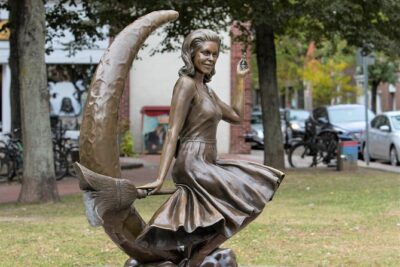
History and Hauntings of Salem Guided Walking Tour
Read our review →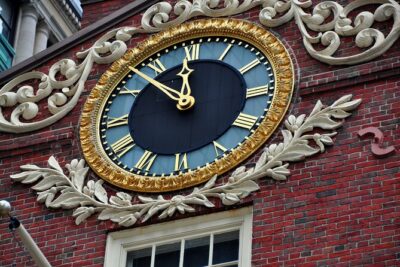
Freedom Trail History Small Group Walking Tour
Read our review →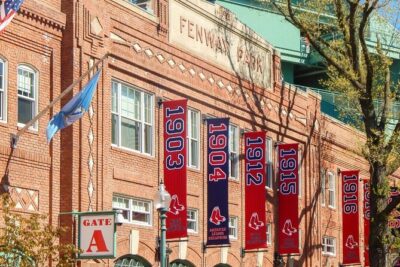
Tour of Historic Fenway Park, America’s Most Beloved Ballpark
Read our review →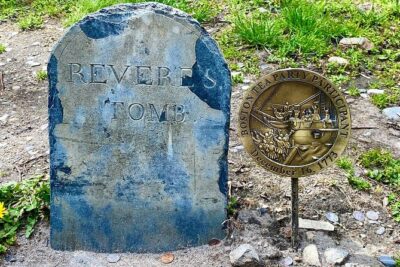
The Full Revolutionary Story Epic Small Group Boston Walking Tour
Read our review →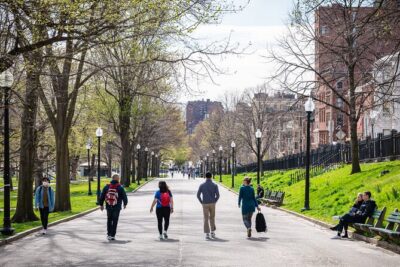
Boston Food & History: Pizza, North End & Freedom Trail
Read our review →
Boston’s Freedom Trail: A Revolutionary Walking Tour
Read our review →
City Cruises Boston Historic Sightseeing Harbor Cruise
Read our review →Browse the lists this tour appears in