
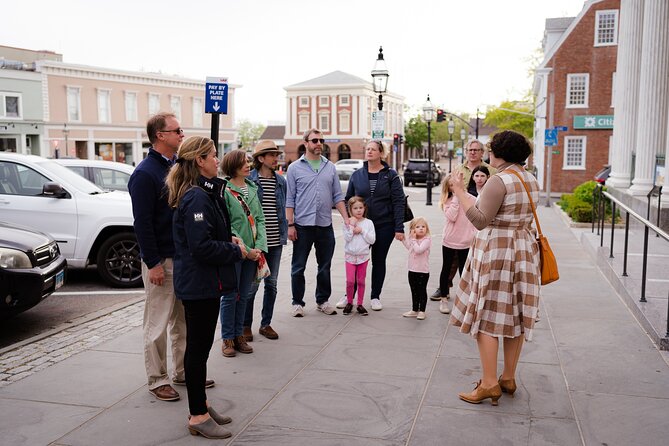
Reviewed · NEWPORT MANSION TOURS
Golden Age to Gilded Age Newport’s Transformation Walking Tour
Newport’s change from a small port town to a fashionable summer resort is written into its streets. On this 14-stop walk, you follow that shift from early houses and immigrant communities to hotels and the architecture that helped prepare the city for the Gilded Age.
I like two things in particular: the tour connects ordinary homes and civic life with the wealthy visitors who later shaped Newport, and it includes admission to the Museum of Newport History. Guides such as Patsy Finley and Mike bring an easy-to-follow, lively approach, with room for questions.
The main consideration is the walking surface. The route is about a mile and mostly flat, but sidewalks and roads can be uneven, and you will be standing at stops. There is also a small meeting-point wrinkle: the details name Old Colony House as the start, while check-in is at the museum, so confirm the exact place before heading out.
- Fourteen stops link Newport’s early streets to its Gilded Age era, with a focus on homes, hotels, architecture, and city services.
- The Museum of Newport History is part of the experience, with time to visit its second-floor space before or after the walk.
- Irish and Jewish history gets a place on the route, alongside stories of prominent architects and wealthy summer visitors.
- The walk lasts about 60 to 80 minutes, with stops generally planned for five minutes and a longer museum check-in.
- The group is capped at 18 people, and the route is roughly a mile, though you should expect uneven paving.
- The $25 price includes museum admission, bottled water, and a 10% museum-shop discount.
Newport’s transformation, one street at a time
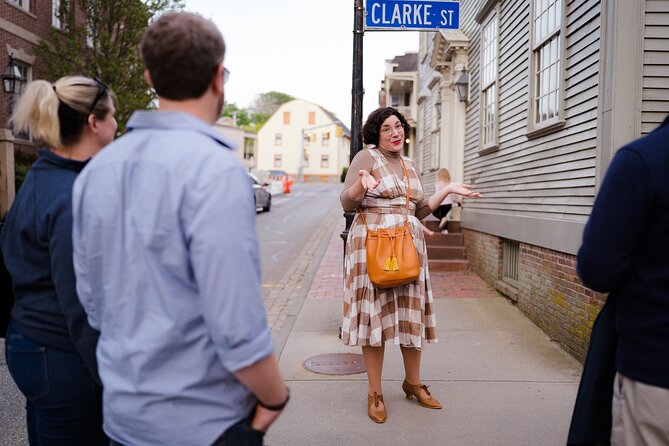
The tour’s central idea is a useful one: Newport’s Gilded Age did not appear out of nowhere. Before wealthy families built seasonal homes along Bellevue Avenue, the city had a long history as a port and a resort town with hotels. The walk traces how development, immigration, architecture, and municipal services all helped change its character.
That approach makes this more than a parade of impressive buildings. You hear about the residents who lived and worked in Newport, the people who invested in its land, and the visitors whose tastes and money shaped what the city built. I like that the route gives attention to both sides of the change.
The itinerary has 14 stops, mostly about five minutes apiece, plus a 10-minute check-in at the Museum of Newport History. The total tour time is listed as roughly one hour to one hour and 20 minutes. That pace leaves time to hear the story at each stop without turning the walk into a full-day commitment.
Start with the Museum of Newport History
The tour begins with a check-in at the Museum of Newport History, where admission is included. You also get 10% off purchases in the museum shop, a useful extra if you want a small souvenir or a local history book.
One important detail: the museum’s second-floor space is not part of the walking route. Arrive early or return after the tour if you want to see it. The museum visit adds value to the $25 price, but it is worth planning for separately rather than expecting the guide to take you through every exhibit.
There is a mismatch in the stated meeting details. The meeting point is named as Old Colony House at Washington Square, while the first stop says to check in at the museum. Confirm the exact starting location with the tour provider before the 11:00 a.m. start time. That simple check can save a needless walk around town.
More Newport mansion tours around Newport:
- Newport Gilded Age Mansions Trolley Tour with Breakers Admission
★ 5.0 · 3,785 reviews - Newport Trolley Tour with Breakers Mansion – Viking Tours
★ 5.0 · 1,624 reviews - Newport RI Mansions Scenic Trolley Tour (Ages 8+ only)
★ 5.0 · 605 reviews
Touro Street: houses, immigrants, and city growth
The first streetside stops introduce the city through its homes and communities. At 29 Touro Street, the guide discusses the Buliod-Perry house, the Perry family, and the area around the building. It is a grounded opening: rather than begin with a grand mansion, you start with a house and the people connected to it.
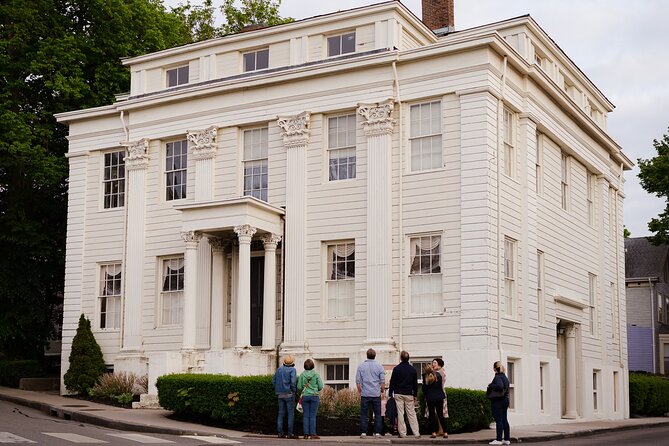
At 85 Touro Street, the Levi Gale house offers an example of architecture from its period. The stop also brings up a practical piece of Newport’s past: houses could be moved. That detail helps explain how the town’s built environment changed over time, and why a street’s appearance does not always tell the whole story of a building.
At 100 Touro Street, the focus shifts to early Irish immigrants. Their work building Fort Adams, establishing Rhode Island’s first Catholic church, and creating a cemetery with lasting historical importance gives the tour a wider view of who helped shape Newport. This is one of the route’s more valuable contrasts: the story is not only about the wealthy people who later summered here.
Three short stops cannot cover every detail of those histories, so treat them as an introduction rather than a full account. Still, the mix of family history, architecture, and immigration gives you useful context for what comes later.
Mount Vernon Street: development and upward mobility

At 12 Mount Vernon Street, the tour turns to Alfred Smith, a New York tailor who became a real estate developer. His land development helped shift Newport from a hotel-based visitor culture toward private summer residences. That change set the stage for the Gilded Age and pushed land values sharply upward.
I find this an important part of the route because it explains the economic shift behind the grand houses. The move from hotels to private seasonal homes was not just an architectural fashion. It changed who owned land, what kinds of buildings were wanted, and how Newport grew.
The next stop, 7 Mount Vernon Street, looks at a Queen Anne-style house designed by local architect John Dixon Johnston. The style was popular from 1875 to 1910, and the building is used to tell the story of the Rooney family and the upward mobility of Irish families in Newport. The pairing is effective: a house style becomes a way to discuss changing fortunes and social status, not just rooflines and ornament.
Fire service, the Jewish cemetery, and the hotel era
At 119 Touro Street, you see Newport’s oldest active fire station. Its story connects the city’s growth to the need for expanded municipal services. Wealthy tourists helped fund those services, while their preferences often influenced city decisions. It is a good reminder that resort development affected daily civic life as well as private property.
The Touro Jewish Cemetery brings the focus further back, to the Jewish community in Newport from the 17th through the 19th century. This stop adds a different dimension to the city’s past, and helps show that Newport’s cultural history long predates its reputation as a summer resort.
At the Hotel Viking, the guide introduces Newport’s era of grand hotels, before Bellevue Avenue’s famous cottages were built. The lavish Ocean House is the example: it represented luxury and elegance and drew a privileged clientele that included artists and writers. The stop helps clarify what came before the private mansions. Newport was already a place people came to stay; the Gilded Age changed how the wealthiest visitors chose to live there.
More walking tours around Newport:
- Newport Walking Food And History Tour
★ 5.0 · 377 reviews - Olde Town Ghost Walk
★ 4.5 · 201 reviews - Newport: Historic District Ghosts Guided Walking Tour
★ 4.5 · 114 reviews - Newport Cliff Walk Self-Guided Walking Tour
★ 4.0 · 79 reviews
Bellevue Avenue: architects and private clubs
At 20 Bellevue Avenue, the story centers on Dudley Newton, a Newport architect who designed more than 100 buildings. He was known for trying bold ideas, including the invention of the Newton Roof. This stop is a good one for readers who enjoy architecture, though the tour’s short format means you should not expect a technical lecture on every design feature.
At 29 Bellevue Avenue, the focus is a small Federal-style hotel that architect George Champlin Mason Sr. transformed into an exclusive men’s club. Mason had a major effect on Newport’s architecture and cultural life, and the club’s history includes a connection to the founding of the Newport Casino. The building shows how a place could change function as Newport’s social world changed around it.
These stops work best as pieces of a larger story. You are not entering each building, so the emphasis is on what can be understood from the outside and how its history fits into the city’s development. If you want an interior-focused architectural tour, this is not that. If you want a guided explanation of the buildings you pass, it is a good fit.
Art, reading, and the final stop at Touro Park
Outside the Newport Art Museum, the tour pauses at the Griswold House, the museum’s main building. The guide discusses Richard Morris Hunt’s first commission in Newport. The stop is outside, and admission to the art museum is not included. Entry costs $15 per person if you decide to visit separately.
The Redwood Library and Athenaeum gives the route a quieter change of pace. Outside the library, you hear about the intellectual culture of Newport’s Golden Age and its renewal in the mid-19th century. This broadens the tour beyond houses and tourism: the city’s cultural life also mattered to its identity.
The walk ends at Touro Park, with stories of the Old Stone Mill, Matthew C. Perry, and the Atlantic House Hotel. The hotel served as the U.S. Naval Academy during the American Civil War. That final mix of subjects neatly reflects the tour as a whole: Newport’s story crosses architecture, local figures, hotels, and national events.
The endpoint is 5 Touro Park Street West. To return to the museum, the directions are straightforward: turn left onto Bellevue Avenue, continue to the light, then go straight down Touro Street. The museum is at the bottom of the hill.
What the $25 price gets you
At $25 per person, the tour offers a guided overview of several centuries of Newport history, plus Museum of Newport History admission, bottled water, and a 10% shop discount. The museum admission is the clearest added value, especially if you make time to see the second-floor space before or after the walk.
The Newport Art Museum is separate and costs $15 per person to enter. That is worth keeping in mind if you are planning both stops and want to budget accurately. Parking fees are also not included.
For a short guided walk, the value comes less from the number of stops than from the connections the guide makes between them. You can walk past houses and hotels on your own, but a guide helps link a moved house, an Irish cemetery, a fire station, and a luxury hotel to the city’s changing fortunes. If you enjoy local history, that context is the point.
Pace, group size, and practical comfort
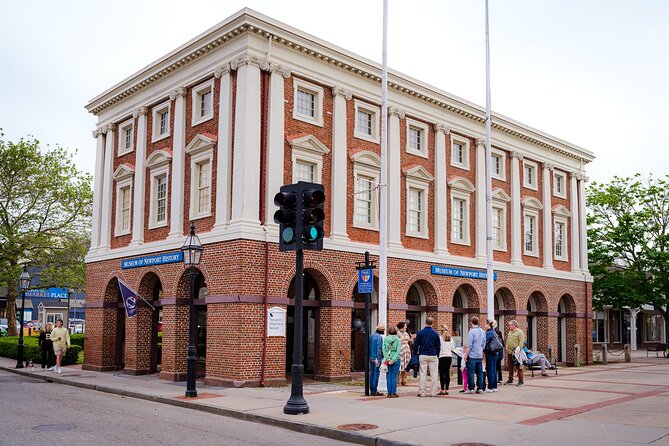
The tour starts at 11:00 a.m. and is offered in English. It uses a mobile ticket, and the group is limited to 18 people. That cap should make it easier to stay with the guide and hear the explanations than on a large coach-style outing, though you will still be outdoors and moving between stops.
The walk is described as about a mile and mostly flat, but the paving can be uneven. Wear comfortable shoes, and plan for standing at each stop. The tour is not recommended for people with mobility or walking difficulties. Service animals are allowed, and the route is near public transportation.
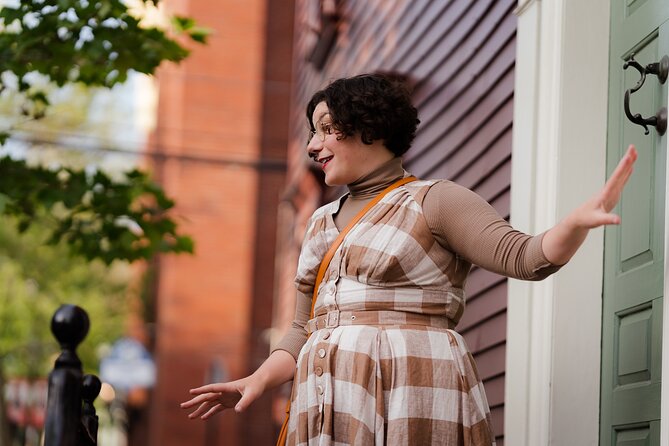
The tour is recommended by 100% of the 14 people who rated it, with an average score of 4.9 out of 5. The strongest praise centers on guides who make the material clear and enjoyable. Patsy Finley is described as a lively guide, while Mike is noted for his enthusiasm as a history teacher and his ability to answer questions beyond Newport. Since the assigned guide may vary, treat those names as examples of the tour’s guiding style, not a promise about who will lead your walk.
Is this Newport walk right for you?
Book this tour if you want a concise, guided introduction to Newport that goes beyond the famous mansions. Its focus on immigrant communities, city services, hotels, architects, and land development gives you a more rounded picture of how the resort city took shape.
It is especially useful for a first visit, but it also suits people who already know Newport and want a fresh thread to follow through familiar streets. Skip it if you need a fully seated activity, want to tour building interiors throughout, or prefer to explore at your own pace. For most history-minded visitors with comfortable shoes, the price, museum admission, and lively local focus make it a practical way to get oriented.
FAQ
How long does the walking tour take?
The tour takes about one hour to one hour and 20 minutes. The listed stops add up to roughly 75 minutes, including the museum check-in.
What time does the tour start?
The start time is 11:00 a.m.
Where does the tour begin?
The details name Old Colony House at Washington Square as the meeting point, while the first stop says to check in at the Museum of Newport History. Confirm the exact start location before you go.
Where does the tour end?
It ends at Touro Park, at 5 Touro Park Street West.
Is Museum of Newport History admission included?
Yes. Museum admission is included, along with a 10% discount on purchases in the museum shop. The museum’s second-floor space is not part of the walking tour, so plan to visit before or after.
Is Newport Art Museum admission included?
No. The tour stops outside the museum at the Griswold House. Admission costs $15 per person.
How much walking is involved?
The route is about a mile and mostly flat, but the roads and sidewalks can be uneven. You should expect to walk and stand for extended periods.
Can I cancel for a refund?
You can cancel at least 24 hours before the start time for a full refund. If poor weather cancels the tour, you will be offered another date or a full refund.
Just added around Newport
- Twilight Cruise: After The Sun Goes Down★ 5.0 · 3 reviews
- Ultimate Newport Self-Guided Audio Tour Bundle: Walk & Drive★ 4.0 · 30 reviews
- Parasailing in Newport, Rhode Island★ 5.0 · 4 reviews
- Road to Independence Walking Tour★ 5.0 · 8 reviews
- Historic Highlights with the Gilded Age Private Van Tour★ 5.0 · 12 reviews
- Art Historian’s Gilded Age Newport: A Self-Guided Driving Tour★ 4.0 · 24 reviews
- Newport Open Air Trolley Tour (Ages 8+ only)★ 5.0 · 24 reviews
- Scenic Tour of Newport, RI By Helicopter – 3 person Mansion Tour★ 5.0 · 18 reviews
Newport Mansion Tours, compared.
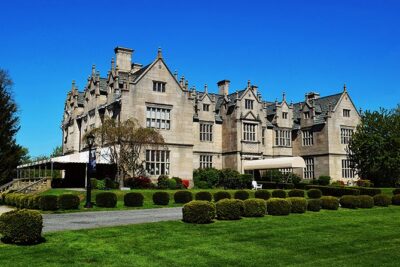
Newport Gilded Age Mansions Trolley Tour with Breakers Admission
Read our review →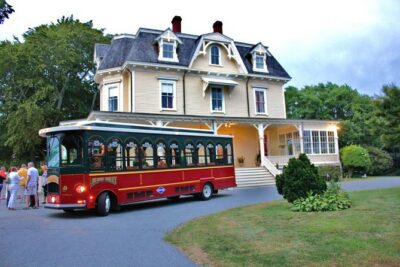
Newport Trolley Tour with Breakers Mansion – Viking Tours
Read our review →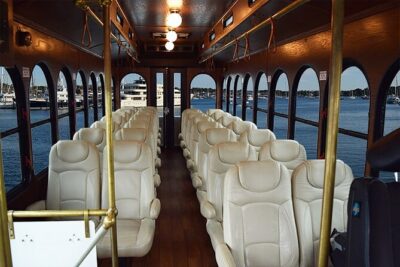
Newport RI Mansions Scenic Trolley Tour (Ages 8+ only)
Read our review →
Boston to Newport Small-Group Day Trip with Breakers & Marble House Admission
Read our review →
Newport Viking Trolley Tour with Breakers & Marble House Admission
Read our review →
3 Hr Newport Mansions Trolley Tour with The Breakers Ticket
Read our review →
Browse the lists this tour appears in