
Reviewed · BOSTON HISTORY TOURS
Best Historic Overview of Salem Walking Tour
Salem’s 1692 witch trials are only one chapter in this city’s story. This 90-minute walk connects them to Salem’s colonial beginnings, its role in the Revolution, and the years when its port made it one of the country’s wealthiest cities.
I like that the tour puts the Witch Trials Memorial and the Witch House in a wider local story, rather than treating Salem as a single, spooky episode. I also like the mix of major stops and small details, from Alexander Graham Bell’s attic laboratory to Harry Houdini testing a jail cell.
One consideration: this is a brisk, one-mile walk with many short stops, and some of the material can feel like a lot of names and dates in a short time. The guide and group’s pace matter, so arrive ready to listen closely and ask questions.
- The tour is about a mile long, with stops across downtown Salem.
- The 1692 trials are part of the story, not the whole story. Expect maritime and Revolutionary-era history, too.
- Old Burying Point Cemetery dates to 1637, and holds the graves of Puritan figures, including judges John Hathorne and Bartholomew Gedney.
- Salem’s port once made it exceptionally wealthy. The tour covers the city’s rise after the Revolution.
- Guides have included Bob, Anna, Amber, and Glenn. Their storytelling style can shape the experience.
- The $30 price covers the guided walk, but not food, drinks, or entry to attractions.
Salem’s story extends beyond the witch trials
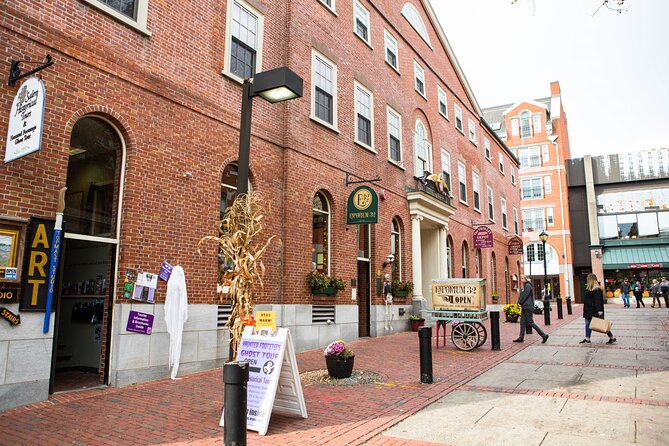
The tour’s most useful promise is right there in its scope: Salem is more than the events of 1692. You’ll hear about the city’s founding in 1626, its part in the American Revolution, and its later success as a maritime port. That broader frame helps make sense of why Salem’s streets hold so many different kinds of history.
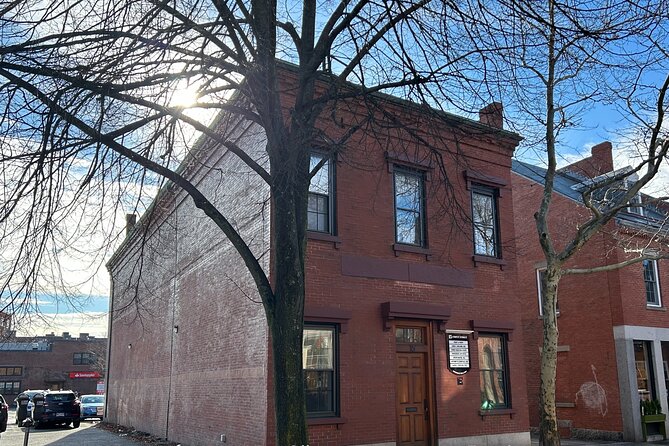
The walk begins at Salem Historical Tours’ office at 8 Central Street. From there, the route covers roughly one mile and takes about 90 minutes. The guide may visit as many locations as possible, so the exact sequence or time spent at a particular stop can vary.
I’d treat this as a first look, not a substitute for every museum or historic house in town. Its value is in linking sites and stories as you move through downtown. You’ll get a map of Salem’s past, then you can choose which parts deserve a longer visit.
The group can have up to 40 people. An amplifier is included so the guide can be heard, an important detail on busy streets. Some people have found that noise, fast speech, or an amplifier not being used made it harder to follow. If you’re having trouble hearing, speak up early rather than hoping the next stop will be quieter.
From meetinghouse to memorial
The opening stops introduce Salem’s early public life and the witch trials. At Red’s Sandwich Shop, the guide points out where local revolutionaries met to discuss a possible war with England. It’s a quick stop, but it gives the Revolution a local setting rather than leaving it as a distant sequence of famous battles.
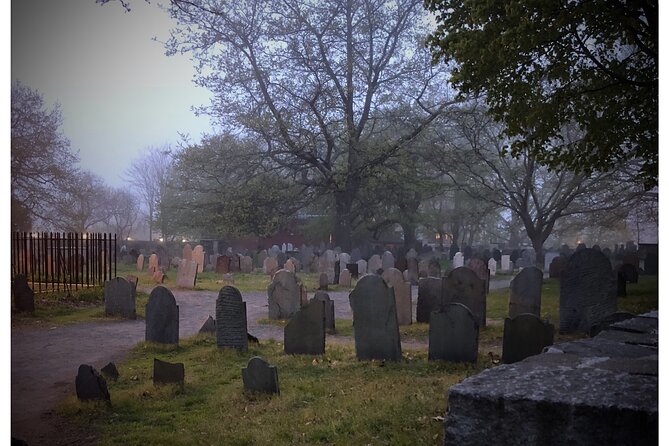
Old Burying Point Cemetery, founded in 1637, offers a more tangible connection to the city’s Puritan period. The graves include judges John Hathorne and Bartholomew Gedney, as well as other Salem figures. The cemetery is old, compact, and full of names that can blur together if you don’t already know the period. I’d listen for the guide’s explanation of who mattered and why, rather than trying to memorize every name.
The Salem Witch Trials Memorial is dedicated to the 20 people executed during the 1692 crisis. Each person has a bench marked with their name, execution date, and method. The memorial’s design carries much of its meaning, so this is a good place to pause and take in the setting instead of expecting a long lecture.
These stops give you a useful contrast: one points toward political resistance, while the other two confront the injustice of the trials and their victims. But the time at each site is short. If the trials are your main reason for coming to Salem, you may want to pair this walk with a visit to a dedicated museum or historic site.
More history tours around Salem:
- History and Hauntings of Salem Guided Walking Tour
★ 5.0 · 14,564 reviews - Wicked Awesome Tours: Witch Trial History and Salem Haunts!
★ 5.0 · 1,032 reviews - 2.5-Hour Salem History & Sightseeing Guided Walking Tour
★ 5.0 · 850 reviews
Bridget Bishop, Bell, and Salem’s many layers
At Lyceum Hall, now home to Turner’s Seafood, the guide connects the site to Bridget Bishop, the first woman executed for witchcraft in 1692. She lived on these grounds. The same location later hosted Alexander Graham Bell’s first public demonstration of the telephone in 1877. That pairing is a neat example of Salem’s habit of putting very different chapters of history on the same block.
The Witch House offers one of the clearest surviving links to the trials. It was built in the 1660s and bought by Judge Jonathan Corwin in 1675. No accused witches lived there, but it is Salem’s last home with direct ties to the 1692 proceedings. The tour discusses the house from outside as a historic stop; admission to the house is not included.
The guide also points out the Salem YMCA site, where Mrs. Brown once had a home. Alexander Graham Bell lived there, taught her grandson, and kept an attic laboratory while traveling to Boston to teach at Boston University. The story makes Bell feel less like a name attached to a patent and more like a person living and working in Salem.
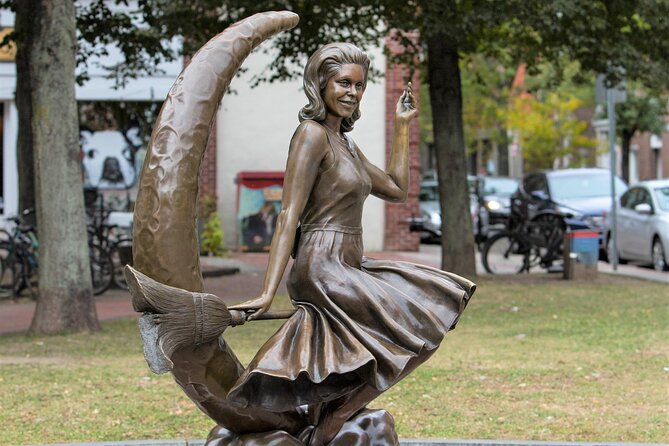
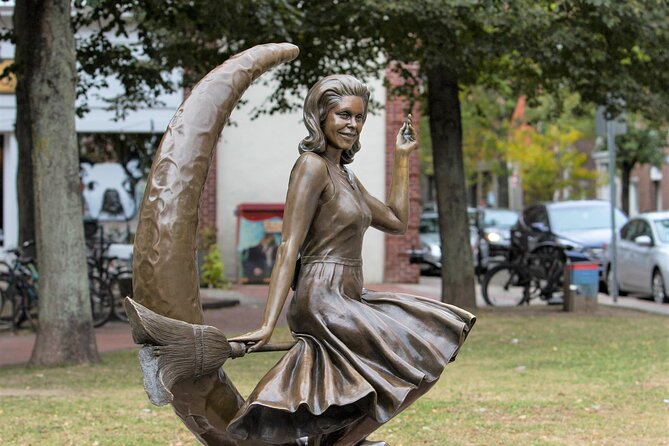
At Lappin Park, the Bewitched statue adds a lighter note. A few episodes of the television show were filmed in Salem, and the statue of Samantha Stevens stands on land once owned by Judge John Hathorne. The contrast is hard to miss: a modern television witch on property linked to a judge associated with the trials. It’s a playful stop, though visitors looking for only serious history may find it less substantial than the cemetery or memorial.
Salem’s port, jail, and Revolution-era politics
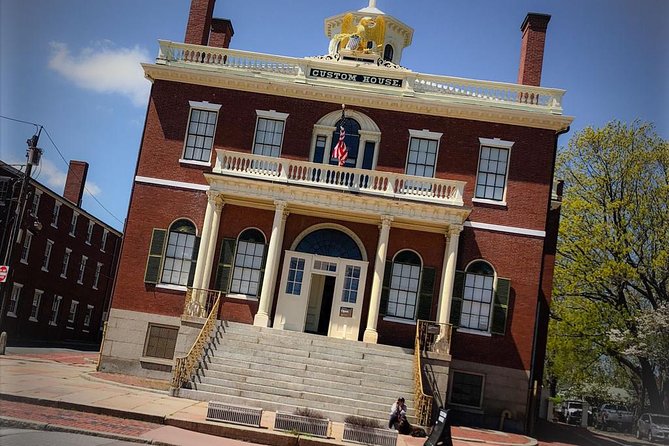
Salem Old Town Hall brings the city’s maritime story into focus. After the Revolution, Salem’s port prospered, and from 1790 to 1812 the city was the richest port in the country. Elias Haskett Derby became America’s first millionaire in 1793. These details help explain how Salem grew into a prosperous trading city, not just a colonial settlement.
The Old Town Hall stop also touches popular culture and local lore. Portions of Hocus Pocus were filmed at the site. Across the street, Harry Houdini was placed in a new jail cell at the request of the police chief, who wanted to see if he could escape. He wasn’t under arrest. The story is brief, but it gives the tour a bit of theatrical mischief between heavier topics.
At The Merchant, the guide brings up George Corwin, high sheriff during the 1692 trials, who lived on the site. The hotel also has a Washington Room, named for George Washington, who visited Salem and stayed there. Nearby, Amelia Earhart taught English at the Salem Commercial School. This is one of the tour’s more crowded stretches of history. You may hear several names in quick succession, so ask the guide to connect the dots if the stories start to run together.
Rockafellas occupies a site with layers of religious and political history. The location held the second and fourth sites of Salem’s first church, as well as the Town House Square building. A local congress of representatives met there before moving on to meetings in Ipswich and Concord, then eventually to the Continental Congress in Philadelphia. The claim that Massachusetts was effectively declared a state on these grounds gives the stop a larger political frame.
The route ends its Revolutionary story near Wesley United Methodist Church, where Leslie’s Retreat took place at the North Bridge. About 140 redcoats, led by Colonel Leslie, tried to cross the river to seize weapons and cannons. Colonists raised the drawbridge, and the British left without taking them. No shots were fired, but the clash came two months before Lexington and Concord. It’s a useful reminder that resistance to British rule was already unfolding in Salem.
What the pace and guiding style mean for you
At $30 per person, the tour is a fair buy if you want a guided introduction rather than a ticket into an attraction. You’re paying for about 90 minutes of local context, storytelling, and help connecting places that can otherwise seem like a collection of old buildings. There’s no food or drink included, and admission to The Merchant is not included.
The strongest part of the experience is the guide’s ability to make the stops feel connected. Bob, Anna, Amber, Glenn, and Stosha are among the guides named in accounts of the tour. Their styles differ, but positive descriptions often focus on lively storytelling, humor, and small details that aren’t obvious from simply walking past a site. One guide, for example, was praised for tying Salem’s history together, while another gave the group options about what to see.
That personal delivery is also the tour’s main variable. Some people have found the guide fast, difficult to hear, or less engaging than expected. Others have felt that the walk assumed too much background knowledge, or that the route gave less attention to the witch trials than they wanted. The tour covers a broad range of subjects, so it can feel disjointed if you’re expecting a single, detailed account of 1692.
The advertised amplifier should help, but it may not solve every problem in crowded or noisy areas. Stay near the guide, and ask for clarification when a name or date goes by too quickly. That small bit of participation can make a broad overview easier to follow.
More walking tours around Salem:
- Salem Voodoo, Vampires, and Ghosts Guided Walking Tour
★ 5.0 · 1,931 reviews - Bewitched Walking Tour of Salem
★ 5.0 · 1,895 reviews - Satanic Salem Walking Tour
★ 5.0 · 1,635 reviews - Mysteries and Murders of Salem Guided Night-Time Walking Tour
★ 5.0 · 1,488 reviews
Timing, parking, and walking comfort
The tour departs at 12 pm. Check in 15 to 20 minutes beforehand at the Salem Historical Tours office at 8 Central Street. It returns to downtown Salem, and the guide can help point you toward your next stop.
Parking is available in garages on New Liberty, Bridge, and Congress Streets, and in lots on Church Street, Front Street, and Klopp Alley. Metered parking is nearby, with payment through the Passport smartphone app. Bus parking is available on New Derby Street and Hawthorne Boulevard. Driving can be difficult, especially in October, when traffic and parking become much worse. If you’re visiting during that period, allow extra time and consider parking before you reach the busiest streets.
Wear comfortable shoes. The route is about a mile, but Salem’s historic sidewalks can be narrow and uneven, with bricks, cobblestones, and stairs. Events and festivals can add crowds and street vendors, making it harder to move through the area. The tour may not suit you if walking that distance within 90 minutes is difficult.
The experience is offered in English, and service animals are allowed. Most people can take part, but the route’s historic surfaces and walking pace are worth considering before booking.
Should you book this Salem walking tour?
Book it if you want a compact introduction to Salem that reaches beyond the witch trials. It’s especially useful on a first visit, or when you have limited time and want a guide to connect the cemetery, memorial, maritime sites, and Revolutionary history.
Skip it if you want a slow, deeply focused account of the 1692 trials, or if uneven sidewalks and a mile of walking are a problem. At $30, the best value comes from treating this as a starting point: listen for the stories that catch your interest, then spend the rest of your day exploring those subjects further.
FAQ
How long is the Salem historic walking tour?
It lasts about 90 minutes and covers roughly one mile, with frequent stops for sites and explanations.
Where does the tour start?
It starts at 8 Central Street, Salem, Massachusetts. Check in at the Salem Historical Tours office 15 to 20 minutes before the 12 pm departure.
Where does the tour end?
It returns to the downtown Salem area. The guide can help direct you to where you want to go next.
Is admission to the Witch House included?
No. The tour discusses the Witch House, but admission to attractions is not included.
Is food or drink included?
No food or drink is provided. Snacks are available for purchase.
What is the cancellation policy?
You can cancel for a full refund at least 24 hours before the tour’s start time. Cancellations or changes made within 24 hours are not accepted for a refund.
Just added around Salem
- [ESP] History of Salem Witch Trials★ 4.0 · 5 reviews
- Vampire Ghost Adventures and Haunted Objects Walking Tour★ 4.5 · 34 reviews
- Wandering Witches★ 4.5 · 33 reviews
- Tales of Salem Candyland Tour★ 4.0 · 8 reviews
- Private Walking Salem Legends Tour Professional Guide★ 5.0 · 3 reviews
- Spooky Ramen Tours★ 5.0 · 5 reviews
- A Ghost Hunting Tour Specters and Apparitions in Salem★ 5.0 · 30 reviews
- Experience Authentic Salem Séance with Entry Pass★ 3.5 · 13 reviews
Boston History Tours, compared.
History and Hauntings of Salem Guided Walking Tour
Read our review →
Freedom Trail History Small Group Walking Tour
Read our review →
Tour of Historic Fenway Park, America’s Most Beloved Ballpark
Read our review →
The Full Revolutionary Story Epic Small Group Boston Walking Tour
Read our review →
Boston Food & History: Pizza, North End & Freedom Trail
Read our review →
Boston’s Freedom Trail: A Revolutionary Walking Tour
Read our review →
City Cruises Boston Historic Sightseeing Harbor Cruise
Read our review →Browse the lists this tour appears in