
Reviewed · BOSTON HISTORY TOURS
Secrets of Salem Hidden Dark History Tour
Salem’s witch trials are the starting point, not the whole story. On this two-hour walking tour, you move from the 1692 court cases to old civic buildings, a Loyalist’s troubled story, Nathaniel Hawthorne, and a cemetery tied to Salem’s early years. Ghost tales add atmosphere, but the route also asks why fear and local rivalry helped shape events.
I like two things about this route: it links familiar witch-trial landmarks to the town’s broader past, and its small-group limit of 20 gives a guide room to keep the walk personal. Guides Mason, Danielle, Sam, and John have been praised for lively storytelling, local ties, and useful historical detail.
One consideration: this is a walking tour, not a shuttle between attractions. It lasts about two hours, includes no transportation, and calls for a moderate fitness level. If you want museum entry or indoor access at each stop, check what is included before booking.
- The witch trials are placed in context: Hear about Judge Jonathan Corwin, Sheriff George Corwin, and the rivalry between Salem Town and Salem Village.
- Salem’s past reaches beyond 1692: Stops include an 1816 municipal building, the Salem Athenaeum, and a house tied to British Loyalist Nathaniel Ropes.
- Ghost stories come with historical landmarks: The route includes a cemetery dating to 1637 and a tale of Judge Corwin’s reported ghost.
- The group is capped at 20: That can make it easier to hear the guide and ask questions along the way.
- Guides bring different strengths: Mason is noted for hometown stories, while Danielle, Sam, and John have also led engaging, history-focused walks.
- The walk ends at the Hawthorne Hotel: The historic hotel is a convenient final landmark, not the starting point.
The witch trials are only the beginning
The Salem witch trials can swallow a visit to this Massachusetts town. This walk makes a useful case for looking wider: it uses the trials as a thread, then follows it into Salem’s civic life, old rivalries, local architecture, and literary past. The result is a more rounded introduction than a route devoted only to accusations and executions.
The tour’s tone appears to balance documented history with eerie stories. You’ll hear about miscarriages of justice and the people who shaped the trials, but also about ghost sightings and later scandals. That mix suits Salem, where the city’s history is both serious and often packaged for spooky fun.
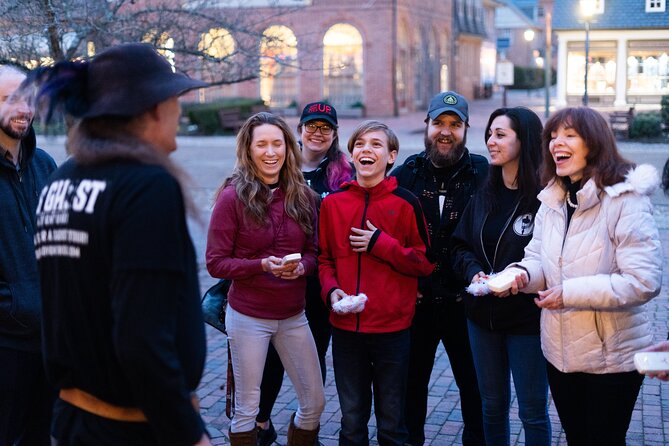
The best guides make the distinction clear. Mason, Danielle, Sam, and John are among the guides named in recent feedback. Comments describe Mason as a local who adds personal touches, Danielle as charismatic, and John as lively and good at sharing historical details. Those are useful signs for a tour where the guide’s storytelling matters as much as the addresses.
From an 1816 municipal building to the 1692 museum
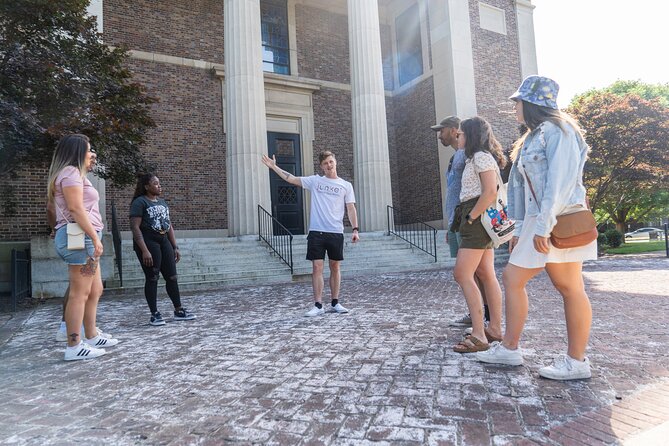
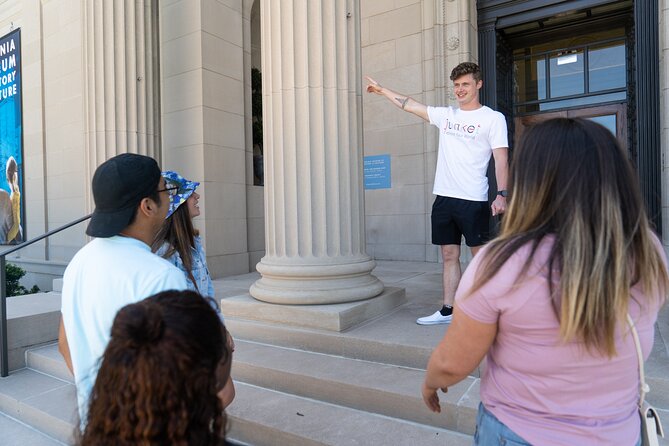
The walk begins at 210 Essex Street and includes Salem’s oldest original municipal building, constructed in 1816. It is now available to rent for functions, but its earlier role gives the tour a chance to discuss the town’s first years and how Salem developed as a community.
The next stop is a museum offering an overview of the 1692 witch trials. The tour frames those events as an example of mass hysteria in American history, with attention to the facts behind the familiar story. That context matters: it helps you separate the actual court proceedings and people involved from the legends that have accumulated around them.
The itinerary does not specify whether admission to the museum is included, or how much time the group spends indoors. If you are hoping for a full museum visit, ask before booking. The tour is only about two hours, so think of this stop as part of a guided introduction rather than a long, self-paced museum session.
More history tours around Salem:
- History and Hauntings of Salem Guided Walking Tour
★ 5.0 · 14,564 reviews - Wicked Awesome Tours: Witch Trial History and Salem Haunts!
★ 5.0 · 1,032 reviews - 2.5-Hour Salem History & Sightseeing Guided Walking Tour
★ 5.0 · 850 reviews
The Corwin family and Salem’s machinery of justice
One of the route’s most significant sites is the house where Judge Jonathan Corwin lived. Dating to the period of the witch trials, it is identified as the only house still standing in Salem with a direct connection to them. The guide uses the home to explore Corwin’s role as a judge and the injustices committed during the proceedings.
That is a valuable change of focus. The trials are often told as a story of frightened accusers and accused people, but they also involved officials who held power over those accused. A stop connected to a judge gives the guide a physical place from which to discuss how authority, fear, and legal process collided.
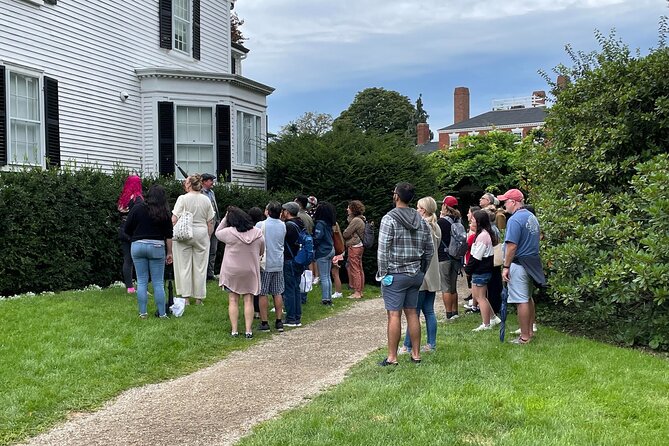
Another stop is a house built about a century after Salem’s founding, roughly 30 years after the trials. It later belonged to local judge Nathaniel Ropes, a committed British Loyalist who faced hostility from his fellow townspeople near the end of his life. His story shifts the tour from witchcraft to political division and local backlash.
That contrast is one of the route’s strengths. Salem’s darker history did not end when the witch trials ended. The Ropes story shows how conflicts over loyalty and politics could also put a person at odds with the community around him.
Salem’s literary side and a sheriff’s reputation
The Salem Athenaeum adds a quieter chapter. It was formed from the libraries of two separate societies, and Nathaniel Hawthorne, author of The Scarlet Letter, served as its head for a time in the 1800s. Hawthorne’s connection gives the walk a literary stop that feels particularly apt in a town whose past later became material for writers.
The route also visits land once owned by George Corwin, nephew of Judge Jonathan Corwin. George served as sheriff of Salem during the witch trials and was described as especially cruel toward people accused or convicted of witchcraft. The family connection makes the history feel close at hand: the judge and sheriff were relatives, and both held positions at the center of the trials.
These stops help explain why the tour can suit people who already know the basic witch-trial story. Instead of repeating only the broad outline, it points to individuals and places that add texture. Guides are also noted for including architectural history and lesser-known details, so you may get more than a sequence of ghost stories.
A 1637 cemetery and Salem’s ghost lore
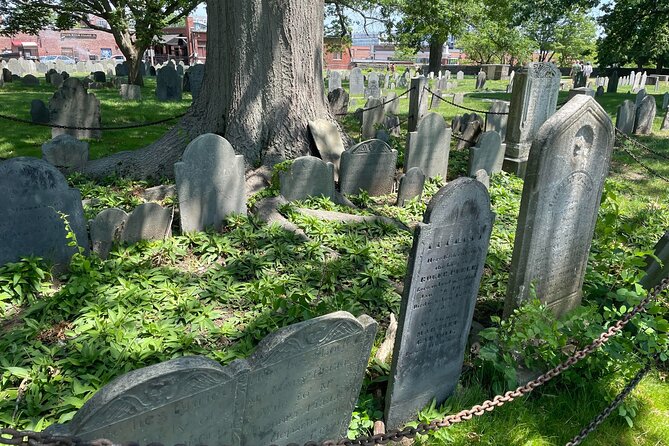
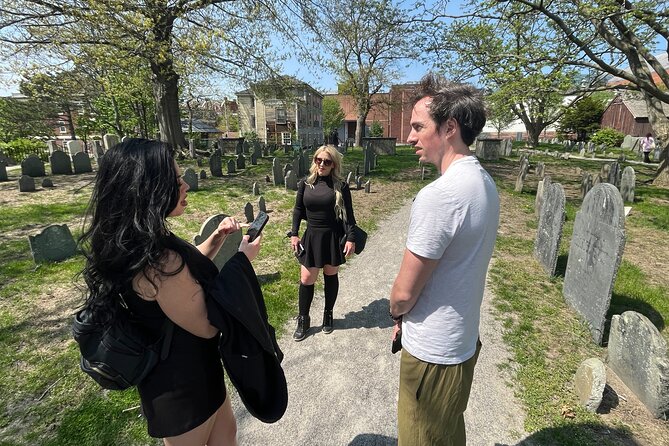
The cemetery on the route dates to 1637, making it one of the oldest in the United States. The tour connects it with people linked to the witch-trial era, including Giles Corey’s second wife and Judge Corwin, and recounts reports of Corwin’s ghost among the graves.
Here, the historical and supernatural strands sit side by side. You can listen to the ghost story as local lore while keeping in mind the very real people and legal events that give the site its weight. The cemetery stop is not simply a spooky backdrop; it ties the route back to Salem’s early community and the people caught up in its history.
The tour also includes a house built more than a century after the trials, with no direct connection to them. Its appeal is a later scandal and secrets of its own. That is a reminder that the walk is not strictly a witch-trial tour. Some stops widen the frame, while others offer a change of pace from the familiar 1692 story.
Same city, a different kind of day:
- Salem’s Best Ghost Tour
★ 4.5 · 4,186 reviews - Salem Voodoo, Vampires, and Ghosts Guided Walking Tour
★ 5.0 · 1,931 reviews - Bewitched Walking Tour of Salem
★ 5.0 · 1,895 reviews - Satanic Salem Walking Tour
★ 5.0 · 1,635 reviews
The Town and Village rivalry behind the fear
A central question of the walk is how the rivalry between Salem Town and Salem Village may have helped create the conditions for the hysteria. That division gives the trials a local setting: disputes and social tensions did not unfold in an abstract place, but among neighboring communities with competing interests.
The tour presents the rivalry as a possible foundation for the events, not as a single explanation for them. That kind of framing is useful. The witch trials were a complicated series of events, and a short walk cannot cover every cause, but it can give you a clearer sense of the pressures surrounding the accusations.
Expect the guide to connect individual sites to the larger story rather than treat each building as an isolated photo stop. The walk’s appeal is that it joins people, places, and conflict. If you like history told outdoors, with room for questions and a few unsettling tales, this format should work well.
Finishing at the Hawthorne Hotel
The tour ends at the Hawthorne Hotel, at 18 Washington Square West. Named for Nathaniel Hawthorne, the hotel also has a pop-culture footnote: an episode of the television series Bewitched was filmed there in the 1970s.
It is a tidy ending for a route that has moved between Salem’s early history, the witch trials, literature, and modern popular culture. The hotel is the endpoint, so plan your onward walk from there rather than expecting the guide to return you to the Essex Street meeting point.
The route is described as an easy walk by one participant, though another points out that there is quite a bit of walking. Both can be true: the pace may be manageable, but you will be on your feet for much of the two hours. Wear comfortable shoes and consider your own stamina, especially if you have other walking plans that day.
What $32 buys you, and who should book
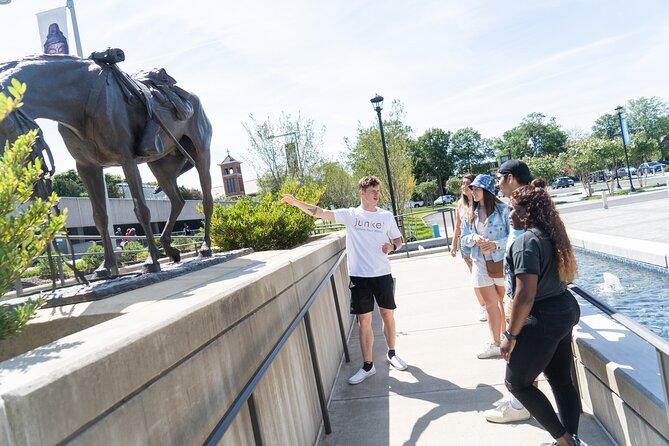
At $32 per person, the main value is a guided overview of Salem’s central historical themes in a compact two-hour route. You get a professional guide, a group capped at 20, and stops that bring together witch-trial history, architecture, local politics, literature, and ghost lore. For a first visit, that structure can help you decide which sites deserve a longer return visit.
The price does not include transportation, and the details do not state that admission to any indoor attraction is included. Think of this as a walking introduction, not a package with transport or extended museum visits. If you want to explore a particular museum at length, leave time and budget for that separately.
It is a good fit for couples, friends, and families who want a guided history walk with a little atmosphere. The group can span a range of ages, and the guide’s storytelling appears to be a major part of the experience. If you prefer a strictly academic account with no ghost stories, this may not be your ideal format. If you want Salem’s darker tales alongside its documented past, the balance is likely to appeal.
The tour is offered in English, uses a mobile ticket, allows service animals, and is near public transportation. Confirmation is provided within 48 hours of booking, subject to availability. It is commonly booked about 29 days ahead on average, so make plans early if your schedule is fixed, especially during a busy Salem visit.
You can cancel for a full refund up to 24 hours before the start time. Cancellations or changes made less than 24 hours before the tour are not accepted for a refund.
Should you book the Secrets of Salem Hidden Dark History Tour?
Book it if you want a compact, guided introduction that treats the witch trials as part of Salem’s wider story. The Corwin homes, cemetery, Town and Village rivalry, Athenaeum, and Hawthorne Hotel give the walk a stronger range than a route focused only on spooky anecdotes.
Skip it if you want transportation, a long indoor museum visit, or a tour devoted exclusively to the 1692 trials. At $32, the value is strongest for visitors who enjoy walking, want a guide to connect the landmarks, and are happy to hear both documented history and ghost lore.
FAQ
How long is the tour?
The tour lasts approximately two hours.
How much does it cost?
The listed price is $32 per person.
Where does the tour start?
It starts at 210 Essex Street, Salem, Massachusetts 01970.
Where does the tour end?
It ends at the historic Hawthorne Hotel, 18 Washington Square West, Salem.
Is transportation included?
No. Transportation is not included.
What language is the tour offered in?
The tour is offered in English.
How large can the group be?
The maximum group size is 20 people.
Are service animals allowed?
Yes, service animals are allowed.
What is the cancellation policy?
You can cancel up to 24 hours before the start time for a full refund. Cancellations or changes made less than 24 hours before the experience are not accepted for a refund.
Just added around Salem
- [ESP] History of Salem Witch Trials★ 4.0 · 5 reviews
- Vampire Ghost Adventures and Haunted Objects Walking Tour★ 4.5 · 34 reviews
- Wandering Witches★ 4.5 · 33 reviews
- Tales of Salem Candyland Tour★ 4.0 · 8 reviews
- Private Walking Salem Legends Tour Professional Guide★ 5.0 · 3 reviews
- Spooky Ramen Tours★ 5.0 · 5 reviews
- A Ghost Hunting Tour Specters and Apparitions in Salem★ 5.0 · 30 reviews
- Experience Authentic Salem Séance with Entry Pass★ 3.5 · 13 reviews
Boston History Tours, compared.
History and Hauntings of Salem Guided Walking Tour
Read our review →
Freedom Trail History Small Group Walking Tour
Read our review →
Tour of Historic Fenway Park, America’s Most Beloved Ballpark
Read our review →
The Full Revolutionary Story Epic Small Group Boston Walking Tour
Read our review →
Boston Food & History: Pizza, North End & Freedom Trail
Read our review →
Boston’s Freedom Trail: A Revolutionary Walking Tour
Read our review →
City Cruises Boston Historic Sightseeing Harbor Cruise
Read our review →Browse the lists this tour appears in