
Reviewed · BOSTON HISTORY TOURS
Boston: Votes for Women History Tour of Back Bay
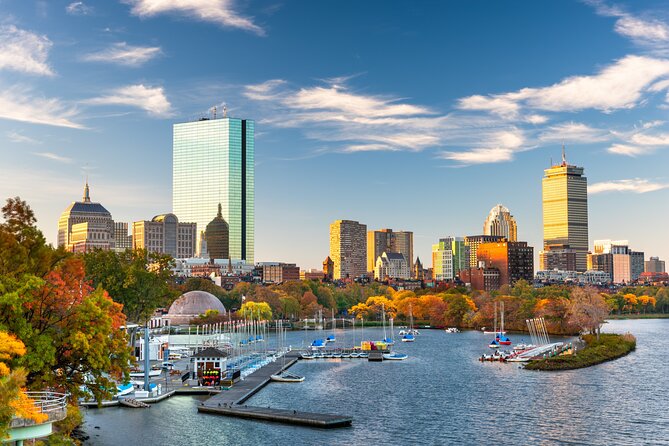
The Back Bay’s handsome streets hold more than grand houses and polished storefronts. On this 2.5-hour walk, you follow the people and places behind Boston’s women’s suffrage movement, including the homes of campaigners on both sides of the debate and former offices of organizations that fought over the vote.
I like two things about this route: it ties national history to real Boston addresses, and its small-group limit of 15 gives you a better chance to ask questions. One consideration: this is a walking tour with periods of standing, so it may not suit you if remaining on your feet for a while is difficult.
Key points to know before you go
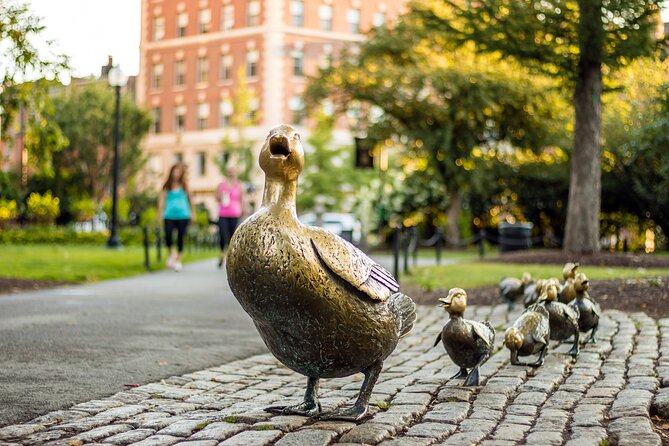
- Starts beside Make Way for Ducklings: Meet at Nancy Schön’s sculpture at 4 Charles Street, near the Boston Public Garden.
- Ends at the Boston Women’s Memorial: The finish is on Commonwealth Avenue Mall, about 0.8 miles from the starting point.
- Includes opposing sides of the suffrage fight: Stops connect pro-suffrage figures such as Pauline A. Shaw and Blanche Ames with anti-suffragists including Elizabeth Putnam and Mary Shreve Ames.
- Small group, focused subject: The maximum group size is 15, and the tour is offered in English.
- Most stops are outdoors: Museum admission is not included, and the tour does not include guides in period costume.
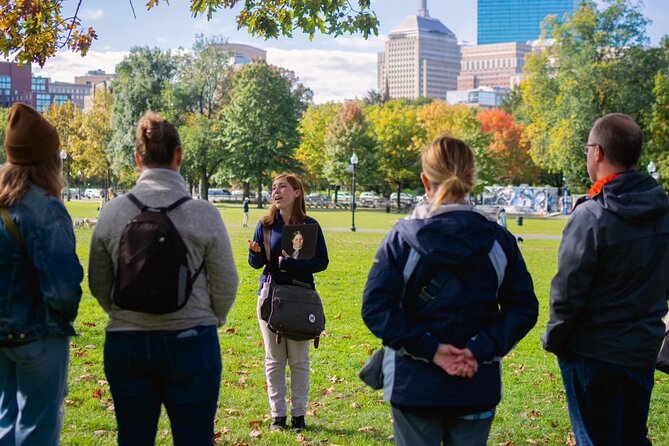
- Plan for a steady walk: The tour lasts about 2.5 hours and is not recommended if you have trouble standing for extended periods.
A walk through Boston’s suffrage story
This tour makes a useful companion to Boston’s better-known Revolutionary-era sights. Instead of focusing on battles and founding documents, it traces the work of women who organized, argued, funded campaigns, and tried to persuade the public that women should have a say in government.
The route puts that story into the city itself. A former home or office can look like an ordinary stop on a stroll until a guide explains who lived or worked there, and what they were trying to change. That setting is the tour’s main strength: the history is not confined to a museum display.
The story is not presented as a simple line from opposition to victory. You encounter suffragists and anti-suffragists, including women who held public roles while disagreeing about whether women should gain the vote. That contrast gives the walk texture and helps explain why social and political change can be contested even among people with many experiences in common.
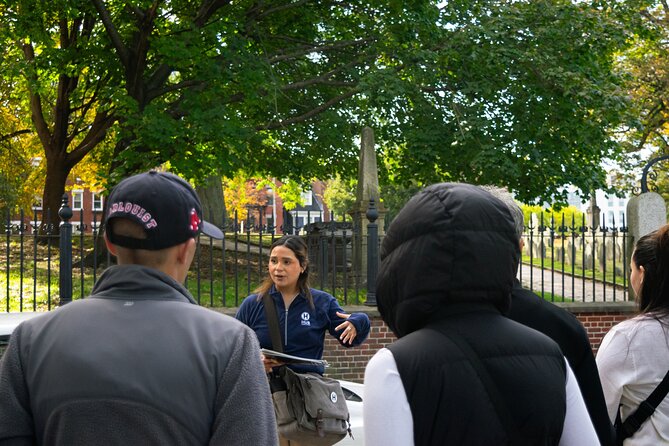
A guest praised guide Maura for telling the stories with energy and for welcoming questions. If Maura leads your walk, expect a guide who can make the subject feel personal and encourage you to keep reading afterward. Guide assignments can vary, so it is best not to assume she will lead on your chosen date.
More history tours around Boston:
- Boston: Freedom Trail History Small Group Walking Tour
★ 5.0 · 6,450 reviews - Tour of Historic Fenway Park, America’s Most Beloved Ballpark
★ 4.5 · 3,013 reviews - The Full Revolutionary Story Epic Small Group Boston Walking Tour
★ 5.0 · 2,356 reviews
From the Public Garden to women’s homes
The meeting point is the Make Way for Ducklings sculpture by Nancy Schön, based on Robert McCloskey’s classic picture book. It is an easy landmark to recognize, and it gives the tour a light, familiar start before the subject turns to political struggle.
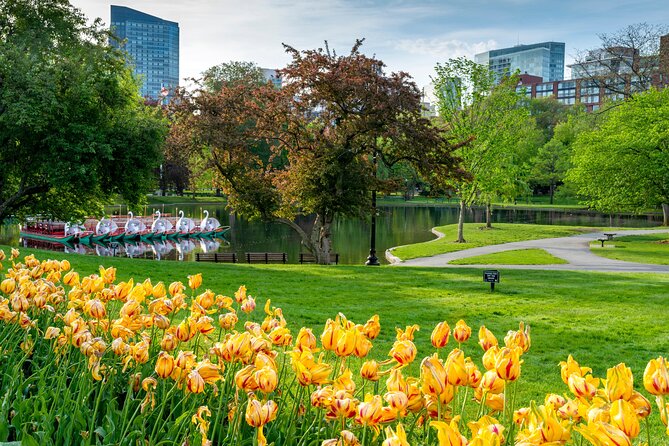
The first named stop is the Boston Public Garden, established in 1837 as the first public botanical garden in the United States. You spend about 10 minutes here. The garden’s formal, public character offers a fitting opening for a tour about who could take part in civic life, though the stop is brief rather than a full garden visit.
A statue of George Washington by Thomas Ball, commissioned in 1859, is also part of the early route. Its presence helps set the scene in a city full of public monuments and celebrated political figures. The tour’s attention then shifts to women whose names are less likely to appear on the usual sightseeing checklist.
At 6 Marlborough Street, you learn about Pauline A. Shaw, who financed Boston’s suffrage movement and founded the Boston Equal Suffrage Association for Good Government. This stop makes a practical point: movements need more than speeches. Funding, organization, and sustained local work matter too.
The walk also passes a church established in 1630 that later became a center of the Transcendentalist movement. The supplied route details do not name the church, so you may want to ask your guide for its name and how its religious and intellectual history connects to the suffrage story.
Several homes bring the debate into private life. Elizabeth Putnam, an anti-suffragist, was the first woman to preside over a state electoral college. Julia Ward Howe and Blanche Ames are also part of the route. Ames supported suffrage, drew pro-suffrage cartoons, and advocated early for birth control.
The tour includes the Ames family’s political legacy, which involved both Blanche Ames and Mary Shreve Ames, president of the Massachusetts Anti-Suffrage Association. This is one of the walk’s most useful contrasts. It shows that a family’s influence did not necessarily mean agreement, and that women who engaged in public life could take opposing positions on voting rights.
Mary Shreve Ames’s home is another stop. Rather than treating opposition as a footnote, the route gives it a place in the story. That approach helps you understand the argument as a real political conflict, not simply a list of people who were right and people who were wrong.
Clubs, institutions, and the campaign’s public face
The College Club of Boston was the first women’s college club in the United States. You spend about 10 minutes here. It adds an institutional angle to a route otherwise rich in homes and street addresses, pointing to the networks women built around education and public life.
The former Museum of Natural History building, now RH Boston | The Gallery, is another 10-minute stop. The museum was housed there from 1864 to 1951. You do not get museum admission as part of the tour, so think of this as an exterior history stop rather than time set aside to explore an exhibit.
The route also passes the former location of an MIT lab, where Katherine McCormick protested popular fashion as part of the suffrage movement. The detail is striking because it connects politics to everyday expectations about how women should look and behave. Ask your guide for more context if you want to understand how the protest fit into the wider campaign.
Another building, constructed in 1877, was considered by members of the American Association of Architects to be among the country’s top 10 buildings. Architecture is not the tour’s central topic, but this stop adds a reminder that the campaign unfolded amid buildings designed to make Boston a cultural showpiece.
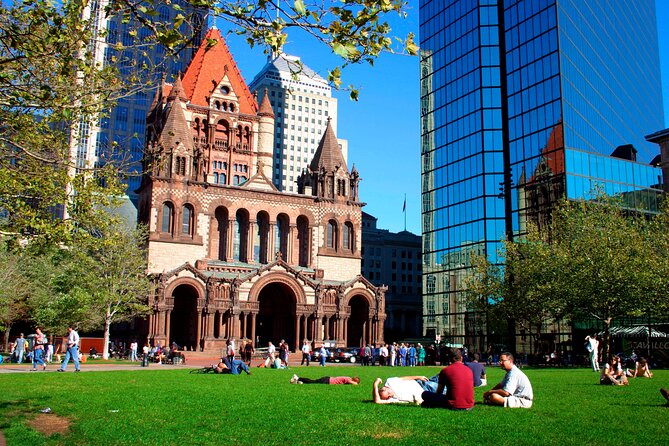
Copley Square, built as a cultural center for Boston, receives about 10 minutes. It is one of the tour’s clearest public spaces, where the scale and civic purpose of Back Bay are easy to read. The square helps connect individual stories to the city’s broader institutions.
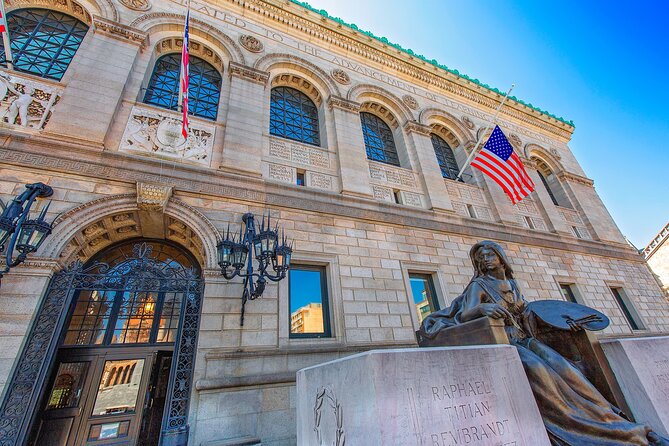
The Boston Public Library is another 10-minute stop. Founded in 1848, it is now the third-largest public library in the United States. The route also points out that the building once known as Chauncy Hall housed offices for pro-suffrage groups, including the Massachusetts Woman Suffrage Association and The Women’s Journal.
That sequence is especially valuable if you like history with an address attached. Instead of hearing only about public figures, you see where organizations operated and where their work reached the city’s everyday life. The library stop is brief, however, and entry is not included as a tour activity.
The route’s arguments, from office buildings to public meetings
Not every stop is a grand landmark. The location of the demolished Kensington Building, which housed the Massachusetts Association Opposed to Further Extension of Suffrage to Women, is a reminder that the campaign had organized opposition as well as organized support. Since the building was demolished in 1967, this is a history of a place that is no longer visible in its original form.
The walk also passes a former Spiritualist Temple, where women were allowed to lead public meetings. This is a useful detail because it shows how different settings could open space for women to speak publicly. The tour’s wider story is not only about the ballot, but also about the routes women found into public discussion.
You also pass the finish line of the Boston Marathon and a popular shopping street lined with dining, shops, and luxury brands. These stops connect the political history to familiar modern Boston landmarks. They are less central to the suffrage story than the homes and campaign offices, but they help orient you as the walk moves through Back Bay.
The itinerary includes the Commonwealth Avenue Mall, a long avenue with trees, grassy areas, benches, and statues. It offers a greener stretch toward the end of the tour, though the overall experience remains a guided city walk rather than a leisurely park outing.
More tours and days out around Boston:
- Boston Duck Boat Sightseeing City Tour with Cruise Along Charles River
★ 4.5 · 9,378 reviews - Boston Hop-On Hop-Off Trolley Tour with 13 Stops
★ 4.5 · 5,576 reviews - Boston: City Cruises Whale Watching Cruise
★ 4.5 · 4,710 reviews - Boston Duck Tour: The Original and World-Famous
★ 4.6 · 3,935 reviews
Finishing at the Boston Women’s Memorial
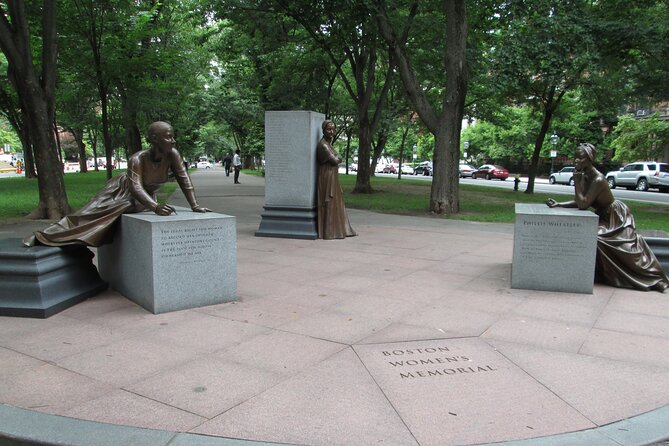
The tour ends at the Boston Women’s Memorial on Commonwealth Avenue Mall. The memorial depicts Abigail Adams, Phillis Wheatley, and Lucy Stone, three women whose lives and work help broaden the story beyond the suffrage campaign alone.
You spend about 10 minutes at the memorial. It makes a fitting close because the walk moves from homes, offices, and meeting places to a public tribute that names women’s contributions in the city. The end point is about 0.8 miles from the start, but that figure describes the distance between the two locations, not necessarily the full amount you will walk along the route.
The finish also leaves you in a useful part of Back Bay. The memorial is a short walk from the Fenway neighborhood to the west and Downtown Boston to the east, so you can continue exploring after the tour without needing to return to the starting point.
What $35 gets you, and what it does not
At $35 per person, you are paying for a 2.5-hour guided walk, a specialist subject, and a group capped at 15. That works out to about $14 per hour, before considering the value of having someone connect scattered addresses into a coherent story. If you are interested in women’s history, the guide’s interpretation is the main reason to book.
The tour does not include admission inside museums, and it does not use guides in period costume. That keeps the experience focused on the streets and the historical sites rather than on theatrical presentation. If you want time inside the Boston Public Library or another institution, plan that separately.
The strongest case for the price is the subject matter. Boston’s role in women’s suffrage can be easy to miss if you focus only on the Freedom Trail. This walk gives you a different frame for familiar streets, and it includes both campaign supporters and opponents rather than reducing the story to a handful of famous names.
The main limitation is the pace and format. Two and a half hours is a substantial stretch on foot, with stops that involve standing. You should have a moderate level of physical fitness, and the activity is not recommended if standing for extended periods is difficult.
The tour is in English, and service animals are allowed. It runs at 10:00 a.m. The activity requires good weather and a minimum number of participants. If it is canceled for bad weather or because the minimum is not met, you are offered another date or a full refund. You can cancel for a full refund up to 24 hours before the start time; cancellations or changes made later are not accepted.
Who should take the Back Bay suffrage walk?
I would choose this tour if you have already seen some of Boston’s major sights and want a more focused story, or if women’s political history is a reason you came to the city. It also suits curious visitors who like learning how ordinary-looking buildings connect to public campaigns.
Younger people may find the mix of homes, organizations, and political disagreement a good way to make the subject concrete. The walk’s small group size helps if you like asking questions, and the guide can give more context than a plaque usually can.
I would skip it if you want a museum visit, a costume-led performance, or a short, easy stroll with little standing. It is a walking history tour, not an indoor attraction, and its value depends on your interest in the topic.
Book it if you want Boston beyond the familiar Revolutionary story. For $35, you get a compact, thoughtfully focused look at suffrage through the people and places of Back Bay. If you are curious about who financed the movement, who opposed it, and where the campaign took shape, this is a practical way to spend a morning.
FAQ
How long is the tour?
It lasts approximately 2 hours and 30 minutes.
What time does the tour start?
The start time is 10:00 a.m.
Where does the tour begin and end?
It begins at the Make Way for Ducklings sculpture, 4 Charles Street, and ends at the Boston Women’s Memorial, 256 Commonwealth Avenue. The two points are about 0.8 miles apart.
How much does the tour cost?
The listed price is $35 per person.
What is the maximum group size?
The tour has a maximum of 15 participants.
Is museum admission included?
No. Admission inside museums is not included.
Can I cancel for a refund?
You can cancel at least 24 hours before the start time for a full refund. If the tour is canceled due to poor weather or because the minimum number of participants is not met, you are offered a different date or a full refund.
Just added around Boston
- Boston’s Freedom Trail: A Self-Guided Tour of All 16 Sites★ 5.0 · 14 reviews
- Boston’s Freedom Trail: A Self-Guided Audio Tour★ 4.0 · 18 reviews
- Private Walking tour of Boston’s Freedom Trail and more!★ 5.0 · 29 reviews
- Boston Self-Guided Audio Tour Bundle: Freedom Trail & More★ 4.5 · 5 reviews
- Tour-in-Four — A Private four hour walking & driving city tour★ 5.0 · 32 reviews
- Washington D.C. Cherry Blossom,Baltimore 3-Day Tour from Boston★ 4.5 · 7 reviews
- True Crime Tour of Boston★ 4.0 · 17 reviews
- Freedom Trail Experience★ 5.0 · 8 reviews
Boston History Tours, compared.
History and Hauntings of Salem Guided Walking Tour
Read our review →
Freedom Trail History Small Group Walking Tour
Read our review →
Tour of Historic Fenway Park, America’s Most Beloved Ballpark
Read our review →
The Full Revolutionary Story Epic Small Group Boston Walking Tour
Read our review →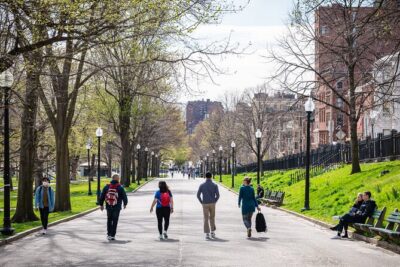
Boston Food & History: Pizza, North End & Freedom Trail
Read our review →
Boston’s Freedom Trail: A Revolutionary Walking Tour
Read our review →
City Cruises Boston Historic Sightseeing Harbor Cruise
Read our review →Browse the lists this tour appears in