

Reviewed · BOSTON HISTORY TOURS
Public Authentic Revolutionary Boston Walking Tour
Boston’s Revolution makes more sense when you see how close its meeting places, churches, burial ground, and streets sit to one another. This 90-minute-to-two-hour walk links them with a focus on the people and arguments behind the familiar events, from the Boston Tea Party to the Boston Massacre.
I like the tour’s effort to connect revolutionary history with questions that still matter, rather than treating the past as a row of dates. I also like the small group cap of 16 and the chance to ask questions. Guide Adam is praised for clear explanations, patience, humor, and a colonial-era outfit that helps set the scene.
One thing to weigh: museum admission is separate. The guide speaks outside several sites, so you’ll get context but not an included visit indoors. The tour also covers a good stretch of central Boston on foot, and its exact route can vary with pace and time.
- Start at Boston Common, the country’s oldest public park and a place tied to the nation’s cultural beginnings.
- Hear the stories behind famous landmarks, including Granary Burying Ground, King’s Chapel, Old South Meeting House, and the Old State House.
- Look beyond the usual Revolution story, with attention to international connections, diverse experiences, and the contradictions of freedom and bondage.
- Expect a compact group, with no more than 16 people, and a walk lasting about 1.5 to 2 hours.
- Plan for outdoor commentary, since entry to several private museums and sites is not part of the tour price.
A Revolution told through Boston’s streets

This walk is built around a useful idea: the American Revolution was not just a string of famous incidents. It was a conflict shaped by arguments, civic spaces, religious life, commerce, and the people who could or could not claim freedom. The route gives those ideas a physical setting in Boston’s compact historic center.
The tour is called Public Authentic Revolutionary Boston Walking Tour, and its stated aim is to bring newer research and a broader range of perspectives to well-known places. That can make a difference if you already know the basics of the Boston Tea Party or Paul Revere’s ride. Instead of only retelling the familiar story, the guide connects landmarks to the wider meaning and consequences of the Revolution.
Expect a conversational walk, not a museum lecture. The group size is capped at 16, which is small enough to make questions practical. You can ask for clarification, and the guide may adapt the discussion to the group’s interests and needs.
Boston Common sets the scale
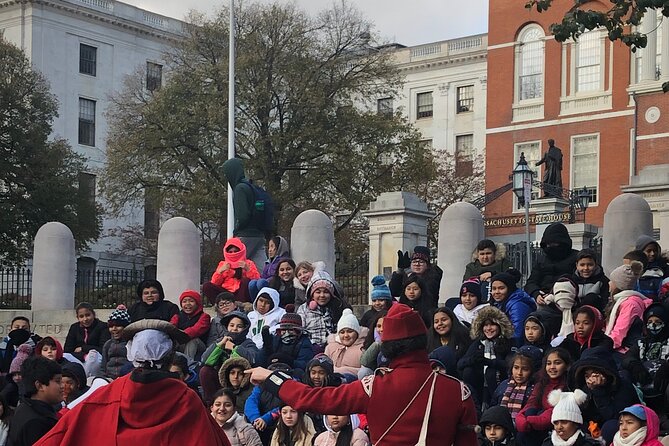
The meeting point is the Boston Common Visitors Center at 139 Tremont Street. The Common is the first stop, with about 15 minutes set aside to introduce this historic public park and its place in the country’s cultural founding.
That opening matters. A public green at the heart of a city is more than a pleasant patch of grass. It gives the guide a way to frame Boston as a place where public life, debate, and political change met. You also get a sense of the route before moving into narrower streets and more specific sites.
The Common is free to enter, and there is no separate admission charge for this stop. Arrive ready to walk, though. The tour ends at Haymarket, at 100 Hanover Street, and the route may extend farther depending on walking speed and time available.
More history tours around Boston:
- Boston: Freedom Trail History Small Group Walking Tour
★ 5.0 · 6,450 reviews - Tour of Historic Fenway Park, America’s Most Beloved Ballpark
★ 4.5 · 3,013 reviews - The Full Revolutionary Story Epic Small Group Boston Walking Tour
★ 5.0 · 2,356 reviews
Granary Burying Ground looks beyond the famous names
The tour spends about 10 minutes at Granary Burying Ground, one of Boston’s oldest cemeteries. The focus is not just on the familiar names associated with the burial ground, but also on lesser-known details that can get lost when the story is reduced to a few celebrated figures.
A cemetery offers a different kind of historical evidence from a meeting hall or church. It brings questions of memory and legacy into view: whose stories are remembered, what details survive, and how a city chooses to present its past. That makes this stop a good fit for a tour that promises to look critically at familiar revolutionary history.
You should expect to hear commentary at the site rather than a long visit. Ten minutes is enough for a focused introduction, but not for an unhurried look at every marker. If you want to return and explore on your own, allow extra time after the guided walk.
King’s Chapel puts Boston in an international frame
At King’s Chapel, the guide pauses outside for about eight minutes. The church is described as more than a striking stone Anglican building: it offers a way to consider the Revolution’s international reach and the religious divisions that shaped life in Boston.
That broader framing is valuable. Revolutionary history can sound like a purely local dispute between Boston residents and British officials. King’s Chapel helps open up the question of how people with different religious ties and political loyalties experienced the events around them.
There is an important limit here. Entry is not included, and visiting the interior requires a separate ticket through the chapel’s museum. If seeing the building inside is important to you, treat that as a separate decision and budget both money and time for it.
Old South Meeting House connects debate to action
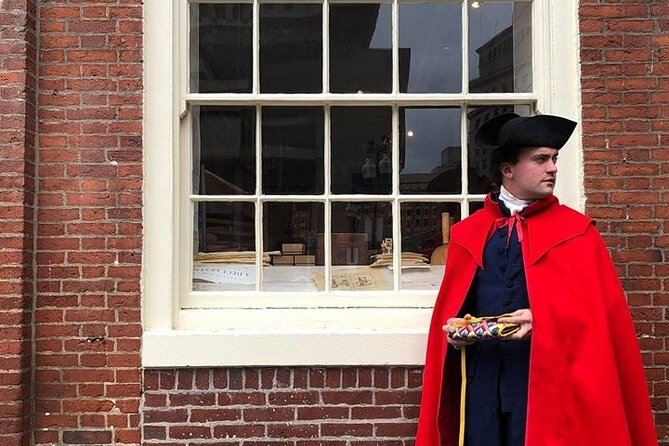
The guide also speaks outside Old South Meeting House, with about eight minutes devoted to the site. The building is closely tied to the events that led to the Boston Tea Party, but the tour places it in a wider setting rather than presenting it as a single-purpose backdrop.
That distinction helps explain how political action develops. Meetings, public speech, and shared grievances helped move people from protest toward a defining act of resistance. The guide’s approach is meant to set the building within that process, not simply point out where a famous event began.
As with King’s Chapel, admission is not part of the $45 tour price. You can hear the outdoor explanation without buying a ticket, but you will need a separate private ticket if you want to go inside. The short stop also means you should not expect a full museum visit during the walk.
More walking tours around Boston:
- Harvard University Campus Guided Walking Tour
★ 4.5 · 3,632 reviews - Boston Freedom Trail Walking Tour with Costumed Guide
★ 4.5 · 2,531 reviews - Boston’s Freedom Trail: A Revolutionary Walking Tour
★ 4.9 · 1,748 reviews - Boston: Freedom Trail History Small Group Walking Tour
★ 4.9 · 1,590 reviews
The Old State House and Boston Massacre site add complexity
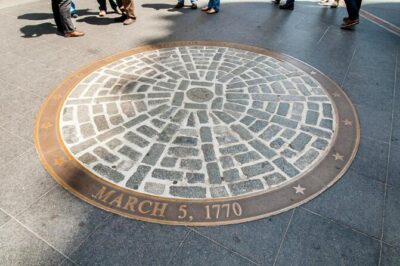
At the Old State House, the guide pauses outside for about six minutes to discuss the Boston Massacre and its varied stories and legacies. The tour also takes you over the site of the massacre, with an explicit reminder not to linger in traffic.
The Old State House is a natural place to talk about how a single event can be remembered and used in different ways. A quick account may focus on the confrontation itself; a more thoughtful one asks how people described it, why it mattered, and whose perspective shaped the story. That approach fits the tour’s focus on critical thinking.
The stop is brief, and the tour does not include entry to the State House museum. You get a concise outdoor interpretation, not time to explore exhibits. If the building’s interior is on your must-see list, plan a separate visit rather than assuming the walking tour covers it.
Other stops widen the story
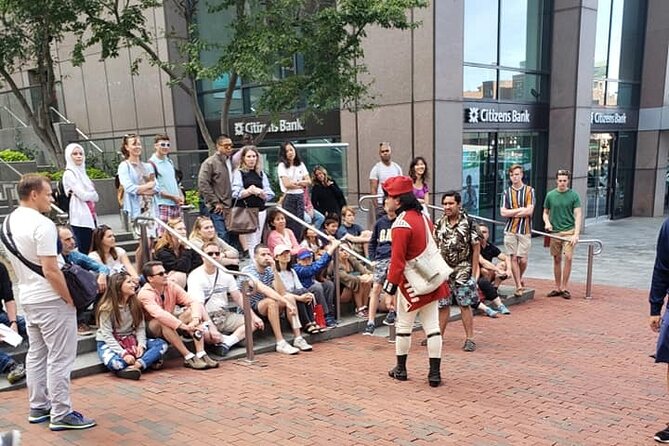
The route includes additional locations described through their roles as a revolutionary meeting place, a marketplace, and a British armory. It also includes a church associated with the lantern signal of the Revolution and with the difficult contradiction between freedom and bondage.
Those themes add useful range to a compact walk. The Revolution was not only a set of political declarations. It unfolded in places where people gathered, bought and sold goods, worshipped, and navigated a society built around unequal rights. A church connected to the lantern signal can prompt a particularly important question: how could a movement speak of liberty while leaving bondage in place?
The supplied route details do not name every one of these locations, so you should not assume a particular building or a stop of a specific length. The practical point is that the walk includes more than the best-known landmarks, and its account aims to put revolutionary symbols beside the harder questions they raise.
What the $45 price gets you
At $45 per person, you are paying for a guided interpretation of central Boston, not admission to a chain of museums. The value depends on how much you want a guide to connect the places and sharpen the historical story. If you are happy to walk on your own and read signs, you may prefer to keep the money for separate museum entry or another activity.
If you want context, the price is easier to justify. A good guide can link a cemetery, church, meeting house, and massacre site into one story, while giving you room to ask questions. The guide fee also covers the professional, engaging commentary that is central to the experience. Adam’s reported strengths include a clear speaking style, patience, humor, and lesser-known historical details. The colonial-style outfit adds a bit of theater without being the main reason to book.
The trade-off is straightforward: several landmark interiors cost extra, and the time at each named stop is short. Think of this as an outdoor history walk that helps you understand the city, not as an all-access pass. If you are planning to enter one or more of the private museums, check the separate admission details and allow time beyond the tour.
Timing, group size, and who will enjoy it
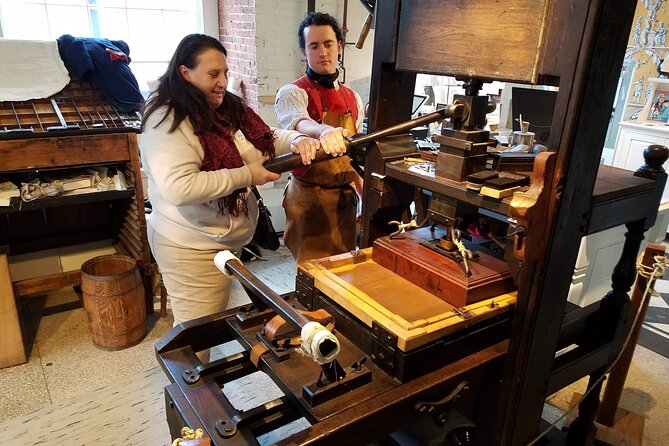
The walk takes approximately 1.5 to 2 hours. The range leaves room for differences in walking speed and time available, and the route may travel farther depending on those factors. Wear comfortable walking shoes and leave a little flexibility in your schedule, especially if you have plans right after the finish at Haymarket.
A maximum of 16 people makes this a more personal option than a large coach or a crowded group walk. You can hear the guide and ask questions without needing to compete for attention. The tour is near public transportation, most people can participate, and service animals are allowed.
I’d choose this tour if you want an engaging introduction to Boston’s Revolution, or if you already know the standard story and want to think harder about its range and contradictions. It should suit history-minded adults, curious families with older children, and anyone who values discussion as much as landmark photos.
You may prefer another option if your priority is going inside historic buildings or spending a long time at each one. This walk gives you a quick outdoor look at several sites, with the guide supplying the connective tissue. For a first visit, that can be an efficient way to orient yourself before returning to the places that catch your interest.
Should you book this Boston history walk?
Book it if you want more than a checklist of famous Revolutionary sites. The strongest reason to go is the combination of a small group, a lively guide, and a wider account of Boston’s past that makes room for questions about citizenship, religion, and freedom.
Skip it if separate museum admissions would frustrate you, or if you want a slow, interior-focused tour. At $45, the walk makes the most sense as a focused introduction to the streets and stories of revolutionary Boston. If that is what you want, it is a promising way to spend two hours.
FAQ
How long is the tour?
It lasts about 1 hour 30 minutes to 2 hours. The route may extend farther depending on walking speed and available time.
Where does the tour start and end?
It starts at the Boston Common Visitors Center, 139 Tremont Street, and ends at Haymarket, 100 Hanover Street.
Is admission to the historic sites included?
No. The tour price does not include separate admission to private museums and sites along the route. The guide speaks outside several of them.
How large is the group?
The tour has a maximum of 16 people.
Is the tour suitable for most people?
Most people can participate, service animals are allowed, and the tour is near public transportation.
Can I cancel for a refund?
You can cancel at least 24 hours before the start time for a full refund. If the experience is canceled because its minimum number of participants is not met, you will be offered another date or experience, or a full refund.
Just added around Boston
- Boston’s Freedom Trail: A Self-Guided Tour of All 16 Sites★ 5.0 · 14 reviews
- Boston Self-Guided Audio Tour Bundle: Freedom Trail & More★ 4.5 · 5 reviews
- Boston’s Freedom Trail: A Self-Guided Audio Tour★ 4.0 · 18 reviews
- Private Walking tour of Boston’s Freedom Trail and more!★ 5.0 · 29 reviews
- Tour-in-Four — A Private four hour walking & driving city tour★ 5.0 · 32 reviews
- Washington D.C. Cherry Blossom,Baltimore 3-Day Tour from Boston★ 4.5 · 7 reviews
- Freedom Trail Experience★ 5.0 · 8 reviews
- Tour de Cambridge Guided Bicycle Tour★ 5.0 · 34 reviews
Boston History Tours, compared.

History and Hauntings of Salem Guided Walking Tour
Read our review →
Freedom Trail History Small Group Walking Tour
Read our review →
Tour of Historic Fenway Park, America’s Most Beloved Ballpark
Read our review →
The Full Revolutionary Story Epic Small Group Boston Walking Tour
Read our review →
Boston Food & History: Pizza, North End & Freedom Trail
Read our review →
Boston’s Freedom Trail: A Revolutionary Walking Tour
Read our review →
City Cruises Boston Historic Sightseeing Harbor Cruise
Read our review →Browse the lists this tour appears in