
Reviewed · BOSTON TOURS
True Crime Tour of Boston
Boston’s familiar parks and public buildings take on a different cast when you hear the crimes and tragedies tied to them. This two-hour walk links serial killers, grave robbing, fraud, and the Boston Marathon bombing, using real places to give each story a sense of location and context.
I like the mix of true crime and city history, and the way the route uses landmarks you might otherwise pass without a second thought. I also like that the tour ends at the Mary Dyer statue, where a story of religious persecution adds a broader historical note to the crime-focused walk.
The main consideration is that the experience depends heavily on the guide’s delivery. Past guides Kai, Andrew, and Kyle have been praised for humor and clear storytelling, but some tours have felt flat, and one reported departure involved a guide not showing up. If you book, keep an eye on your confirmation and contact the operator if anything seems unclear.
- Ten stops connect the stories to real places, from the Public Garden to the State House.
- The route takes about two hours, with roughly 12 minutes planned at each stop.
- The stories span several eras, from 17th-century anti-Quaker laws to modern Boston.
- Guide style matters: Kai, Andrew, and Kyle have each been singled out for strong storytelling.
- At $32 per person, the tour offers a guided city walk and a focused set of local stories, with food and drink extra.
A darker route through central Boston
This tour turns a stretch of central Boston into a series of story settings. It begins at the George Washington statue in the Public Garden and ends at the Mary Dyer statue near the Massachusetts State House. Along the way, the guide connects crimes and tragedies to monuments, squares, a cemetery, and public buildings.
The format is simple: stop, hear the story, then walk to the next location. Each stop is allotted about 12 minutes, though the total experience is approximately two hours. That gives you a brisk sequence of short narratives rather than one long lecture about a single case.
I like that the route does not treat true crime as a collection of lurid tales detached from place. The stops bring in the social and historical setting behind the events, including grave robbing, legal persecution, and the aftermath of the Boston Marathon bombing. The advertised approach is structured and respectful, which matters when the subject includes real victims and recent tragedy.
The group is capped at 20 people. That is small enough for a walking tour to feel more personal than a large crowd, though how well you hear and engage can still depend on where you are standing and how the guide manages the group.
From the Public Garden to the Marathon memorial
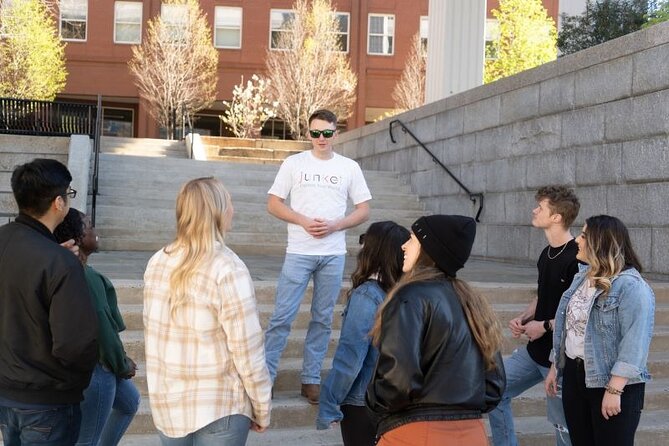
The first stop is the Ether monument in the Boston Public Garden. It introduces the story of the first female serial killer, known in the tour’s promotional material as Jolly Jane. The setting offers an immediate contrast: a pleasant public garden paired with a grim account. That contrast is part of the appeal, but the story is the focus, not a guided tour of the garden itself.
Next comes the Boston Marathon Survivor Memorial. Here the subject shifts from historic crime to the terror surrounding the bombing and the bravery it inspired. This stop may feel more serious than the others because the event is part of recent Boston memory. The guide’s handling of the topic is especially important, and the stated aim is to give the story context without turning it into spectacle.
The tour then reaches Copley Square, where the guide discusses the Craigslist Killer at one of his haunts. The location gives the account a direct connection to the city’s streets, while the story shifts the focus back to an individual criminal case. Expect a short stop rather than a long examination of the case’s every detail.
These opening stops set the tour’s range. You move from a historical serial killer to a mass tragedy and then to a notorious modern crime. If you want one case explored at length, this quick-changing structure may feel too broad. If you like a sampler of Boston’s darker history, the variety is a strength.
More tours and days out around Boston:
- Boston Duck Boat Sightseeing City Tour with Cruise Along Charles River
★ 4.5 · 9,378 reviews - Boston: Freedom Trail History Small Group Walking Tour
★ 5.0 · 6,450 reviews - Boston Hop-On Hop-Off Trolley Tour with 13 Stops
★ 4.5 · 5,576 reviews
Grave robbers, a hitchhiker killer, and the Parkman family
At Central Burying Ground, the subject is grave robbing. The tour explains that in the 18th and 19th centuries, cemeteries were raided for purposes that were not always sinister. That distinction is intriguing: the word grave robbing suggests one kind of story, while the history may be more complicated. You hear the account at the cemetery itself, which gives this stop a strong sense of place.
The next stop, Emerson College, brings the tour to the story of the Hitchhiker Killer, a serial killer who terrorized Boston for eight months in the 1970s. The stop is a reminder that the tour spans more than one era and type of crime. The short format means you should expect a concise narrative, not a full documentary treatment.
At Parkman Bandstand, the subject is the Parkman family and its tale of debt and death. This is one of the more distinctive stops because the family story is tied to the name of the bandstand itself. The guide uses the setting to connect a public landmark with the people and events behind it.
A strong guide can make these varied subjects feel linked rather than like unrelated case summaries. Kai has been especially praised for mixing humor with solid storytelling, while Andrew and Kyle have also been described as engaging and clear. You cannot choose your guide based on the information available, so treat those names as examples of the style the tour can offer, not a promise about who will lead your departure.
The Common, Charles Ponzi, and the courthouse
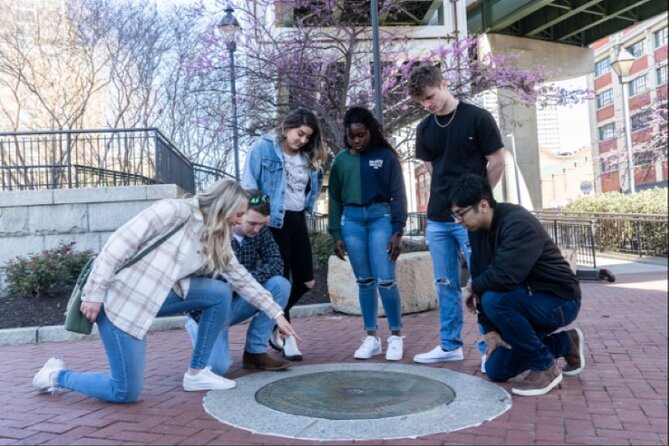
Boston Common Frog Pond is the setting for a story involving a suicide attempt, intrigue, forgeries, and family conflict. It adds a different kind of case to the route: the focus is not simply a notorious killer, but the chain of circumstances and relationships that led to a crisis. This is one of the stops where the historical context may be as compelling as the headline event.
At 27 School Street, the guide points out the building where Charles Ponzi began the fraud that later took his name. The building gives an otherwise abstract financial scandal a specific address. You get a useful reminder that famous schemes begin somewhere ordinary, often in the middle of a working city.
The route continues to the John Adams Courthouse, where the youngest serial killer in American history was tried. This stop shifts the angle from the crime itself to the legal process that followed. The courthouse setting helps anchor that part of the story, though the tour description does not specify the length or detail of the discussion about the trial.
Taken together, these stops give the walk a broad scope: family conflict, financial fraud, and a criminal case in court. That variety suits curious generalists and true crime fans who enjoy historical context. It may be less satisfying if you are looking for in-depth coverage of one particular case.
Ending with Mary Dyer at the State House
The final stop is the Mary Dyer statue near the Massachusetts State House. The story concerns Dyer and three other women who were put to death for violating anti-Quaker laws. It is a sobering end to a tour centered on crime, because it turns attention toward the law itself and the injustice that can be carried out in its name.
Ending here gives the walk more than a string of criminal stories. The State House setting and Dyer’s statue invite a final question about who gets labeled a criminal, and how power shapes the answer. That broader theme makes this stop a good close, especially if you appreciate history that complicates the usual distinction between lawbreakers and authority.
The tour begins at the George Washington statue and finishes at the Mary Dyer statue, so you end at a different central Boston landmark from the one where you started. The listed meeting time is 3:00 pm. If you are planning the rest of your afternoon, allow for the full two hours and a little flexibility rather than scheduling something immediately afterward.
Same city, a different kind of day:
- Boston: City Cruises Whale Watching Cruise
★ 4.5 · 4,710 reviews - Boston Duck Tour: The Original and World-Famous
★ 4.6 · 3,935 reviews - Harvard University Campus Guided Walking Tour
★ 4.5 · 3,632 reviews - Boston Fenway Park: Guided Ballpark Tour with Options
★ 4.8 · 3,606 reviews
What $32 buys you, and what to plan for
At $32 per person, you are paying for a local guide, researched stories, and a two-hour walk connecting ten central Boston locations. Admission tickets at the listed stops are free, and food and drink are not included. The value lies in the guided interpretation: without it, many of the sites are simply public spaces or buildings; with it, they become settings for a connected set of local stories.
The price looks reasonable if you enjoy walking tours and want a structured way to explore Boston beyond its most familiar historical themes. It is less compelling if you expect paid entry to attractions, a meal, or a deep investigation of every case. This is a compact outdoor tour, not a museum visit or a full-day program.
The route is described as an easygoing walk in some accounts, and one person specifically found it manageable rather than vigorous. Still, the tour advises a moderate level of physical fitness. Wear comfortable walking shoes and be ready to spend much of the experience on your feet. Service animals are allowed, and the route is near public transportation.
The tour is offered in English and uses a mobile ticket. Confirmation is expected within 48 hours of booking, subject to availability. The experience is booked about 24 days ahead on average, so reserve earlier if your dates are fixed. You can cancel for a full refund up to 24 hours before the start time; changes made inside that window are not accepted.
One practical caution is guide reliability. Alongside many reports of engaging guides, there has been a serious account of a no-show without advance notice. That does not mean a missed departure is likely, but it is worth keeping your confirmation handy and checking messages before heading to the meeting point.
Is this Boston true crime walk right for you?
Book it if you like true crime with a historical frame, enjoy hearing stories tied to actual locations, and want a two-hour activity that adds a less familiar angle to central Boston. The changing subjects and steady sequence of stops make it a good choice for curious visitors who do not need every case explored at length.
Skip it if you want a focused account of one crime, dislike stories involving murder or suicide, or would rather spend your time inside museums and historic buildings. The tone and pacing depend on the guide, too. For the best chance of enjoying it, arrive ready for a short, varied walking tour, and judge it by the stories and places together, not by expecting a single case to carry the whole afternoon.
FAQ
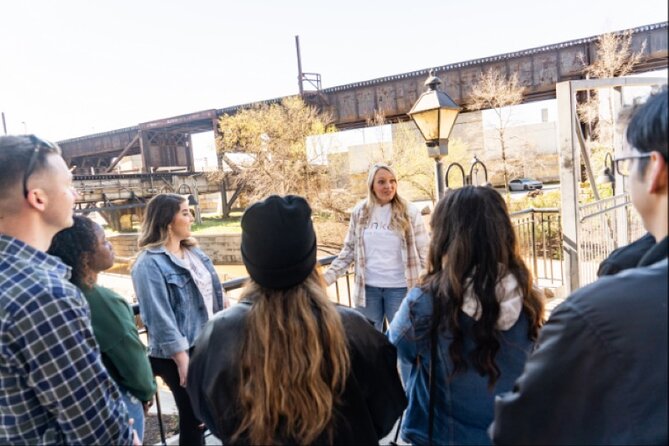
How long is the True Crime Tour of Boston?
The tour lasts approximately two hours. There are ten stops, each listed at about 12 minutes.
Where does the tour start and end?
It starts at the George Washington statue in the Boston Public Garden area and ends at the Mary Dyer statue near the Massachusetts State House.
What time does the tour start?
The listed start time is 3:00 pm.
How much does the tour cost?
The listed price is $32 per person.
Is food or drink included?
No. Food and drink are not included.
What language is the tour offered in?
The tour is offered in English.
How many people can join?
The group is limited to a maximum of 20 people.
Can I cancel for a refund?
You can cancel for a full refund if you do so at least 24 hours before the tour starts. Cancellations or changes made less than 24 hours before the start time are not accepted.
Just added around Boston
- Boston’s Freedom Trail: A Self-Guided Tour of All 16 Sites★ 5.0 · 14 reviews
- Boston’s Freedom Trail: A Self-Guided Audio Tour★ 4.0 · 18 reviews
- Private Walking tour of Boston’s Freedom Trail and more!★ 5.0 · 29 reviews
- Boston Self-Guided Audio Tour Bundle: Freedom Trail & More★ 4.5 · 5 reviews
- Tour-in-Four — A Private four hour walking & driving city tour★ 5.0 · 32 reviews
- Washington D.C. Cherry Blossom,Baltimore 3-Day Tour from Boston★ 4.5 · 7 reviews
- Freedom Trail Experience★ 5.0 · 8 reviews
- Tour de Cambridge Guided Bicycle Tour★ 5.0 · 34 reviews
Boston Tours, compared.

Boston Duck Boat Sightseeing City Tour with Cruise Along Charles River
Read our review →
Freedom Trail History Small Group Walking Tour
Read our review →
Boston Hop-On Hop-Off Trolley Tour with 13 Stops
Read our review →
Harvard University Campus Guided Walking Tour
Read our review →
Boston Fenway Park: Guided Ballpark Tour with Options
Read our review →
Boston to Martha’s Vineyard Day Trip with Optional Island Tour
Read our review →