
Reviewed · FREEDOM TRAIL TOURS
Boston’s Freedom Trail: A Revolutionary Walking Tour
Boston’s Revolution is easier to follow when you see where it unfolded. This 2.5-hour walk traces the Freedom Trail from The Embrace to Copp’s Hill Terrace, linking Paul Revere’s home, the Old State House, burying grounds and other landmarks with stories of protest, politics and daily life.
I like two things especially: the guide connects familiar names to the places where their stories happened, and the tour widens the lens beyond the Revolution to abolition, women’s rights, education and immigration. The final view toward Bunker Hill Monument and USS Constitution gives the walk a satisfying North End finish.
The trade-off is the pace. This is a long walk with a lot to cover, and one account describes the group moving too quickly for people with walking sticks. You’ll get the most from it if you’re comfortable on your feet and can hear a guide speaking outdoors.
- A start that links past and present: Meet at The Embrace, a monument to Martin Luther King Jr. and Coretta Scott King, beside the Boston Common Visitor Information Center.
- A broad sweep of the Trail: The tour is designed to cover all 16 official sites, with stops tied to Boston’s colonial and revolutionary past.
- Stories as well as landmarks: Guides bring in abolition, literature, civil disobedience and the lives of lesser-known patriots.
- A North End finish: End at Copp’s Hill Terrace, with views of Bunker Hill Monument and USS Constitution across the water.
- A brisk, substantial walk: Plan on about 2.5 hours, several miles of walking and a group of up to 25.
- Good value for a guided overview: At $31 per person, the guide supplies context you would miss by following the red-brick path alone.
The Freedom Trail makes more sense with a guide
Boston’s Freedom Trail is easy to follow on foot, but the red-brick route cannot explain itself. A guide helps connect the stones, churches, graves and meeting halls to the arguments and events that made them matter. That difference is important when you have only a couple of days in Boston, or when the Revolution is familiar in outline but fuzzy in detail.
This tour begins at The Embrace and finishes at Copp’s Hill Terrace in the North End. Along the way, it covers the official Trail sites and tells stories of Redcoats, smugglers, riots and midnight riders. The focus is not only on famous names such as Paul Revere, John Hancock and Samuel Adams. You also hear about Boston’s place in abolition, women’s rights, education and immigration.
The tour costs $31 per person and runs for roughly two and a half hours. For that price, you get a guide’s interpretation and a route through many of the city’s best-known historic areas in one go. You do not get an unhurried visit at every landmark. This is an overview, not a series of long museum stops.
Starting at The Embrace
The meeting point is The Embrace, a recent statue honoring Martin Luther King Jr. and Coretta Scott King. It sits beside the Boston Common Visitor Information Center at 139 Tremont Street. The choice makes a useful opening: Boston’s story does not begin and end with the Revolution, and the statue points toward the city’s later struggles for equality.
The first stop is brief, about 10 minutes. From there, the walk turns toward the Massachusetts State House, whose golden dome is a familiar feature of the city. The building dates to the period after the Revolution, with Samuel Adams laying its cornerstone in 1795. It helps set up a central theme of the tour: Boston’s political identity was shaped over generations, not in one dramatic night.
The opening also gives you a chance to get oriented before the route gathers momentum. Listen closely from the start. Outdoor tours can be harder to hear when a group spreads out, and one attendee wished for a louder speaker. Keeping near the guide is practical, not merely polite.
More Freedom Trail tours around Boston:
- Boston: Freedom Trail History Small Group Walking Tour
★ 5.0 · 6,450 reviews - Boston Freedom Trail Walking Tour with Costumed Guide
★ 4.5 · 2,531 reviews - Boston Food & History: Pizza, North End & Freedom Trail
★ 5.0 · 1,772 reviews
From abolitionist speeches to Boston’s old burying grounds
The walk takes in a red-brick church built in 1809, where abolitionists delivered anti-slavery speeches. These talks were among the first of their kind in America, and the stop broadens the familiar Freedom Trail story. Boston’s public life included fierce disputes over slavery as well as resistance to British rule.
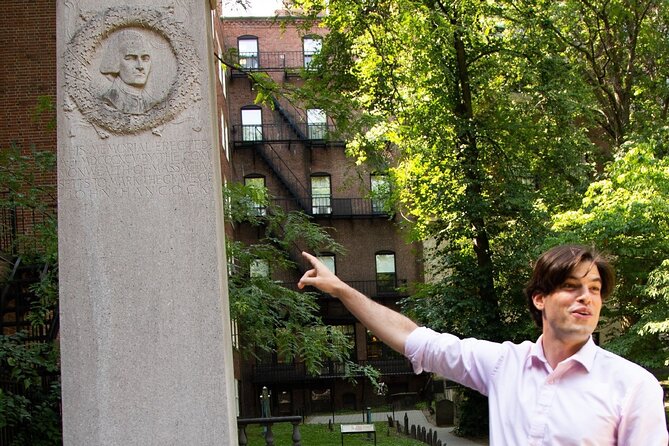
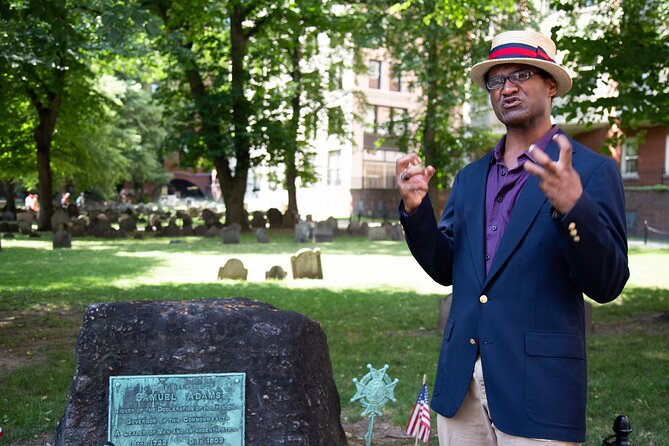
A nearby burying ground, established in 1660, brings the tour back to the city’s colonial era. John Hancock, Paul Revere and Samuel Adams are buried there. A guide can make the graveyard more than a roster of famous names by linking each person to the events discussed along the route. Still, time spent here has a cost: the tour covers a lot of ground, and one participant felt the cemetery stop ran long while later sections felt rushed. If you prefer an even pace, pay attention to how the group is moving and ask the guide early if you need a little more time.
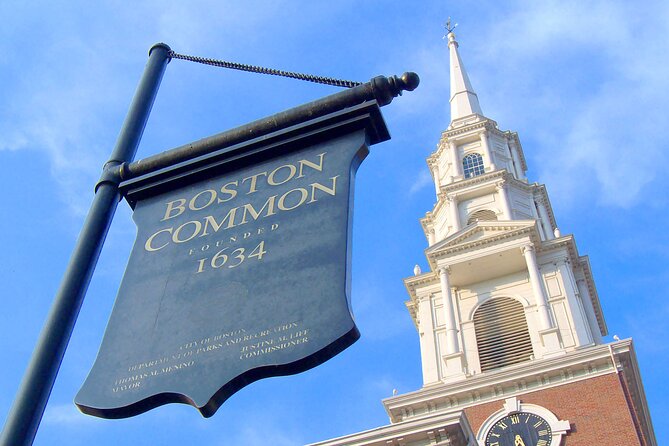
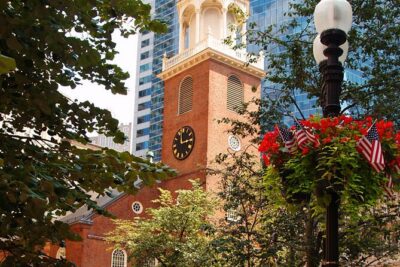
The first Anglican church in Boston, built in 1754, adds another layer. Its story includes the church’s construction, the adjoining burying ground and crypts beneath it. The site is a reminder that colonial Boston was not a single-minded community. Religion, loyalty and politics all shaped the city’s divisions.
The meeting house, the Tea Party and a literary address
The tour next visits a Puritan meeting house built in 1729, where the Boston Tea Party began. The event is often reduced to tea chests thrown into the harbor, but this stop offers a chance to hear how an act of protest took shape. One visitor wanted more detail about what happened that evening and how many people took part. If the Tea Party is a particular interest, ask your guide for more of the story when you reach the site.
A brick building from 1718 gives the walk a quieter change of subject. It began as a colonial apothecary and later housed the publishing firm Ticknor & Fields, which published major nineteenth-century literary figures. The connection shows how Boston’s influence extended beyond politics. It was also a place where ideas and books traveled.
That variety is one of the tour’s strengths. You move from political protest to publishing, from church history to burial customs. The pace can feel brisk, but these shifts keep the city from becoming a string of Revolutionary War anecdotes.
The Old State House and the Boston Massacre site
Built in 1713, the Old State House served as the center of British government in Massachusetts. Its Lion and Unicorn symbols make the building’s former allegiance plain. The tour connects its walls to speeches and confrontations that helped sharpen colonial opposition to British rule.
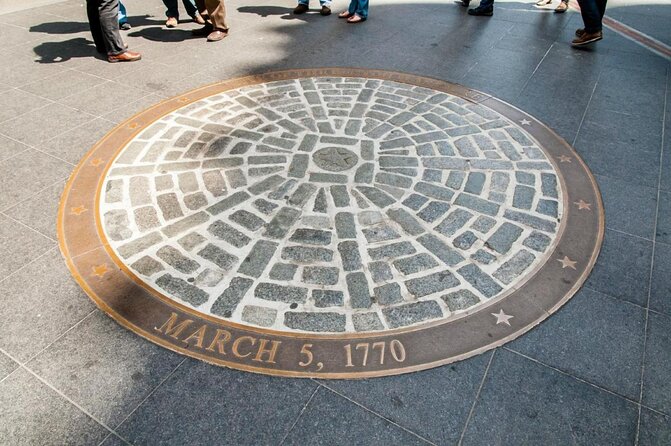
Outside, a circle of stones marks the site of the Boston Massacre of 1770. The guide recounts the night when British soldiers fired on colonists, killing five. This is one of the moments when a strong storyteller can make a familiar date feel immediate: the setting is small and urban, and the consequences were far larger than the physical space suggests.
The Old State House and massacre site are close enough to make a compact but substantial portion of the walk. You are not simply ticking off two landmarks. Together, they show the shift from a government dispute to a public crisis, and help explain why the city’s political temperature kept rising.
More history tours around Boston:
- Tour of Historic Fenway Park, America’s Most Beloved Ballpark
★ 4.5 · 3,013 reviews - The Full Revolutionary Story Epic Small Group Boston Walking Tour
★ 5.0 · 2,356 reviews - Boston: City Cruises Historical Sightseeing Cruise
★ 4.6 · 1,771 reviews - Boston’s Freedom Trail: A Revolutionary Walking Tour
★ 4.9 · 1,748 reviews
Faneuil Hall and Paul Revere’s home
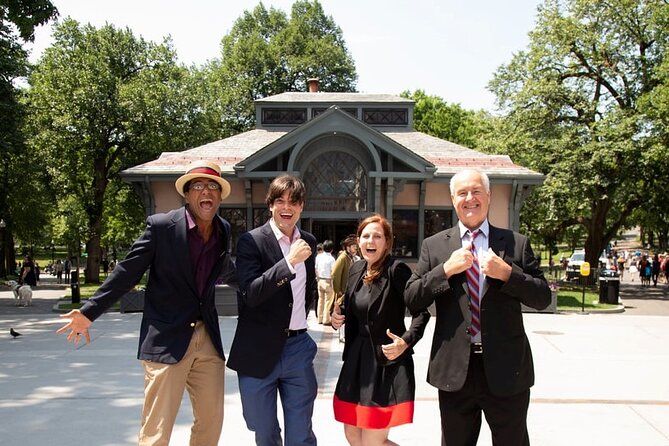
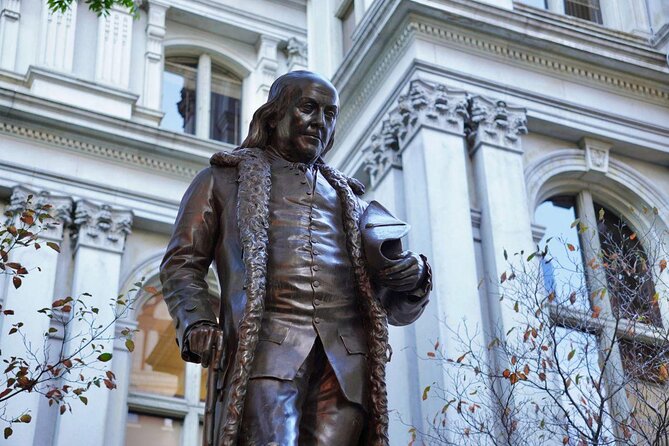
Faneuil Hall began as a marketplace in 1743. Its upstairs meeting room became more famous, earning the name Cradle of Liberty through speeches that stirred public debate. It is a good place to think about how political movements depended on gathering spaces, not just leaders and declarations.
The next stop is the Paul Revere House, a wooden home dating to 1680 and the oldest building in Boston. Here, the Revolution gets personal. Revere lived there with his family before taking part in events that made him one of the best-known figures of the era. Seeing the house helps counter the idea that he was only a midnight rider. He was also a working Bostonian with a home and family in the city.
The tour explains the route and the events associated with Revere, but do not assume the guided walk includes a full interior visit to every building. The experience is primarily a walking tour of the sites, and the supplied details do not promise interior admission. If you want to explore a particular building at length, plan to check its visiting arrangements separately.
Lanterns at Old North Church
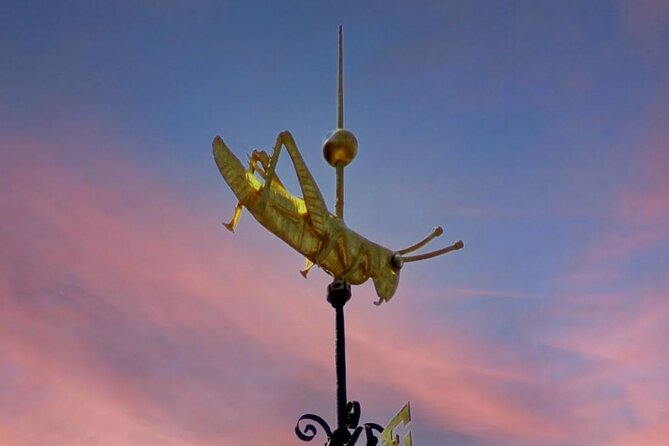
At Old North Church, the guide explains the signal that became one of the Revolution’s most famous images: two lanterns in the steeple on April 18, 1775, meaning the British were coming by sea. The church dates to 1723, and the story connects Paul Revere’s plans to the wider network of people preparing for conflict.
This stop shows the value of having a guide rather than simply reading a plaque. The lanterns are memorable, but the planning behind the signal is the useful context. A guide can explain how the warning fitted into the tense night before fighting began.
The church has sometimes been undergoing construction, which can affect how clearly you see it. The tour still centers on the history of the site, but an active work area may change the view. This is one reason to treat the tour as a story-led walk rather than a promise of pristine photo stops.
Copp’s Hill, Bunker Hill and the USS Constitution
The final stretch brings you to Copp’s Hill Burying Ground, another burial site dating to 1660. During the Battle of Bunker Hill, British forces placed cannons here. The guide covers the battle and the notable Bostonians buried in the ground, linking the North End to the fighting across the water.
At Copp’s Hill Terrace, the 221-foot Bunker Hill Monument is visible in the distance. The tour does not end at the monument itself, so keep that distinction in mind if you want to visit it up close. The view is a useful closing image: a major battle site stands beyond the city, while the walk has traced the streets and institutions that helped set the conflict in motion.
You can also see the masts and rigging of USS Constitution, known as Old Ironsides. The ship fought in the War of 1812 and is the oldest warship afloat anywhere in the world. It is a strong final sight, but it is a view from the terrace rather than a ship visit.
The endpoint is listed at Copp’s Hill Terrace, with a street address of 7 Jackson Avenue. It leaves you in Boston’s historic North End, a good place to continue exploring if you still have energy. The route’s end is not the same as its start, so plan your next step from the North End rather than expecting to return to Boston Common with the group.
Pace, group size and getting the most from your walk
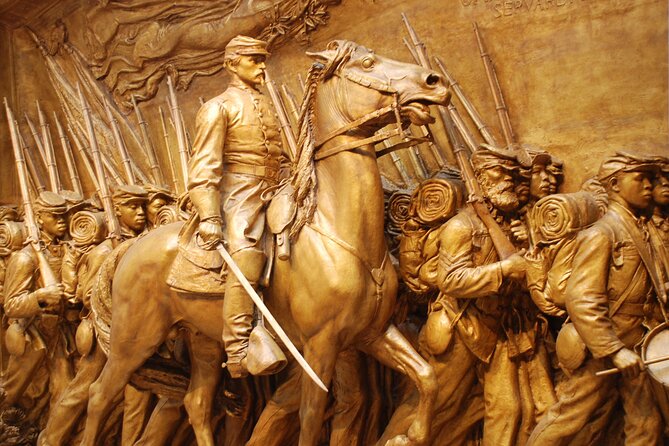
The stated duration is about two and a half hours, and the tour may have up to 25 people. That is a manageable group size in theory, but it can still stretch out on busy sidewalks. Several accounts praise guides for keeping a good pace and speaking clearly. Others point to the practical risks: one person with a walking stick struggled to keep up, while another found it hard to hear when the guide was not facing the group.
Wear comfortable walking shoes and be ready for a sustained outdoor walk. The tour requires a moderate level of physical fitness, and it is not the best choice if you need frequent long breaks or a slow, flexible pace. If mobility is a concern, contact the operator before booking rather than relying on the group to adjust on the day.
Guide quality is a major part of the experience. Names praised include Jim, Alissa, Kenny, Julia, Alfred, Sam and Noah. The praise tends to focus on clear storytelling, humor, thoughtful answers and the ability to keep families or history buffs engaged. Your guide is not guaranteed to be any one of these people, but the recurring emphasis on storytelling is a good sign of what this format is meant to deliver.
The tour is offered in English and uses a mobile ticket. It is booked about 12 days ahead on average, so reserving early is sensible if your schedule is fixed. It can be canceled for poor weather, in which case you are offered another date or a full refund. You can also cancel for a full refund up to 24 hours before the start time.
Is $31 good value for the Freedom Trail?
At $31, this is a strong value if you want a guided overview rather than a do-it-yourself walk. The route takes you across several historic sections of Boston, and a good guide supplies the connections that signs and buildings alone cannot. Families, first-time visitors and history fans can all get something from it, especially if they like lively explanations and questions along the way.
The price is less compelling if you want to enter each historic building, spend a long time at the graves or walk at your own pace. The tour’s purpose is breadth: cover the trail, hear the major stories and leave with a clearer sense of how Boston’s landmarks fit together. The group format and brisk schedule are the cost of seeing so much in one session.
The tour has a 4.9 rating and is recommended by 97 percent of participants, based on 1,343 ratings. Those figures support its appeal, but they do not remove the practical caveats. Hearing the guide, managing the pace and coping with weather all matter. The best guide in the world cannot make a long walk comfortable if your feet are already protesting.
Should you book this Boston walk?
Book it if you want a compact, story-led introduction to Boston’s Freedom Trail, and you are comfortable walking for about two and a half hours. I especially recommend it early in a Boston visit, when the route can help you understand what you want to explore more deeply afterward.
Skip it, or choose a slower alternative, if you need a gentle pace, want to enter every landmark or prefer to linger at each stop. At $31, it offers good value for a broad guided introduction, provided you arrive ready to walk, listen closely and keep up with the group.
FAQ
How long is the Freedom Trail walking tour?
The tour lasts about 2 hours and 30 minutes. It covers the official Freedom Trail sites in a continuous walk.
Where does the tour start and finish?
It starts at The Embrace, beside the Boston Common Visitor Information Center at 139 Tremont Street. It ends at Copp’s Hill Terrace in the North End.
How much does the tour cost?
The listed price is $31 per person.
Is the tour offered in English?
Yes. English is the stated language.
How large can the group be?
The maximum group size is 25 people.
How much walking should I expect?
It is a substantial walking tour, and participants should have a moderate level of physical fitness. Comfortable walking shoes are advised.
What happens if bad weather cancels the tour?
If poor weather causes the tour to be canceled, you will be offered a different date or a full refund.
More walking tours around Boston
- Harvard University Campus Guided Walking Tour
★ 4.5 · 3,632 reviews - Boston: Freedom Trail History Small Group Walking Tour
★ 4.9 · 1,590 reviews - Boston’s North End Food Tour: Italian Flavors & Heritage Walk
★ 5.0 · 1,322 reviews - Freedom Trail Walking Tour 250
★ 4.5 · 1,118 reviews
Just added around Boston
- Boston’s Freedom Trail: A Self-Guided Tour of All 16 Sites★ 5.0 · 14 reviews
- Boston’s Freedom Trail: A Self-Guided Audio Tour★ 4.0 · 18 reviews
- Private Walking tour of Boston’s Freedom Trail and more!★ 5.0 · 29 reviews
- Boston Self-Guided Audio Tour Bundle: Freedom Trail & More★ 4.5 · 5 reviews
- Washington D.C. Cherry Blossom,Baltimore 3-Day Tour from Boston★ 4.5 · 7 reviews
- Tour-in-Four — A Private four hour walking & driving city tour★ 5.0 · 32 reviews
- Freedom Trail Experience★ 5.0 · 8 reviews
- Tour de Cambridge Guided Bicycle Tour★ 5.0 · 34 reviews
Freedom Trail Tours, compared.

Freedom Trail History Small Group Walking Tour
Read our review →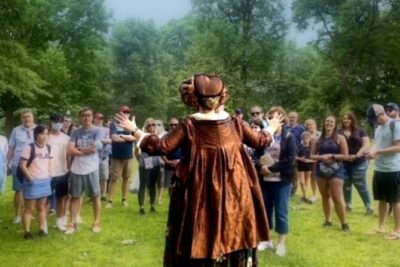
Boston Freedom Trail Walking Tour with Costumed Guide
Read our review →
Boston Food & History: Pizza, North End & Freedom Trail
Read our review →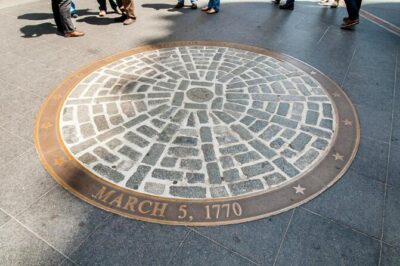
Boston’s Freedom Trail: A Revolutionary Walking Tour
Read our review →
Boston Freedom Trail History Pub Crawl Small-Group Tour
Read our review →
Entire Freedom Trail Walking Tour: Includes Bunker Hill and USS Constitution
Read our review →Browse the lists this tour appears in