
Reviewed · FREEDOM TRAIL TOURS
Freedom Trail: Boston Common, Old State House, Faneuil Hall
Boston’s Freedom Trail is more than a line of red markers. On this two-hour walk, you move from the Common to Faneuil Hall, passing a revolutionary-era cemetery, churches, meeting houses, and the Old State House. The best part is hearing how these places connect, rather than seeing them as a string of old facades.
I like the small group, capped at 15, which gives you room to ask questions, and the route’s mix of famous landmarks and quieter details. Guides such as Brian have been praised for energetic storytelling and occasional detours that add context. One caution: that lively delivery can bring a lot of information quickly, and younger children may find the building-focused stops less engaging.
The useful details at a glance
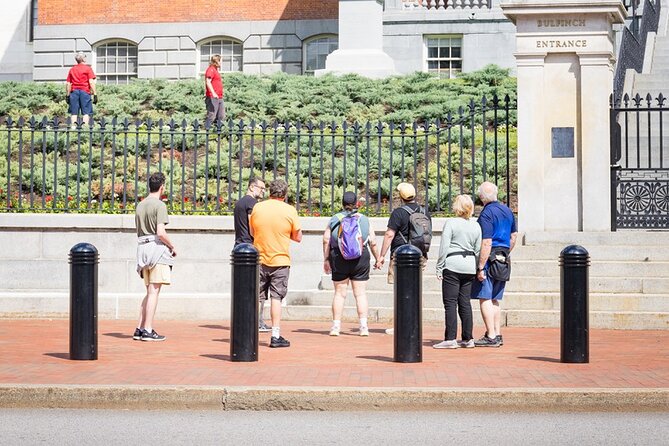
- Eight stops in about two hours: The route runs from Boston Common to Faneuil Hall, with roughly 15 minutes at each listed stop.
- A small group, not a crowd: No more than 15 people are allowed, a practical advantage when you want to hear the guide and ask a question.
- Stories beyond the plaques: Guides may add nearby historical details beyond the main trail. Brian, named in several accounts of the tour, is noted for lively storytelling, but a specific guide is not guaranteed.
- A meaningful cemetery visit: Admission to Granary Burying Ground is included, where Paul Revere, Samuel Adams, John Hancock, and Crispus Attucks are buried.
- A one-way walk through central Boston: Meet at Tremont Street and Park Street, near Winter Street, at 10:30 a.m. The tour ends at Faneuil Hall Marketplace.
- Good value if context matters: At $39, you are paying for a guided interpretation of the route, not just access to landmarks. Most listed stops are free to enter.
Why a guide changes the Freedom Trail
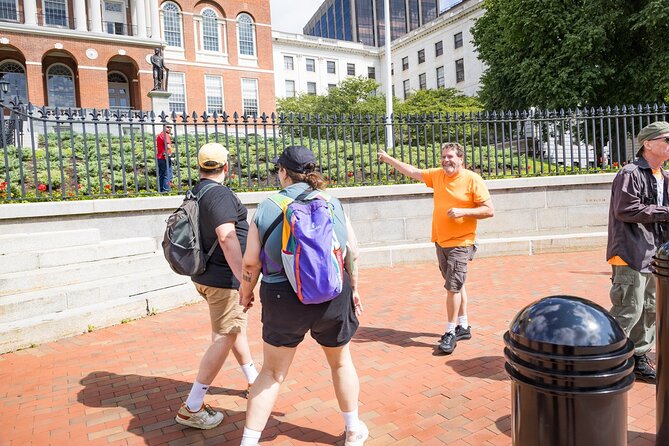
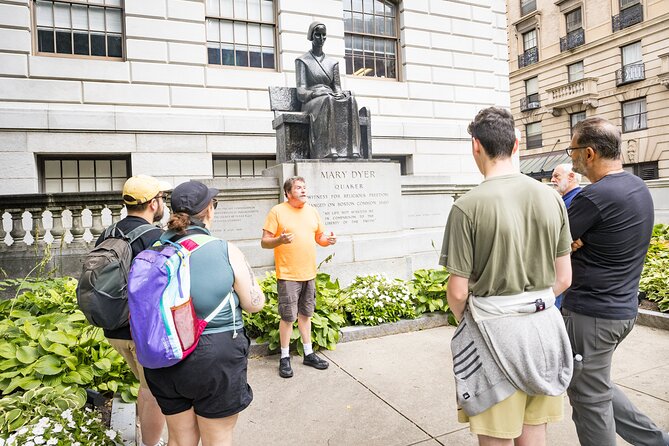
You can follow the Freedom Trail on your own, but the route is more rewarding when someone connects the landmarks to the arguments, people, and events they represent. This tour gives you a local guide’s running commentary as you walk, with chances to ask questions along the way. That can make a big difference at places where a building’s meaning is not obvious from the street.
The group limit helps keep the experience personal. With no more than 15 participants, the guide can speak to the group without turning the walk into a parade. One account particularly valued that intimate feel and the lack of a megaphone. That does not guarantee how every guide will speak, but the format is a better fit for conversation than a large bus tour.
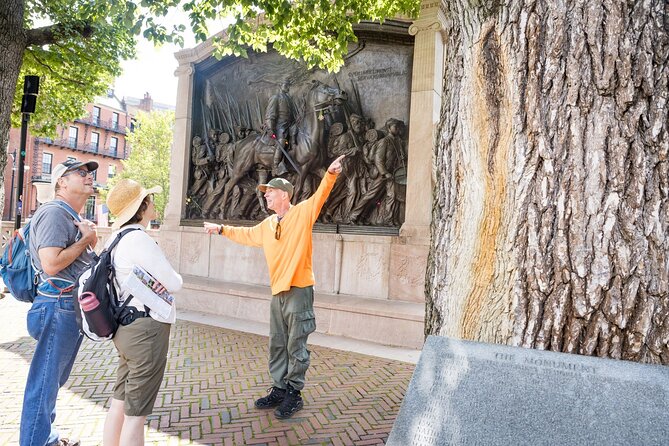
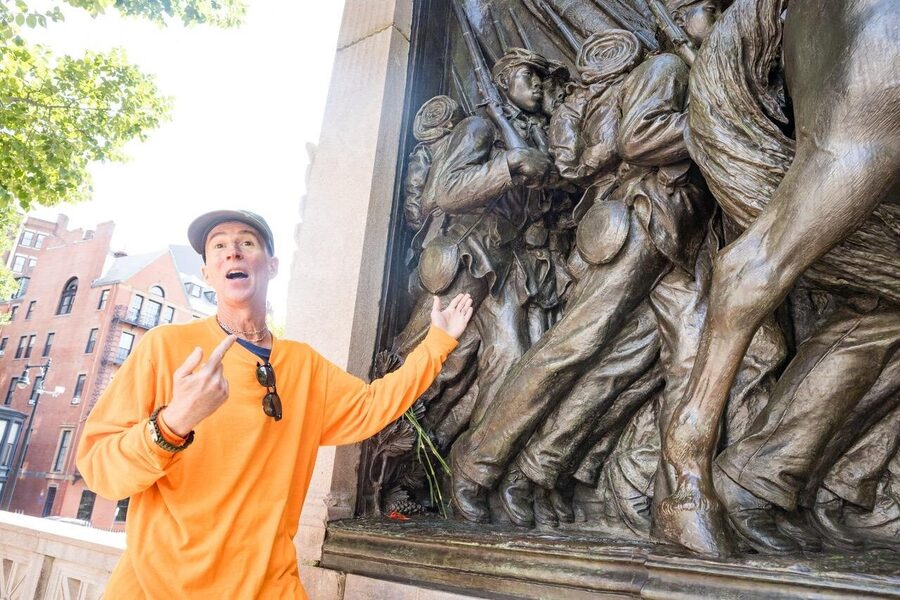
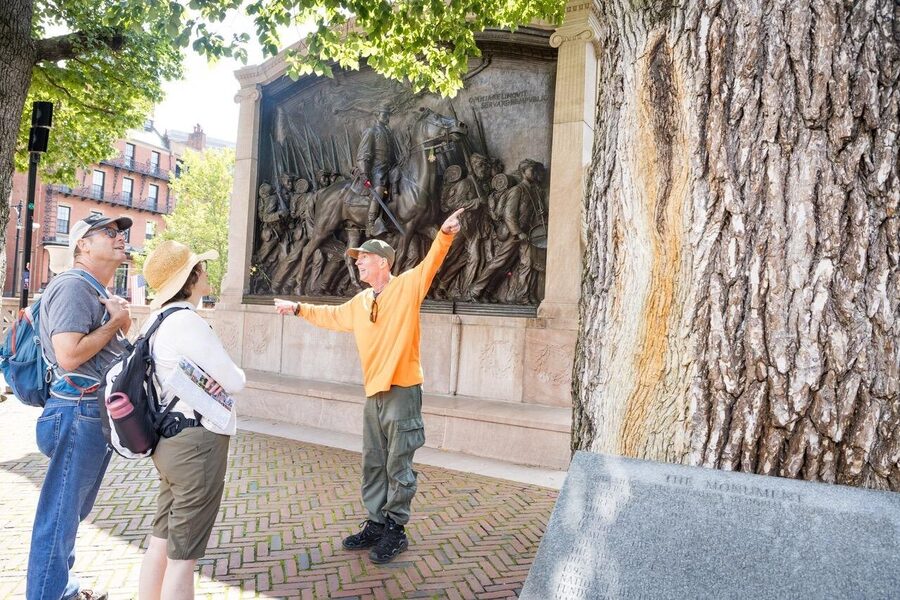
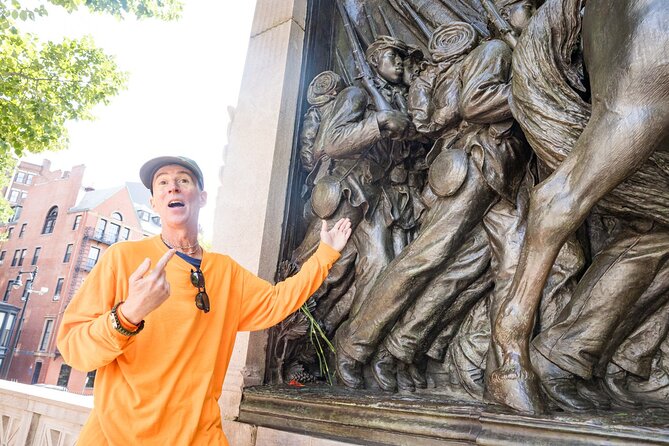
Brian is a guide associated with the experience, and his delivery is often described as energetic, entertaining, and packed with historical detail. He has also taken groups slightly off the main route to point out nearby sites, including the 54th Regiment Memorial. That kind of extra context can make the walk feel less like a checklist. It is worth knowing, though, that a fast, enthusiastic guide may sometimes give you more information than you can absorb in one pass.
More Freedom Trail tours around Boston:
- Boston: Freedom Trail History Small Group Walking Tour
★ 5.0 · 6,450 reviews - Boston Freedom Trail Walking Tour with Costumed Guide
★ 4.5 · 2,531 reviews - Boston Food & History: Pizza, North End & Freedom Trail
★ 5.0 · 1,772 reviews
Boston Common sets a broad stage
The walk begins at Boston Common, founded in 1634 and described as America’s oldest public park. Its open lawns offer a calm start before the route moves into the denser historic center. The Common has seen British troops encamp there during the Revolutionary War and has hosted civil rights rallies in the 20th century, so its story reaches well beyond the founding era.
The planned stop is about 15 minutes. That is enough time for an introduction and a few key details, not a leisurely park visit. I’d arrive with a little time to spare so you can find the meeting point and settle in before the group sets off.
The State House and Park Street Church
Next comes the Massachusetts State House, completed in 1798. Its golden dome is one of Boston’s most recognizable features, and the building remains the seat of Massachusetts government. The guide can help you connect its familiar exterior with the state’s political life and the changing role of government after independence.
The scheduled stop is 15 minutes, so expect an overview rather than an extended look inside. The tour information does not promise entry to the State House, and admission is listed as free, so ask the guide what you will see on the day if entering the building matters to you.
Park Street Church, built in 1809, brings a different chapter into view. It is associated with the first public anti-slavery address in the United States, a reminder that Boston’s public debates did not end with the Revolution. Its steeple also makes it an easy landmark to spot as you move through this part of the route.
Here, too, the stop is brief. The value lies in hearing why a church belongs on a walk devoted to civic history, rather than simply ticking off another impressive building.
Granary Burying Ground puts names to the story
Granary Burying Ground is one of the most affecting stops because it brings the large story of independence down to individual lives. Paul Revere, Samuel Adams, and John Hancock are buried here. So is Crispus Attucks, the first person killed in the Boston Massacre and a figure connected with the struggle for freedom.
Admission to the cemetery is included, unlike the free-entry stops listed elsewhere on the route. The group spends about 15 minutes here, enough to focus on notable graves and hear why they matter. A guide may also point out details that complicate the familiar names: one tour account recalls the Franklin memorial in the cemetery and the useful correction that Benjamin Franklin is not buried there.
This is a compact stop, and the cemetery can feel somber amid a busy sightseeing day. Give it your attention. It offers a human scale that can be missing when the Revolution is presented only as dates, speeches, and grand buildings.
More tours and days out around Boston:
- Boston Duck Boat Sightseeing City Tour with Cruise Along Charles River
★ 4.5 · 9,378 reviews - Boston Hop-On Hop-Off Trolley Tour with 13 Stops
★ 4.5 · 5,576 reviews - Boston: City Cruises Whale Watching Cruise
★ 4.5 · 4,710 reviews - Boston Duck Tour: The Original and World-Famous
★ 4.6 · 3,935 reviews
King’s Chapel and Old South Meeting House
King’s Chapel, built in 1754, is a strong example of Georgian architecture and one of Boston’s oldest churches. Its history includes ties to loyalist congregants during the Revolution, a useful reminder that colonial Boston was not united in its views. A brief stop here adds tension and nuance to a route that might otherwise sound like a straight march toward independence.
The next major story is at Old South Meeting House, built in 1729. Colonists gathered here, and plans for the Boston Tea Party were famously set in motion at the meeting house. Its role as a place for debate makes it one of the route’s clearest links between a physical landmark and political action.
Both stops are listed as free admission, but the tour schedule gives each around 15 minutes. Do not assume that a short guided stop includes time to explore every interior or exhibit. The core benefit is the guide’s explanation of what happened here and why the buildings mattered.
Old State House to Faneuil Hall
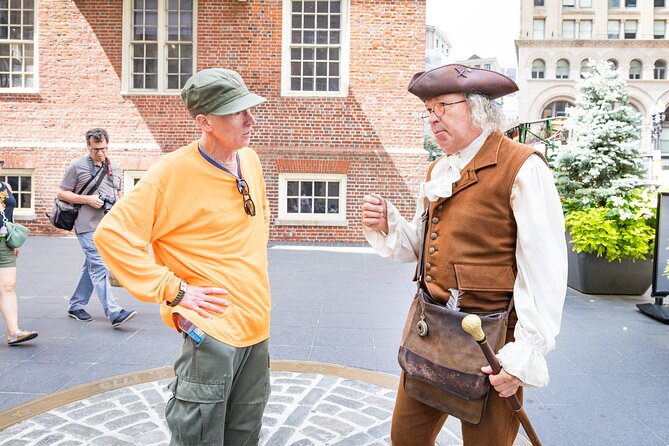
Dating to 1713, the Old State House was the seat of colonial government and a setting for events that helped fuel the Revolution. The Declaration of Independence was read from its balcony. At this point in the walk, the route’s earlier themes come together: public argument, colonial authority, and resistance.
The tour allows about 15 minutes at the Old State House. Its listed admission is free, but the description does not promise an indoor visit. If you want to see a particular exhibit or spend more time inside, plan to check separately rather than counting on the guided stop to cover it.
The final stop is Faneuil Hall, known as the Cradle of Liberty. It has served as a marketplace and meeting hall since 1742, hosting speeches and debates in support of independence. The tour ends at Faneuil Hall Marketplace, making this a convenient place to continue your day after the walk.
That finish is a practical strength. You end in a central historic area rather than retracing your steps to the starting point. The guide gives you about 15 minutes at Faneuil Hall, so treat the tour as an introduction, not a full visit to everything in the marketplace.
How much history can you take in?
The route is ambitious for two hours. Eight stops are allotted about 15 minutes each, which leaves little slack for long questions or lingering. The short format suits you if you want a clear orientation and a guided overview, then plan to return to the places that catch your interest.
A guide’s enthusiasm is a real asset, especially when stories make familiar sites feel immediate. But the pace and volume of information can be a drawback. One account of the tour describes losing the thread amid a flood of detail, despite enjoying the guide’s energy and the overall mood. If you know you prefer a slower pace, ask questions when you can and jot down the names of places you want to revisit.
The tour is also more about listening to the guide at historic buildings than doing hands-on activities. A family account praised Brian’s ability to keep children engaged, while another found the format less suitable for younger children. Your child’s interest in history and ability to follow a walking explanation will matter more than age alone.
Is $39 a fair price?
At $39 per person, this is a reasonable buy if you want the Freedom Trail explained as you go. Most stops are listed as free, so the ticket’s value comes from the local guide, the small group, the route planning, and the chance to ask questions. Admission to Granary Burying Ground is included.
You are not paying for a private tour, and gratuity is not included. The group can have up to 15 people, so it is intimate by walking-tour standards, but not one-on-one. The average booking time is 44 days in advance, which suggests it may be wise to reserve ahead if the 10:30 a.m. start fits your plans.
The tour is offered in English and uses a mobile ticket. Service animals are allowed, and the activity is near public transportation. Most people can participate, though it is a walking tour, and the supplied details do not give a route distance or a specific mobility-accessibility assessment.
Who should book this walk?
I’d choose this tour if you are new to Boston, want the main Freedom Trail landmarks in one compact outing, or prefer a person’s explanation to reading plaques on your own. It also suits history fans who enjoy questions, anecdotes, and some extra context beyond the marked route.
If your ideal visit means spending a long time inside each historic building, this is not the right format by itself. The stops are short, and the tour is built around a continuous walk. Likewise, if you are traveling with a young child who needs frequent activities, consider whether a two-hour explanation-heavy outing will hold their attention.
Book it if you want a lively, guided introduction to Boston’s revolutionary sites and can keep pace with a steady flow of stories. Skip it if you want a slow, self-directed visit or need guaranteed time inside each landmark. Either way, the route gives you a useful framework for understanding the city, and the guide can help turn a line on a map into a sequence of places with people and arguments attached.
FAQ
How long is the Freedom Trail tour?
It lasts about two hours. The listed schedule allows roughly 15 minutes at each of eight stops.
Where does the tour begin?
The meeting point is at Tremont Street and Park Street, near Winter Street, in Boston.
What time does the tour start?
The start time is 10:30 a.m.
Where does the tour end?
It ends at Faneuil Hall Marketplace in Boston.
How large is the group?
The tour has a maximum of 15 participants.
What is included in the $39 price?
The price includes a guided walking tour with live commentary from a local Boston guide, the Freedom Trail highlights, and admission to Granary Burying Ground. Gratuity is not included.
Is the tour offered in English?
Yes. English is the listed language.
Are service animals allowed?
Yes, service animals are allowed.
Can I cancel for a refund?
You can cancel for a full refund if you do so at least 24 hours before the start time.
Just added around Boston
- Boston’s Freedom Trail: A Self-Guided Tour of All 16 Sites★ 5.0 · 14 reviews
- Boston’s Freedom Trail: A Self-Guided Audio Tour★ 4.0 · 18 reviews
- Private Walking tour of Boston’s Freedom Trail and more!★ 5.0 · 29 reviews
- Boston Self-Guided Audio Tour Bundle: Freedom Trail & More★ 4.5 · 5 reviews
- Tour-in-Four — A Private four hour walking & driving city tour★ 5.0 · 32 reviews
- Washington D.C. Cherry Blossom,Baltimore 3-Day Tour from Boston★ 4.5 · 7 reviews
- Freedom Trail Experience★ 5.0 · 8 reviews
- Tour de Cambridge Guided Bicycle Tour★ 5.0 · 34 reviews
Freedom Trail Tours, compared.

Freedom Trail History Small Group Walking Tour
Read our review →
Boston Freedom Trail Walking Tour with Costumed Guide
Read our review →
Boston Food & History: Pizza, North End & Freedom Trail
Read our review →
Boston’s Freedom Trail: A Revolutionary Walking Tour
Read our review →
Boston Freedom Trail History Pub Crawl Small-Group Tour
Read our review →
Entire Freedom Trail Walking Tour: Includes Bunker Hill and USS Constitution
Read our review →Browse the lists this tour appears in