
Reviewed · BOSTON HISTORY TOURS
Provincetown West End History Tour
Provincetown’s West End is a short stretch of town with a long memory: old fishing wharves, a Cape Cod house built before the Revolution, and homes that were once floated across the harbor. Guide Cathy links these landmarks to the people who shaped this harbor town, from the Coast Guard and fishing families to the Pilgrims’ first landing.
I like two things especially: the tour is private, so you can focus on your own group’s questions, and it mixes familiar landmarks with wonderfully odd local stories, including houses moved by water. One consideration: it is a walking tour with no public restrooms along the route, so plan ahead before meeting at 2 pm.
West End stories at a glance
- A private walk with Cathy: Your group has the guide to itself, with time for questions and her informal pop quizzes.
- A pre-1750 house: The Seth Nickerson House is Provincetown’s oldest, with a rare brick oven and a tale of shipwreck-salvaged building materials.
- Wharf life, then and now: Captain Jack’s Wharf began as a working fishing wharf and became a cluster of 12 colorful cabins.
- A town that moved its houses: Families from the Long Point settlement floated their homes across the harbor when the outpost declined.
- A practical, compact route: The walk lasts about 1 hour 45 minutes, starts at the Coast Guard station, and ends at Pilgrims’ First Landing Park.
- A good pre-tour plan: Use a restroom before you arrive. There are no public restrooms along the walk, and parking at the Montello-Bradford lot was reported at $20.
A compact walk through Provincetown’s West End
This tour is less about checking off grand attractions than learning how the West End fits together. In a few blocks, the story moves from maritime work and shipwrecks to summer houses, inns, and the Pilgrims’ brief stop on Cape Cod. The route covers several centuries without asking you to spend half a day on your feet.
The tour lasts about 1 hour 45 minutes and begins at 2 pm outside the U.S. Coast Guard Station at 125 Commercial Street. It ends at Pilgrims’ First Landing Park. The stated stops are short, generally 10 minutes, with a longer 20-minute stop at Land’s End Inn and 15 minutes in the historic district. That pace should suit you if you enjoy listening while walking and looking closely at a place, rather than lingering inside museums.
The walk is described as casual and easy, and the stops are outdoors or at historic sites. Admission tickets are free. Since it is a private activity, only your group participates, which makes it easier to ask Cathy to explain a detail or connect one stop to another. She also brings in local culture, not just dates and buildings, and may test your memory with a pop quiz along the way. No need to study: the questions are part of the fun.
More history tours around Cape Cod:
- History and Hauntings of Salem Guided Walking Tour
★ 5.0 · 14,564 reviews - Boston: Freedom Trail History Small Group Walking Tour
★ 5.0 · 6,450 reviews - Tour of Historic Fenway Park, America’s Most Beloved Ballpark
★ 4.5 · 3,013 reviews
From Coast Guard station to the oldest house
At the Coast Guard Station, Cathy can set Provincetown’s maritime story in context. The local rescue tradition reaches back to the 19th century and the United States Life-Saving Service, the Coast Guard’s predecessor. That background helps make sense of the town’s relationship with the harbor: it was a source of work and trade, but also a place where ships could founder and people needed help.
The station stop is about 10 minutes, with no admission charge. It is a useful opening rather than a long visit, giving you a frame for the fishing wharves and seafaring stories ahead. You should expect an exterior look and a guided explanation, not a tour through Coast Guard facilities.
Next comes 72 Commercial Street, home of the Seth Nickerson House, commonly called the Oldest House. Built around 1746 to 1750, it is an early Cape Cod-style house, recognizable by its balanced front, central door, and windows close to the eaves. At the rear of its main fireplace is a beehive-shaped brick oven, a feature associated with homes built before 1750.
The house also carries a tale suited to Provincetown: it was reportedly built with materials salvaged from shipwrecks. That detail turns a domestic landmark into part of the larger harbor story. The stop is listed at 10 minutes and is free, so think of it as a brief look and explanation, not a lengthy interior tour.
Fishing wharves and the far end of the point
Captain Jack’s Wharf offers a different view of working waterfront life. Built in 1897 by local trap fisherman Jackson R. Williams, the wharf once held sheds for storing and repairing nets and fishing gear. Today, its 12 small cabins give it a distinctly different look, but the place still makes the town’s fishing past tangible.
Cathy’s explanation can help you read the wharf as more than a photogenic row of buildings. Its change from practical work site to a quirky collection of homes reflects how Provincetown’s waterfront has changed over time. The stop is about 10 minutes. The cabins are condominiums, so expect to view the wharf from public areas rather than enter private spaces.
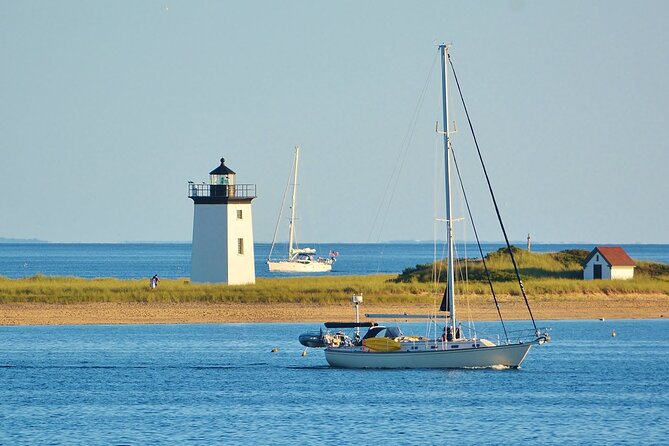
The route also includes Long Point Beach, with Long Point Lighthouse as part of the story. The lighthouse marks the entrance to Provincetown Harbor. The present square, white brick tower dates to 1875, replacing earlier lights on the site; it is 35.5 feet tall and shows a flashing green light visible for eight nautical miles. It has been solar-powered since 1982 and automated since 1956.
Long Point itself was once a remote fishing settlement. The lighthouse helps connect navigation and settlement to the same demanding geography: a narrow point at the harbor entrance, far from the town center. The listed stop is about 10 minutes, but do not assume this means a trip to the lighthouse tower. It stands at the tip of the peninsula, and the tour’s stated endpoint is elsewhere in the West End. Treat this as a stop for local history and views, with the exact sightlines depending on the route and conditions.
The houses that crossed Provincetown Harbor
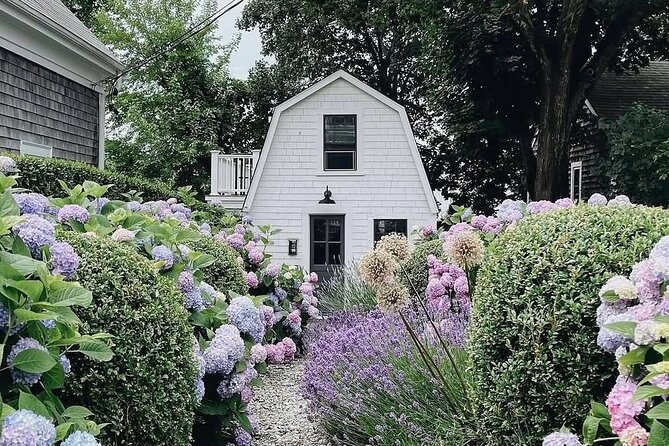
One of the tour’s most memorable local stories is the Long Point settlement and its so-called floaters. Around 1818, people established a small community at the remote tip of Cape Cod. It grew to include about 38 homes, along with a school, post office, bakery, and saltworks.
By the 1850s, overfishing, falling salt prices, and the settlement’s isolation made life there harder. Rather than leave their houses behind, roughly 30 to 40 families moved them across Provincetown Harbor on flat-bottomed scows at low tide. Many resettled in the West End, while others went to streets elsewhere in town.
The historic-district stop lasts about 15 minutes. It gives Cathy room to point out how this unusual migration still shapes the streetscape and to explain why a house may have a story that begins somewhere else. I like this part of the walk because it makes local history feel practical: people did not simply abandon a failing settlement; they found a way to carry their homes with them.
Same city, a different kind of day:
- Cape Cod & Provincetown Self-Guided Driving & Walking Audio Tour
★ 4.0 · 207 reviews - Provincetown: Whale Watching Cruise
★ 4.6 · 167 reviews - Hyannis: Hyannis Harbor Sunset Cruise
★ 4.1 · 50 reviews - Mayflower Trolley Tour!
★ 4.5 · 39 reviews
Land’s End, the Red Inn, and Provincetown’s changing character
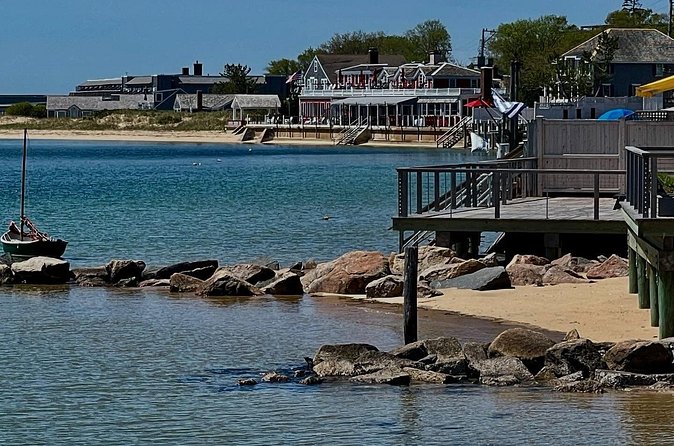
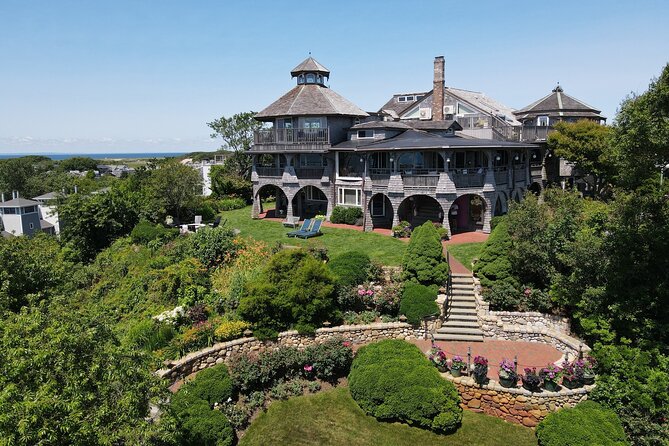
Land’s End Inn sits atop Gull Hill at 22 Commercial Street, with views over Provincetown Harbor and Cape Cod Bay. Built in 1904 as a summer bungalow for Charles Lothrop Higgins, it became an inn in 1926. Its position gives you a sense of the West End’s appeal as a place to stay and look out over the water, while its history connects the area’s domestic architecture to Provincetown’s artistic and maritime past.
This is the longest scheduled stop, at about 20 minutes. The inn is a historic bed-and-breakfast, not a public museum, so the stop is best understood as an exterior visit and a chance to hear about the building. The tour does not specify entry inside.
The Red Inn, at 15 Commercial Street, adds another layer. Dating to 1805, with parts that may date to 1775, it began as a residence and later served as a boarding house and tavern. It was restored in 1915 and renovated in 2002. Today it is an inn and restaurant directly on the harbor.
Nearby, the Provincetown Inn dates to the early 1920s. It stands on land associated with the Pilgrims’ first landing in 1620, and full-color murals there depict Provincetown’s past. These inns show how the West End has shifted from a place of fishing and settlement into a destination for visitors, without losing its links to the harbor. The exact amount of time spent at each is not specified, so expect brief context rather than a separate extended visit.
Ending where the Pilgrims first landed
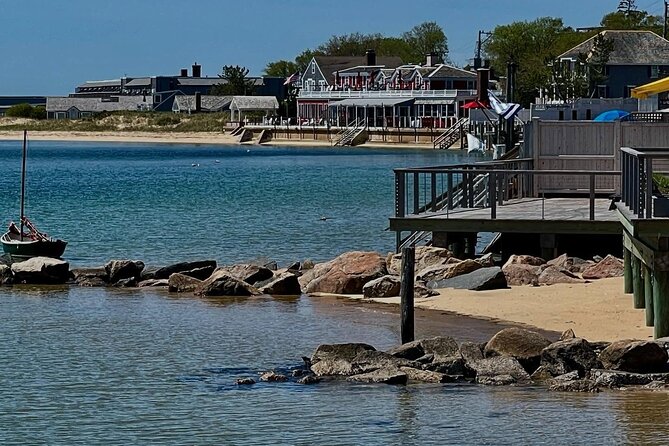
The walk finishes at Pilgrims’ First Landing Park, a small memorial park marking the Pilgrims’ first landing on November 11, 1620, before they went on to settle in Plymouth. A plaque installed in 1917 by Provincetown’s Research Club marks the site.
It is a modest endpoint, not a large monument complex. Its value lies in the story it anchors: the Pilgrims first touched land here, even though Plymouth later became the better-known settlement. Ending at the park brings the route’s themes together, since this short walk has traced how Provincetown’s position at the tip of Cape Cod shaped settlement, work, rescue, and travel.
What $60 buys you
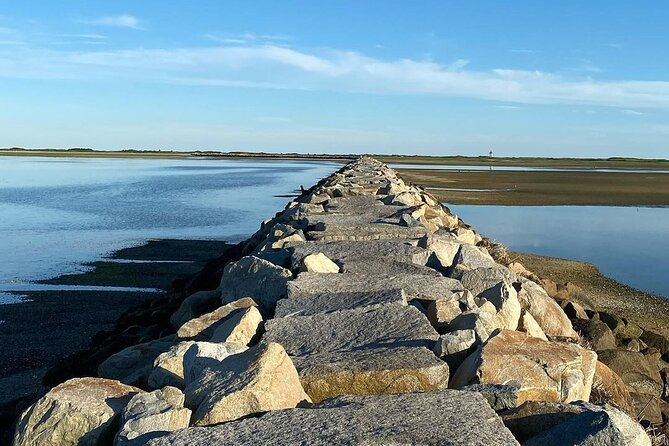
At $60 per person, this is a focused history walk rather than a full-day outing. You are paying for nearly two hours with a private guide who can connect the West End’s buildings and waterfront to local stories. Since the group is private, that price may make particular sense for a couple, family, or small group that values conversation and a flexible pace.
All listed stops have free admission, so the cost is not tied to entry fees. The value depends on how much you enjoy learning a town through its streets. If you want access to interiors or a long visit at each landmark, this is not that kind of tour. If you like a guide who can make a brief walk feel informed and personal, the format is a good fit.
The tour runs in English and uses a mobile ticket. Confirmation is received at booking. Service animals are allowed, and the activity is described as suitable for most people. It requires good weather; if poor weather cancels it, you are offered a new date or a full refund. You can cancel for a full refund up to 24 hours before the start time. For practical planning, arrive ready to walk and use a restroom beforehand.
Small tips that make the afternoon easier

The meeting point is the Coast Guard Station at 125 Commercial Street, and the tour starts at 2 pm. Give yourself time to find the spot and settle in before the walk begins. Parking at the Montello-Bradford parking lot was reported at $20, a useful figure to budget for, though parking arrangements may change.
There are no public restrooms along the route, so use one before meeting Cathy. Bring a camera if you like taking pictures: the walk includes plenty of photo opportunities, from the old house and wharf to the waterfront views. And listen for Cathy’s occasional pop quizzes. They are a lighthearted way to keep names and dates from drifting away as you walk.
For a meal afterward, Cathy has recommended Bubala’s on the Bay, with good food and people-watching. It is a suggestion, not part of the tour, but it gives you a straightforward way to continue the afternoon in town.
Should you book the West End History Tour?
I would book this tour if you want a personal introduction to Provincetown’s West End, especially if stories about fishing, old houses, and the harbor appeal more than a formal museum visit. Cathy’s casual style, local perspective, and pop quizzes suit people who enjoy asking questions and learning at a relaxed pace.
Skip it if you need a fully indoor activity, expect to enter every historic building, or want a long excursion out to the lighthouse itself. For everyone else, this is a compact way to understand why the West End looks and feels the way it does, with enough useful detail to make a later solo stroll more meaningful.
FAQ
How long is the Provincetown West End History Tour?
The tour lasts approximately 1 hour 45 minutes.
How much does the tour cost?
The price is $60 per person.
What time does the tour start?
It starts at 2 pm.
Where does the tour begin?
Meet at the U.S. Coast Guard Station, 125 Commercial Street, Provincetown, Massachusetts.
Where does the tour end?
It ends at Pilgrims’ First Landing Park in Provincetown.
Is the tour private?
Yes. Only your group participates.
What language is the tour offered in?
The tour is offered in English.
Are service animals allowed?
Yes, service animals are allowed.
What is the cancellation policy?
You can cancel up to 24 hours before the start time for a full refund. If bad weather cancels the tour, you are offered a different date or a full refund.
Just added around Cape Cod
- Provincetown Self-Guided Walking Audio Tour★ 5.0 · 5 reviews
- Ziplining and Climbing at The Adventure Park on Cape Cod★ 3.5 · 3 reviews
- The Martinis & Mingle Tour★ 5.0 · 20 reviews
- National Seashore Tour with Guided Hike★ 5.0 · 7 reviews
- Local Legends and Lobster Roll Tour★ 5.0 · 9 reviews
- Provincetown Prowl Scavenger Hunt★ 4.5 · 6 reviews
- Chatham Bites and Sights Walking Guided Food Tasting Tour★ 5.0 · 28 reviews
- Private Open-Air Pedicab Tour in Provincetown★ 3.5 · 19 reviews
Boston History Tours, compared.

History and Hauntings of Salem Guided Walking Tour
Read our review →
Freedom Trail History Small Group Walking Tour
Read our review →
Tour of Historic Fenway Park, America’s Most Beloved Ballpark
Read our review →
The Full Revolutionary Story Epic Small Group Boston Walking Tour
Read our review →
Boston Food & History: Pizza, North End & Freedom Trail
Read our review →
Boston’s Freedom Trail: A Revolutionary Walking Tour
Read our review →
City Cruises Boston Historic Sightseeing Harbor Cruise
Read our review →Browse the lists this tour appears in