
Reviewed · CAMBRIDGE TOURS
Public Innovation Trail Tour in Cambridge
Cambridge’s Innovation Trail makes a good case that history is still being made: the labs and companies you pass are working on subjects like gene-editing, modified RNA, robotics, and faster internet delivery. For about 90 minutes, a guide links these modern projects to older inventions and the people who helped shape them.
I like two things in particular: the mix of science and human stories, from Margaret Hamilton’s Apollo software work to Akamai’s early web experiments, and the guide’s role in making a walk past office buildings feel like a connected story. Guides such as Julia have brought energy to the tour, including memorable accounts of robotics pioneer Hugh Herr and a stop at the Danny Lewin Memorial courtyard.
The trade-off is that this is an outdoor walking tour, not a series of lab visits. You won’t go inside most buildings, and some public lobby exhibits may be closed, especially on a Sunday, so come for context and stories rather than guaranteed access to displays.
- A 90-minute walk through Kendall Square connects MIT, biotech, software, and local manufacturing.
- Apollo, Android, Akamai, and gene research all feature in the stories along the route.
- Guides such as Julia make the science easier to follow with lively, personal accounts.
- The group is limited to 25 people, and the tour costs $20 per person.
- Building access is not included, though some sites have publicly accessible lobbies or exhibits that may be open.
What the Innovation Trail explains about Cambridge
Cambridge’s technology story is not confined to a museum case. It is written across working labs, company offices, research institutes, and old industrial buildings, often on the same few streets. This tour gives you a guided way to read those surroundings and see how ideas move from research to products that affect daily life.
The route is part of the broader Innovation Trail, which covers four centuries of breakthroughs in Boston and Cambridge in science, medicine, business, and technology. Here, the focus is Kendall Square: a place where the next big chapter may be taking shape behind a plain glass entrance.
That setting is useful, but it also calls for the right expectations. You will hear about active research and company history from the sidewalk. The tour does not include entry to buildings, and a stop outside a lab is not the same as seeing its work firsthand.
From the Entrepreneur Walk of Fame to MIT
The tour begins at 50 Broadway, near the Entrepreneur Walk of Fame. This brief first stop introduces names and stories that will return later, giving you a sense of the people behind the local startup culture. It is a quick orientation, not a long exhibit visit.
A few minutes later, the group reaches CIC Cambridge at 245 Main, a startup hub founded by MIT Business School graduate Tim Rowe. The building’s significance is less about its appearance than its role in the local business ecosystem: it offers a starting point for understanding how ideas can become companies.
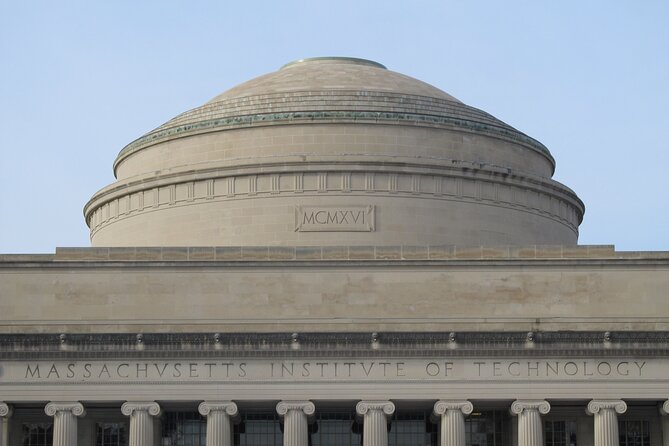
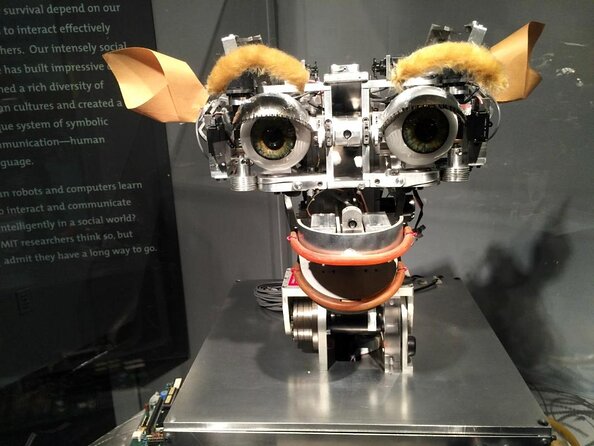
The route then takes in the MIT Museum, which reopened in October 2022 and presents the Institute’s work in technology and science. The listed stop is short, and entry is not included, so don’t plan on touring the museum galleries as part of this experience. Treat it as a chance to hear how MIT’s research and teaching fit into Cambridge’s wider story.
At 355 Main Street, the guide talks about Google’s Cambridge office and the city’s relationship with large technology firms. Android is one example of the creative work associated with the company’s local presence. This stop helps show that Cambridge innovation is not limited to young startups or university labs.
Other things people book around Cambridge:
- Cambridge: Harvard University Student-Guided Walking Tour
★ 4.6 · 3,931 reviews - MIT Campus Guided Walking Tour
★ 4.5 · 175 reviews - Illustrious Schools: Group Tour of MIT And Harvard
★ 5.0 · 107 reviews
Stata Center, robotics, and the Broad Institute
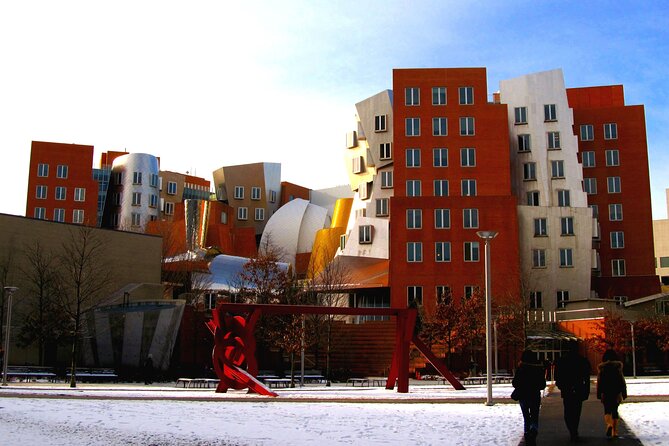
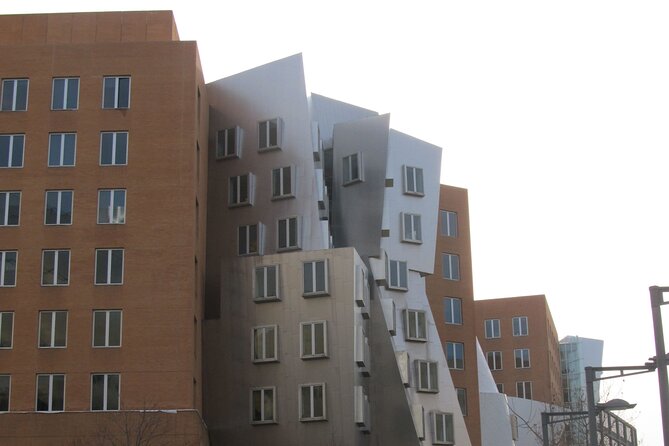
MIT’s Stata Center is one of the tour’s more distinctive stops. The building houses work in computer science, artificial intelligence, and robotics, and the guide connects that research environment to iRobot, maker of the Roomba robotic vacuum cleaner. There is also a small ground-floor display about MIT student hacks, the Institute’s long-running pranks.
That combination makes the stop approachable even if you don’t follow robotics. You get a building, a product many people recognize, and a glimpse of student culture in one short visit. The small exhibit is inside, however, so access depends on whether it is open when you arrive.
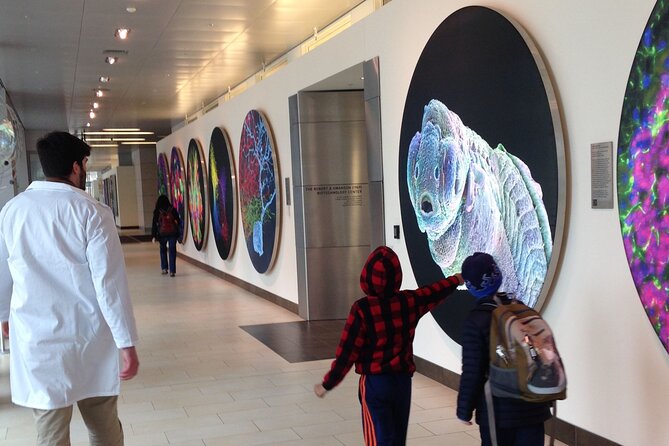
The tour also passes the Broad Institute of MIT and Harvard, whose work aims to better understand disease and turn biological discoveries into benefits for patients. This is a useful point in the walk to pause over the practical side of research: a scientific finding matters most when it can lead to better care.
Nearby, the story reaches the Whitehead Institute and the Human Genome Project. Founded in 1982 by philanthropist Jack Whitehead and MIT professor and Nobel laureate David Baltimore, the independent nonprofit was designed to bring leading biomedical researchers together with strong funding, advanced lab equipment, and less bureaucracy. Its role in the Human Genome Project is a striking example of how research institutions can be organized to support ambitious work.
These stops are not lab tours. You are learning about the people, goals, and institutions from outside, which can make the subject feel abstract if you want demonstrations or hands-on exhibits. A good guide helps bridge that gap by explaining why the research matters and how it may affect medicine.
Biogen, Akamai, and the Apollo moon landing
At 225 Binney Street, the guide introduces Biogen, a biotech company founded by two Nobel Prize winners. Its history gives the tour another view of Cambridge’s scientific economy: discoveries are not only made in university settings, but also developed within companies focused on biotechnology.
The next stop, Akamai at 145 Broadway, takes the story from biology to the early internet. The company’s original idea was to place servers around the world and store online content closer to the people accessing it, helping web pages and media load faster. Early large-scale demonstrations included a Star Wars: The Phantom Menace trailer and ESPN’s March Madness coverage in 1999.
This is one of the clearest examples of a technical idea that became part of everyday life. You may not think about where web content is stored when you open a page or stream a clip. Akamai’s story offers a simple way to understand how the internet became quicker and more reliable for users.
A walk down Broadway leads to Draper at 555 Technology Square. A giant moon hangs in the lobby, a fitting marker for the company’s work on Apollo guidance computers. Those computers helped Apollo spacecraft travel to and land on the moon.
The guide also tells the story of Margaret Hamilton, one of the software developers who wrote code for the guidance computers. She later founded two companies and is credited with helping define software engineering. Her story gives the Apollo stop a human focus and highlights how crucial software was to a mission often remembered for its rockets and astronauts.
Draper is a particularly strong stop for anyone interested in space exploration or the history of computing. Keep in mind that the tour does not promise lobby access, so the moon display may not be visible from inside on every visit.
Moderna, LabCentral, and Cambridge’s candy makers
The route continues to Moderna, founded in 2010 to explore modified RNA molecules, a name formed from mod-RNA. The company’s work centers on using this approach to treat disease or make vaccines. It is a concise stop, but it connects the tour’s broader themes of research, medicine, and commercial innovation.
At LabCentral, the guide points out how the same place has served different generations of makers. The site was once home to Davenport Car Works, Walworth Manufacturing Company, and Polaroid; it now supports life-science startups. The address itself becomes a small lesson in how Cambridge’s industries change while its buildings keep working.
The final listed stop, at 810 Main Street, brings the story down to something more familiar: candy. Cambridge once had 66 candy companies producing treats such as Valentine’s candy hearts, Squirrel Nut Zippers, and lemon drops. The Fig Newton was also invented in Cambridge in 1891, despite its name referring to nearby Newton.
This building is described as Cambridge’s last operating candy factory and is owned by Tootsie Brands. The factory does not offer tours, partly because candy makers tend to protect their equipment and processes. Inside, it produces 26 million pieces of candy a day, a remarkable scale that you will have to imagine from outside.
That contrast is part of the charm of the route. Cambridge innovation is not only gene research and software. It also includes manufacturing know-how, recipes, machines, and the businesses that have kept making familiar goods for generations.
Same city, a different kind of day:
- Boston: Charles River Sunset and Cocktail Cruise
★ 4.4 · 50 reviews - Delicious Donuts of Harvard Square: A Historical Walking Tour
★ 5.0 · 31 reviews - From Boston: Guided Bike Tour of Cambridge
★ 4.9 · 23 reviews - Boston: Harvard & Cambridge Walking Food Tour
★ 5.0 · 18 reviews
What the $20 price buys
At $20 per person, the main value is the guide’s ability to connect a long list of names and buildings into one readable story. You are not paying for museum admission or transportation. You are paying for 90 minutes of interpretation, local context, and a route that would be easy to pass through without noticing the history under your nose.
The tour is a good value if you enjoy learning while walking and want an introduction to Cambridge’s science and business history. The price is less compelling if your priority is entering labs, seeing full exhibitions, or spending substantial time at each site. Most stops are short, typically around five to ten minutes, so expect an overview rather than a deep examination of any one institution.
The posted start time is 2:00 pm. The group can include up to 25 people, a size that keeps the walk social without being enormous. A past large-group outing still allowed participants to hear the stories, but if you prefer a quieter experience, a smaller group may suit you better.
The start is at 50 Broadway, and the finish is the MIT Media Lab at 75 Amherst Street. There is no private transportation, so you should be ready to walk for the full tour and have a moderate level of physical fitness. Public transportation is nearby, and service animals are allowed.
Tours are often booked about 10 days in advance, so planning ahead is sensible. The experience depends on good weather and a minimum number of participants; if weather or low enrollment cancels it, you can be offered another date or a refund. You can cancel for a full refund up to 24 hours before the start time.
How to get the most from the walk
Bring comfortable walking shoes and keep your expectations focused on conversation, not entry. Since some lobby exhibits may be closed, especially on Sundays, don’t build your day around seeing a particular display inside a building. If a lobby is open, consider that a bonus.
You will get more from the tour if you ask questions when a story catches your interest. The route covers a wide range, from genome research and robotics to candy manufacturing, so there is room to follow the subjects that matter most to you. The most praised element is the guide’s storytelling, and guides such as Julia have made technical topics engaging through specific people and episodes.
One example is the story of Hugh Herr, whose connection to robotics left a strong impression on a past group. Another is the Danny Lewin Memorial courtyard, which adds a personal dimension to the technology story. These details help keep the tour from becoming a mere parade of company names.
Who should book the Cambridge Innovation Trail
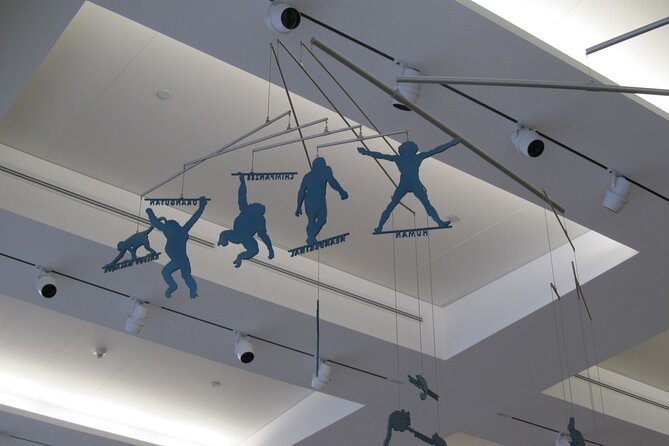
I’d recommend this walk to curious visitors who like science, technology, entrepreneurship, or the stories behind familiar products. It is also a smart choice if you have a short window in Cambridge and want a structured introduction to Kendall Square rather than a self-guided walk past offices and institutes.
Families with older children interested in computers, space, or medicine may find plenty to discuss, though the experience is a walking talk rather than a hands-on activity. The short stops help vary the subject matter, but younger children who need frequent activity may prefer a museum visit with more things to see and do.
You may want to skip it if you expect access to active labs or a full tour of the MIT Museum. The most rewarding approach is to treat the streets themselves as a classroom and the guide as the link between places that can otherwise look like ordinary offices.
Should you book?
Book the Public Innovation Trail Tour if you want a compact, guided look at how Cambridge’s scientific past continues into present-day research and business. For $20, the stories about Apollo, Android, Akamai, gene research, and the city’s candy makers offer a varied introduction, especially with an engaging guide.
Pass if you need guaranteed indoor access or prefer to explore at your own pace. This is an outdoor overview, but for visitors who enjoy ideas, local history, and a good human story behind a technical breakthrough, it is a practical way to make Kendall Square’s working buildings mean more.
FAQ
How long is the Public Innovation Trail Tour?
The tour lasts approximately 1 hour and 30 minutes.
How much does the tour cost?
The listed price is $20 per person.
Where does the tour start and finish?
It starts at 50 Broadway in Cambridge and ends at the MIT Media Lab at 75 Amherst Street.
What time does the tour start?
The listed start time is 2:00 pm.
Does the tour go inside labs or offices?
No. Access inside buildings is not included, and most stops are active workspaces.
How many people can join the tour?
The maximum group size is 25 people.
Is the tour suitable for someone with limited mobility?
The stated fitness level is moderate, and the tour is a walking activity. Service animals are allowed.
Does the tour run in bad weather?
The experience requires good weather. If poor weather causes a cancellation, you will be offered another date or a full refund.
Can I cancel for a refund?
Yes. You can cancel at least 24 hours before the start time for a full refund. Cancellations made less than 24 hours before the experience are not refunded.
Just added around Cambridge
- Union Square, Somerville Neighborhood Food Tour★ 5.0 · 4 reviews
- Harvard’s Secret Society: Exploration Game and Tour★ 4.0 · 3 reviews
- Delicious Donuts of Harvard Square: A Historical Walking Tour★ 5.0 · 31 reviews
- Harvard Square Cambridge Food & Walking Tour★ 5.0 · 5 reviews
- Harvard Square Chocolate Tour★ 4.5 · 14 reviews
- Boston: Harvard & Cambridge Walking Food Tour★ 5.0 · 18 reviews
- Harvard: America’s oldest university – walking tour in French★ 4.9 · 10 reviews
- Boston: Private City Tour of Boston & Cambridge★ 5.0 · 5 reviews
Cambridge Tours, compared.
Harvard University Student-Guided Walking Tour
Read our review →
Illustrious Schools: Group Tour of MIT And Harvard
Read our review →
Delicious Donuts of Harvard Square: A Historical Walking Tour
Read our review →

Browse the lists this tour appears in