
Reviewed · SALEM WITCH TOURS
Best Salem Witch Trials Historical Walking Tour
Salem’s 1692 witch trials happened on streets you can still walk, but most of the buildings tied to them are gone. This tour helps you connect the surviving Witch House and the Witch Trials Memorial with the places where judges, accusers, prisoners, and officials once shaped a terrible episode in the town’s past.
I like that the walk pairs personal stories of the accused and accusers with actual downtown locations, and that its 90 minutes offer a useful introduction before you explore Salem on your own. The main caveat: many stops are sites, not preserved interiors, and the exact route may vary.
The useful details at a glance
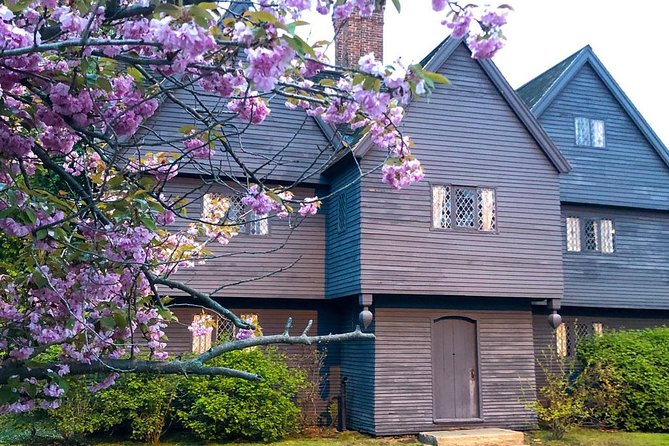
- The Witch House is the key surviving trial-era building: It dates to the 1660s and belonged to Judge Jonathan Corwin, who took part in the trials.
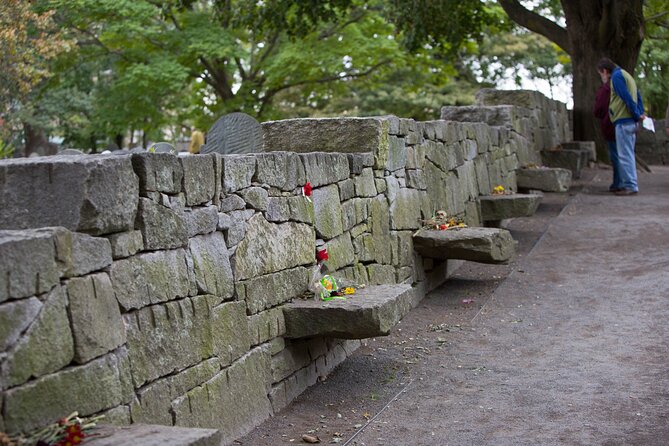
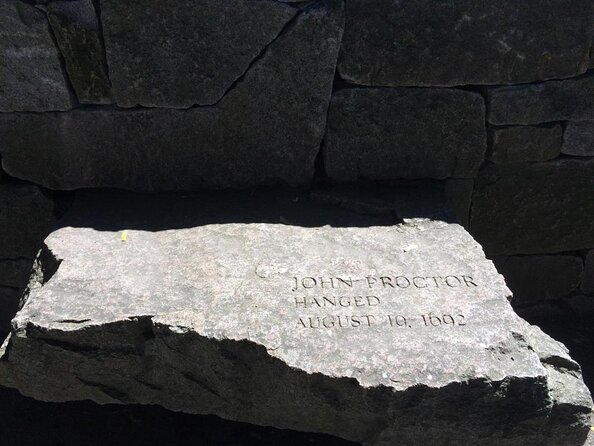
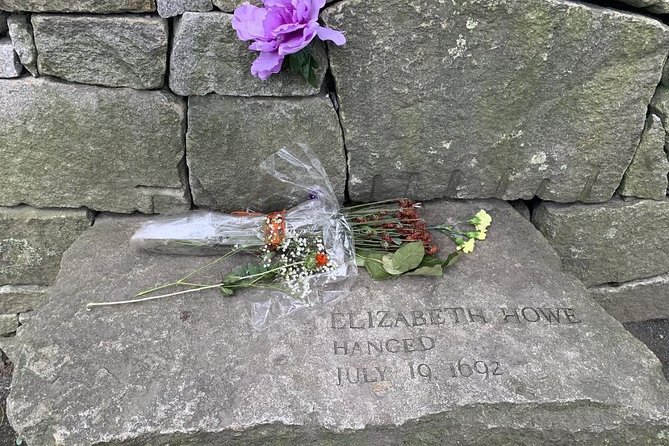
- The memorial gives names to the victims: Its 20 stone benches identify each person and how and when they died.
- Several stops are historical locations, not attractions to enter: The court, jail, and sheriff’s house are gone, though the guide can explain where they stood.
- The route is about one mile over 90 minutes: Expect frequent pauses for stories, not a brisk sightseeing march.
- The itinerary can change: The guide aims to cover as many sites as possible, but you may not visit every listed stop.
- Plan for weather and crowds: Tours run in all weather, and Salem’s narrow sidewalks and busy October streets can make walking slower.
A walk through the places behind the trials
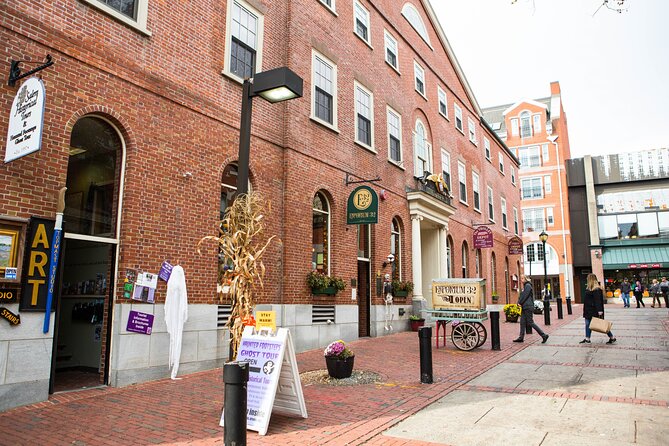
The tour begins at Salem Historical Tours’ office at 8 Central Street, where you check in and meet your guide. Tours depart at 10 a.m., 1 p.m., and 4 p.m. Arrive 15 minutes early, especially if you are visiting during the fall rush.
The opening talk sets the scene: the demographics, theories, and individual stories behind the 1692 crisis. That context matters. Without it, a modern storefront or street corner can feel like just another stop on a town walk. With it, you start to understand how neighbors turned against neighbors and how accusations became arrests, court decisions, and deaths.
The walk is described as roughly one mile, but the pace is shaped by frequent stops. You will spend time standing while the guide talks, so comfortable shoes matter even if the distance sounds modest. The group can include up to 40 people, which is a sizeable crowd for narrow sidewalks. Stay close enough to hear, and expect the group to gather around the guide at each stop.
More witch-history tours around Salem:
- The Salem Witch Walk
★ 4.5 · 1,301 reviews - Wicked Awesome Tours: Witch Trial History and Salem Haunts!
★ 5.0 · 1,032 reviews - Salem Ghost Tour: Witches & Wicked Whispers
★ 4.5 · 571 reviews
Salem Witch Trials Memorial
The memorial honors the 20 people who died as a result of the 1692 trials. Each bench bears a victim’s name, the date of death, and the manner of death. The guide explains the memorial’s symbolism and shares stories that put individual lives ahead of the familiar Halloween imagery.
This is one of the walk’s most affecting stops. It offers a quiet place to consider the human cost of the accusations, and it helps give the broader history a personal scale. Allow yourself time to read the names and inscriptions. The guide’s stop is listed as about 10 minutes, though the exact way the group explores the memorial may vary. If you want to examine the benches closely, ask the guide when there is time to do so.
Rockafellas and the former meeting house
Rockafellas is now a restaurant in the center of town, but the site once held Salem’s First Church and served as a meeting house during the trials. The contrast is useful: the location has changed its purpose, yet the guide can connect the everyday modern setting to the town’s public life in 1692.
The tour does not include a meal or restaurant admission. Think of this as a street-side history stop, not a chance to see inside a preserved colonial building. The value is in learning what stood there and how civic and religious life were intertwined in the town.
The Joshua Ward House and George Corwin
The Merchant Hotel now occupies the site where George Corwin’s house once stood. Corwin was Essex County’s high sheriff in 1692, responsible for signing arrest and execution warrants. He also took property from accused people and was said to have tortured some prisoners at his home.
The present building is not the original sheriff’s house, so this stop is about the site and the man, not a surviving trial-era interior. That distinction is worth keeping in mind throughout the walk. Salem’s history often has to be read through location and story because the structures themselves have disappeared.
More history tours around Salem:
- History and Hauntings of Salem Guided Walking Tour
★ 5.0 · 14,564 reviews - 2.5-Hour Salem History & Sightseeing Guided Walking Tour
★ 5.0 · 850 reviews - Salem Night Tour: Haunt and History Guided Night Tour
★ 4.5 · 673 reviews - Salem, MA: History and Hauntings Guided Walking Tour
★ 4.8 · 651 reviews
The Witch House
The Witch House is the standout architectural stop because it is the only remaining Salem structure with direct ties to the 1692 trials. Built in the 1660s, it was the home of Judge Jonathan Corwin. He met with Judge John Hathorne there to discuss accusations of witchcraft.
The tour includes the exterior stop, but admission to the house is not included. If you want to go inside, plan that as a separate visit rather than assuming the walking tour includes entry. The building gives you a rare physical link to the period, while the guide explains the role of the men who lived and worked within Salem’s legal system.
Betty Parris and the Sewall Street area
Near the Salem YMCA, the guide points out the area associated with nine-year-old Betty Parris. She was the daughter of Reverend Samuel Parris and was moved there in July 1692. The house is gone, but the story helps explain the early stages of the crisis and the young people whose actions helped set the accusations in motion.
The street name also carries a connection to judge Stephen Sewall. This is a good example of the tour’s method: you stand in a present-day setting while the guide reconstructs what once happened there. If you expect a preserved house at each stop, you may find the walk frustrating. If you enjoy linking people and events to city blocks, the approach makes sense.
Bridget Bishop’s land and the Witch Dungeon Museum
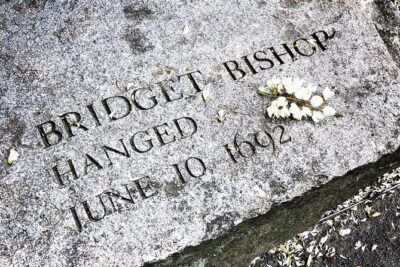
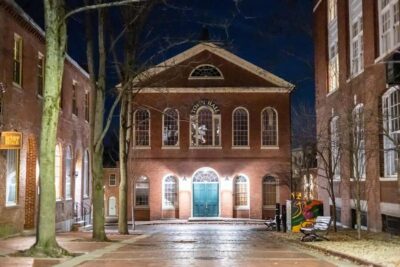
Turner’s Seafood occupies Lyceum Hall, built on land once owned by Bridget Bishop and her husband, Edward. Bridget was the first woman executed in 1692. The guide tells her story and explains how the town came to accept the case against her. The stop is brief, about five minutes, and the restaurant itself is not part of the tour.
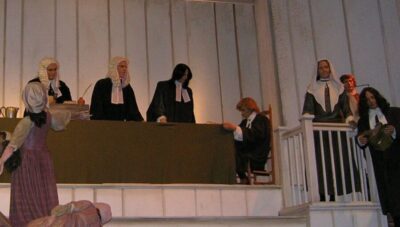
The Witch Dungeon Museum provides a different kind of context. It is not connected to the original trials, but it helps illustrate the conditions of imprisonment: tiny cells, sometimes about the size of a phone booth or closet, and prisoners who had to pay for their own jail time. The tour does not include museum admission. The guide also points out the pillory, or stocks, where you can pose for a photo.
The Bewitched statue and the court site
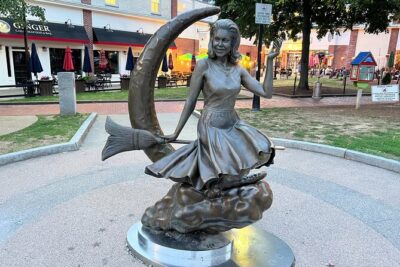
The statue of Elizabeth Montgomery as Samantha Stevens is a pop-culture stop, and a good reminder that Salem’s image has long been shaped by entertainment as well as history. The guide discusses episodes filmed in Salem and the irony of whose land the statue stands on. It is a lighter pause in a tour centered on serious events.
The Witchcraft Court, known as the Court of Oyer and Terminer, met in the area of Washington Street in front of the present Masonic building. Most trials were held there, with further proceedings in January 1693. The actual court structure is gone. The guide describes the decisions made there, including a case in which a jury found an accused person innocent but the judges overturned that result.
This stop is less about seeing a historic courtroom than understanding the failures of the court system. A guide may use old-book images to help you picture buildings that no longer exist. That can make the location easier to imagine, though it is still a street-side explanation rather than a preserved courtroom visit.
The jail site and the limits of the route
The old witchcraft jail stood near 50 St. Peter Street. It has disappeared, but the guide discusses prisoners held there, including Giles Corey, who was crushed during interrogation. Some prisoners died in jail. The site gives the tour a way to talk about the process of imprisonment and coercion without presenting the vanished jail as if it were still standing.
The hanging site is not included in the regular walk. It lies more than a mile away, and the tour stays within the downtown area to keep the outing to about 90 minutes. The precise tree used for the executions is not known, and the history of the gallows remains uncertain. If reaching the execution site is important to you, ask the guide about directions and consider visiting separately.
What the guide adds, and what can vary
A good guide can turn a sequence of modern addresses into a clear account of how the trials unfolded. The strongest parts of the walk are the specific stories: the people named on the memorial benches, Bridget Bishop’s rapid passage from arrest to execution, and the officials who wielded power over accused neighbors. Guides are also described as willing to answer questions, and some add local context beyond the trials.
Guide style matters. Some people prefer a chronological account with clear causes and consequences; others respond more to vivid anecdotes and a lively presentation. One guide named Bob has been singled out for bringing the people of the period to life, but guides are assigned rather than guaranteed. You cannot count on booking a particular person.
The advertised list is broad, but do not treat it as a promise to enter or spend equal time at every place. The guide may visit as many listed stops as time and conditions allow, and the order can change. Some addresses are sites where events happened, not historic buildings. If a particular stop matters to you, ask early in the walk whether it is on that day’s route.
Is $30 a fair price?
At $30 per person, you are paying for a 90-minute guided introduction, not a package of admissions or transport. The memorial and several outdoor locations are free to see on your own, and Salem’s marked walking route gives independent visitors another option. The tour earns its price when the guide supplies useful context, points out less obvious sites, and connects people to places you might otherwise pass without noticing.
The value is less clear if you expect a series of preserved buildings, theatrical reenactments, or entry to the Witch House and museums. Those admissions are not included, and the tour does not provide hotel pickup, parking, or public restrooms. I would treat it as a compact orientation that can help you decide what to explore further, rather than as a complete visit to every Salem witch-trial attraction.
The experience has an average rating of 4.1 out of 5 from 743 ratings. That suggests a generally positive reception, with a real divide over presentation and expectations. The most appreciated qualities are engaging guides, clear historical detail, and the chance to see several parts of town in one short walk. The recurring trouble points are repetitive storytelling, too much standing, and disappointment when listed sites turn out to be locations rather than buildings you can enter.
Practical notes before you set out
Wear comfortable shoes and dress for the forecast. The tour runs in all weather, and Salem has uneven sidewalks, bricks, cobblestones, and stairs. In October, crowds and street vendors can make the route harder to navigate. Parking and traffic can be difficult at any time, and much worse during the Halloween season, so leave extra time.
The walk lasts 90 minutes and covers about one mile, with frequent standing stops. Each participant needs to be able to complete the route in that time. Children must be accompanied by an adult, and service animals are allowed. If mobility or access is a concern, contact the operator before booking because historic streets and crowded conditions can pose challenges.
The meeting address is 8 Central Street, Salem, MA 01970. Check in at the Salem Historical Tours office and arrive 15 minutes before the 10 a.m., 1 p.m., or 4 p.m. departure. The tour returns to the downtown area, where the guide can direct you onward.
Should you book this Salem walking tour?
Book it if you want a focused introduction to the 1692 trials, enjoy learning through personal stories, and are comfortable picturing vanished buildings from their sites. It is especially useful early in a Salem visit, when a guide can help you make sense of the memorial, the Witch House, and the less obvious locations around downtown.
Skip it if you want to enter every historic building, see the execution site on foot, or need a tightly guaranteed itinerary. At $30, the tour is a reasonable way to get a guide’s perspective and cover several trial-related locations in 90 minutes, as long as you arrive with realistic expectations: the story is extensive, but much of the physical evidence is gone.
FAQ
How long is the Salem Witch Trials walking tour?
The tour lasts about 90 minutes and covers roughly one mile, with frequent stops for stories and explanations.
Where does the tour begin?
It begins at Salem Historical Tours’ office at 8 Central Street, Salem, Massachusetts. Check in there before departure.
What time do tours depart?
Tours depart at 10 a.m., 1 p.m., and 4 p.m. Arrive 15 minutes early.
Does the tour enter the Witch House?
Admission to the Witch House is not included. The tour stops at the house, and you should plan separately if you want to go inside.
Will the guide visit every stop listed?
Not necessarily. The route can change, and the guide aims to visit as many listed locations as possible during the 90-minute walk.
Is the execution site part of the tour?
No. The execution site is more than a mile from the downtown route and is not included in the regular tour.
Are public restrooms available during the tour?
No public restrooms are provided as part of the tour.
What happens if the weather is bad?
The tour operates in all weather, so dress appropriately for the conditions.
More walking tours around Salem
- Salem Voodoo, Vampires, and Ghosts Guided Walking Tour
★ 5.0 · 1,931 reviews - Bewitched Walking Tour of Salem
★ 5.0 · 1,895 reviews - Satanic Salem Walking Tour
★ 5.0 · 1,635 reviews - Mysteries and Murders of Salem Guided Night-Time Walking Tour
★ 5.0 · 1,488 reviews
Just added around Salem
- [ESP] History of Salem Witch Trials★ 4.0 · 5 reviews
- Vampire Ghost Adventures and Haunted Objects Walking Tour★ 4.5 · 34 reviews
- Wandering Witches★ 4.5 · 33 reviews
- Private Walking Salem Legends Tour Professional Guide★ 5.0 · 3 reviews
- Tales of Salem Candyland Tour★ 4.0 · 8 reviews
- Spooky Ramen Tours★ 5.0 · 5 reviews
- A Ghost Hunting Tour Specters and Apparitions in Salem★ 5.0 · 30 reviews
- Witches of Salem Tour: Mysteries, Myths, and Magic★ 4.0 · 36 reviews
Salem Witch Tours, compared.
Wicked Awesome Tours: Witch Trial History and Salem Haunts!
Read our review →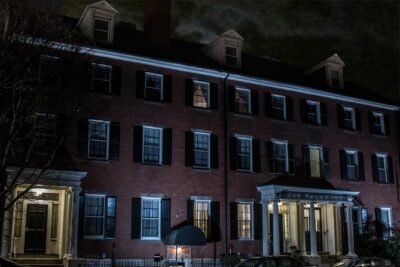


Witch Costume Photo Shoot – Olde Salem Village theatrical set
Read our review →Browse the lists this tour appears in